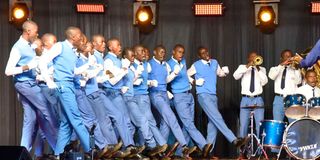
Every second term of the school calendar, an unmistakable wave of energy surges through educational institutions. As classrooms give way to ball games, indoor sports and the music festival, campuses transform into vibrant hubs of talent.
The Competency-Based Education (CBE) has rightly re-engineered our educational priorities by elevating music and the creative arts into a core pillar of talent development. This shift serves as a bold institutional affirmation that true education extends well beyond the narrow confines of national examinations.
Music is not just passive entertainment; it is a potent instrument for cognitive development, character formation, and sustainable nation-building.
At its core, participating in the festival instils foundational values of accountability, commitment and psychological resilience. Learners dedicate long weeks and months to gruelling rehearsals, discovering first-hand that artistic excellence is built through patience, consistency and cooperation. Every successful stage performance is a masterclass in collective sacrifice.
Furthermore, music provides a highly constructive outlet for youthful energy at a time when contemporary adolescents face severe vulnerabilities, including substance abuse, negative peer pressure and digital media dependency. By channelling their emotions into creative production, students build self-confidence and discover safe avenues for authentic self-expression.
The festival is also a practical laboratory for leadership. On the stage, learners naturally cultivate emotional intelligence, clear communication, and the capacity to manage performance anxiety under pressure. They learn to process constructive critique from adjudicators, navigate competitive losses with dignity, and celebrate victories with humility—competencies that will serve them long after they step off the stage.
Perhaps the festival’s most profound societal contribution, however, is its capacity to foster national cohesion. By stepping into another culture’s expressions through performance, learners break down historical prejudices and celebrate shared cultural capital.
The festival also possesses immense unexploited economic potential. Globally, structured cultural festivals serve as massive drivers of local tourism, employment creation and hospitality growth. Kenya’s rich artistic tapestry can easily be leveraged as a pillar of cultural tourism. By professionally packaging school performances, the country can market its heritage to international audiences while simultaneously injecting capital into the local creative economy.
Now, it is time for Kenya to think strategically beyond the festival itself. The Ministry of Education should establish a centralised national digital archive to professionally record, preserve and monetise the finest performances. Furthermore, the finest ensembles should be integrated into our national celebrations, international tourism expos, and global cultural conferences.
As Kenya advances the implementation of the CBE, the music festival must be embraced not as a simple annual contest, but as a critical national investment in culture, peace, education and economic development. It moulds disciplined citizens, strengthens national unity and safeguards our history.