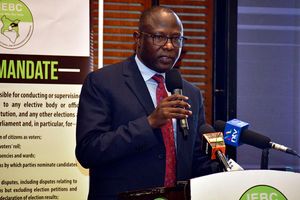
Voters in Ol Kalou rejected the ruling party’s candidate by a margin of more than six to one in mid-July. Since then, it has been said that money due to the constituency under the National Government Constituencies Development Fund has been held back.
Whether or not that is borne out, the larger point is that the National Treasury could do it, and every MP knows it could.
That is the problem with the National Government Constituency Development Fund (NG-CDF), stated in one sentence. The fund places the people charged with watching the Executive, directly on the payroll of the Executive.
The Institute for Social Accountability and its partners have spent more than a decade arguing this in courts of law. The High Court agreed in September 2024 and ordered the fund wound up by June 30, 2026. The Court of Appeal overturned that ruling in February this year, finding no demonstrated conflict between the two levels of government.
The case has been taken to the Supreme Court. Whatever the judges decide, Kenyans should understand what is at stake, because it touches almost every complaint they have on how this country is being run.
Start with what the Constitution intended. The 2010 settlement split government into two levels. Counties took early childhood education, county health services, water, local roads and most of what a citizen touches daily.
The national government kept policy, security and national functions. Parliament was given three roles – make laws, approve budgets and hold the Executive to account.
Nowhere in that design is there a third tier of government run out of 290 constituency offices, building classrooms and dispensaries that counties and line ministries are already funded to build.
National government’s share of revenue
The NG-CDF creates that tier anyway. In the 2026/27 financial year, it will receive Sh61.8 billion, up from Sh58.8 billion, at a time interest payments alone are projected to consume 53 per cent of tax revenue.
For scale, the entire agriculture budget this year is Sh63 billion. The country is spending almost as much on a fund the Constitution never mentioned as it spends on an industry that employs more Kenyans than any other.
The fund is not a fixed sum either, which is part of the problem. The law sets it at no less than 2.5 per cent of the national government’s share of revenue. Consider the incentive this creates for the 349 people who approve the budget.
Every shilling added to national spending enlarges the pot their offices are credited for. Every shilling cut reduces it.
A lawmaker who votes for austerity votes to shrink his allocation. Kenya is in a debt crisis that requires Parliament to say no to more spending, and the NG-CDF directly incentivises Parliament against this urgent action.
Then there is the leash. The money is appropriated by Parliament but released by the National Treasury, on the timetable of Treasury.
In December 2023, members from both sides of the House walked out and stalled parliamentary business because NG-CDF money appropriated six months earlier had not been disbursed.
The one issue that united government and opposition MPs enough to stop the business of the House was the release of their own money. Not a tax measure. Not a security failure. The fund!
An Executive that controls the tap does not need to issue threats. It needs only to be slow with some constituencies and prompt with others.
A lawmaker considering a hard vote on a Finance Bill, an impeachment motion or a report on a stalled megaproject has to weigh the cost to the bursary and classrooms in his or her constituency. Oversight that comes with a price tag becomes a negotiation, and one in which the Executive holds the stronger hand.
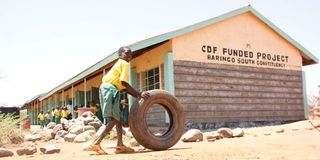
The defenders of the fund point to its benefits, and they are visible. That is true. Classrooms. Bursary. Police posts. Every one of them comes with a plaque and a ribbon. However, the visibility is part of the design, and not necessarily the evidence of the function of this fund.
Those classrooms are not free. They are paid for out of the same national revenue that funds the Ministry of Education and the devolved government allocations, routed through a parallel structure with its own board, staff and administrative budget.
Where the classroom is built, and which student gets the bursary, becomes a decision shaped by the lawmaker’s patronage map rather than by a national education strategy.
The record on accountability is not reassuring either. In Ol Kalou, nine people – including the local fund’s chairman – were charged in 2024 over Sh55.8 million said to have been diverted from a CDF road project.
They deny the charge and the courts will make a decision. The case, however, illustrates the structural weakness. When projects are identified, funded and publicised through the same political office, there is no independent voice in the room until auditors arrive, many years later.
When the courts began closing in, lawmakers did not reconsider. The National Assembly passed a constitutional amendment in July last y ear to write the fund into the Constitution, and attached a new fund for senators to ease its passage.
Senators dismissed it as bribery. That is a fair description of the whole arrangement, really.
Kenyans who are angry about debt, about taxes rising while services decline, about a Parliament that rarely says no to the Executive, should see the connection. These are not separate failures.
A Legislature that depends on the Executive for its most visible spending cannot be expected to restrain that same Executive. A Parliament that benefits from bigger budgets cannot be expected to shrink them.
Abolishing the fund would not end local development. The money would go where the Constitution already sends it: to counties, to line ministries and to bursary schemes run by institutions with no elections to win. MPs would be left with the jobs they were elected to do.