“Aujourd’hui, Maman est morte. Ou peut-être hier, je ne sais pas – Mother died today. Or perhaps yesterday; I don’t know”.
These words are in The Stranger by Albert Camus.
The character who says them is Meursault, a man who expresses a lack of emotional connection to his mother’s death, indicating a detachment from the reality of loss.
The French sociologist and philosopher Émile Durkheim had a word for this detachment: “anomie”. It is a feeling of disconnection and purposelessness.
As we move towards the General Election in 2027, many voters are seized by anomie. It is the story of a narrow lane in Kayole in 2022 as the hustler versus dynasty campaigns reaches fever pitch.
A young Rastafarian stands outside a barber shop on election night, dreadlocks tied back beneath a knitted cap, eyes fixed on a television set balanced on a soda crate.
Every IEBC declaration of election results brings cheers from one side of the street and groans from the other, but everyone is excited.
Motorbike riders rev their engines, and the future is filled with endless possibility.
Today, the same Rastafarian is disillusioned with politics. He feels an aching void, a deep emptiness when he thinks of politics. He has lost the most important thing in life: hope.
There are many reasons citizens feel a sense of anomie. The first and major source of anomie is economic strain. Politics is ultimately judged by the cost of living and how economically healthy people’s pockets are.
“It’s the economy, stupid,” said the American political strategist James Carville in 1992 during Bill Clinton’s presidential campaign.
Carville used this slogan to emphasise the importance of economic issues to voters, particularly during a time of recession.
In this, an incumbent president has a disadvantage because life will never be cheaper anyway in every successive year. But incumbents are blamed for it.
This is where opposition politicians hit incumbents. And it is something that incumbents themselves did when running for office. The shoe is just on the other foot.
The second is the sense that the electorate keeps returning the same politicians in new guises. Parties rebrand and change their logos, colours and slogans and coalitions change their names, but voters see the same status quo as they are asked to choose between familiar players offering the same solutions.
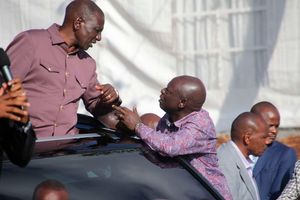
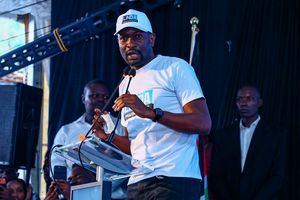
Excitement gives way to predictability. President William Ruto, Rigathi Gachagua, Kalonzo Musyoka, Musalia Mudavadi, Justin Muturi and Martha Karua are familiar faces.
The third is the collapse of trust. Modern voters live in a world saturated with information, accusations and counter-accusations.
And there is also fake news and propaganda. Every promise is examined, every speech fact-checked, every politician viewed through a lens of suspicion and exaggerations.
President William Ruto.
Photo credit: PCS
With AI and deepfakes, even videos are produced with politicians saying things they have never said. The result is greater cynicism.
Most elections are won when political messaging strikes the right chord and generates a sense of euphoria.
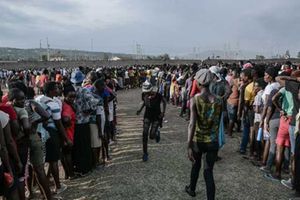
That is what happened in 2002. As crowds rallied in stadium after stadium, packed shoulder to shoulder singing “Yote yawezekana bila Moi (All is possible without Moi)”, they captured what millions of voters already felt.
The message matched the mood. The words spread outward like a gust rippling through the open savannah grass. The song became a declaration of national possibility.
In that moment, politics became something rare: a collective act of hope.
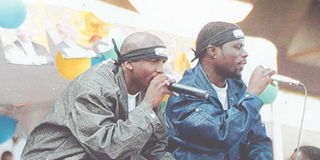
However, the song that really did it in 2002 seems to be “Unbwogable” that captured something else: the collapse of the fear of Kanu and President Daniel arap Moi after decades in power.
A new mood swept through the country. At rallies, crowds sang along to Gidi Gidi Maji Maji’s anthem, clapping, dancing and shouting the refrain, “Who can bwogo me?”
They were saying: “Nobody can intimidate me. Nobody can frighten me. Nobody can tell me that change is impossible”.
It was the same thing that helped President William Ruto’s rise to power. In 2022, his hustler narrative rang out like a war cry and resonated with the masses.
If Kenya is to emerge from its current mood of political anomie, the men and women seeking elective office will have to rise to the occasion to restore faith in politics.
First, they must speak honestly about the country’s challenges. Most voters know the problems facing the nation are complex and won’t be resolved by a magic wand.
What Kenyans want is politicians credible enough to be realistic about what can be done and what cannot be done with the public resources at hand.
Second, they must demonstrate results in areas that touch daily life – jobs, prices, healthcare, transport and education. Nothing restores political faith faster than visible improvement.
Third, political leaders must listen to the electorate. They usually do this very well when they are outside government. Once they are elected, they forget.
Today, some regime politicians speak with striking contempt, talking down to the very voters they need to return them to office. People want to feel heard and treated with dignity.
Voters may not be sophisticated, but they understand the feeling of emptiness and disillusionment that follows unfulfilled political promises.