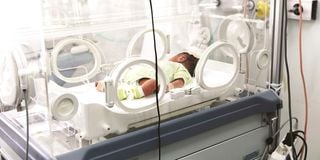
I delivered my son at 34 weeks. He weighed 1.5 kilogrammes. He was born prematurely because I developed pre-eclampsia, a serious complication of pregnancy characterised by high blood pressure, sometimes accompanied by damage to organs including the kidneys, liver and brain. Pre-eclampsia can become life-threatening for both the pregnant woman and the baby, and sometimes the safest intervention is to deliver the baby before term.
Because my obstetrician anticipated that I might deliver prematurely, I received medicines to accelerate foetal maturation, particularly of the lungs. I also got a shot of surfactant, a substance that helps keep the small air sacs in the lungs open. Very premature babies may not produce enough of it and can develop respiratory distress.
When my son was born, he was small, but he was able to breathe spontaneously. The first four weeks of his life were extremely difficult. Looking back, however, I also recognise that I was a privileged pregnant woman. I am a medical doctor. I understood pregnancy complications and knew the warning signs. I attended antenatal care consistently and had access to an obstetrician, investigations and medical information.
Many women do not have these advantages. This is what I have been thinking about following the recent case of Mercy Kanini, who delivered five extremely premature babies, all of whom subsequently died. Public discussion has focused on whether she attended antenatal care, whether the multiple pregnancy was adequately monitored, whether she should have been referred earlier and whether the health facilities had the neonatal intensive-care capacity required. These are important questions. But we should start by understanding prematurity.
A pregnancy normally lasts approximately 40 weeks. A baby born before 37 weeks is considered preterm. Babies born before 28 weeks are classified as extremely preterm. The difference between a baby born at 34 weeks and one born at 25 weeks is big.
At 25 or 26 weeks, several organ systems are still immature. The lungs may not produce enough surfactant. The immune system is immature. The brain and gastrointestinal system are still developing. The baby may struggle to maintain body temperature, regulate blood glucose, feed or breathe independently. Some survivors experience longer-term respiratory, visual, hearing or neurodevelopmental complications.
This is why discussions about survival at 25 or 26 weeks cannot be separated from the capacity of the health system in which the baby is born.
The World Health Organization recommends a minimum of eight antenatal contacts, beginning during the first trimester. But we should not reduce quality antenatal care to the number of clinic visits. What’s more important is what happens during those visits. Was gestational age established? Was an ultrasound performed? Were maternal and foetal risks identified? Was foetal growth monitored? Was the woman appropriately counselled? If a high-risk pregnancy was identified, did that result in specialist review, closer monitoring, referral and appropriate delivery planning?
This is particularly important in multiple pregnancies. Twins carry greater risks than singleton pregnancies, and triplets and higher-order multiple pregnancies require even more specialised management. Premature delivery is a major risk. There should be a plan for monitoring the pregnancy, anticipating complications, determining where delivery should occur and ensuring that the required neonatal care will be available.
And this is where we must examine our health system. Do our facilities have sufficient healthcare workers trained in neonatal care? Do they have adequate newborn intensive-care beds, incubators, warmers, CPAP machines, ventilators, reliable oxygen, monitors, surfactant, essential medicines, laboratory services, feeding support and infection-control capacity?
A hospital may be able to manage one premature baby but struggle when five extremely premature newborns require intensive care simultaneously. If a facility cannot provide the required care, is there an appropriately equipped ambulance? Can respiratory and thermal support continue during transfer?
We should therefore be careful about reducing this tragedy to whether a mother attended an antenatal clinic. Nor should we assume that the death of an extremely premature baby necessarily means that a healthcare worker or hospital failed. At 25 or 26 weeks, mortality remains a significant risk even with specialised care. What we need is a proper examination of the continuum of care: antenatal care, identification of high-risk pregnancy, specialist referral, preparation for premature delivery, emergency obstetric care, neonatal intensive care and referral capacity.
My medical knowledge helped me navigate my pregnancy, but few women have this privilege. Every pregnant woman should be able to enter a system capable of identifying risk early, responding appropriately and giving her and her newborn the best possible chance of a good outcome.