I chanced on an article, over the weekend, on a renewed campaign to ‘retire’ the distinctive bearskin hats worn by units of the British military.
A campaign launched by animal rights activists demanding that the towering ceremonial hats be replaced with synthetic fur has recently been given added impetus by being taken up by lawmakers.
The no-longer-great Britain has no bears of its own, so traditionally sources its needs from an annual cull of the giant animals in Canada.
Now, I do not have any particular fascination with military garb and traditions, so I would most likely have moved on after the first few lines of the CNN article. However, those first few lines brought out a recollection in me that the Kenyan Defence Forces marching bands also don their own animal skin headgear, and which to me is much more striking than the dull monochrome of the North American black bear.
So I read on, curious as to the likely shared origin of tall animal skin hats, and whether the British anti-fur campaign would come to impact on the pomp, style and colour of our ceremonial military displays.
I came across some fascinating snippets. Bearskin hats have been worn by the King’s Guards (or Queen’s Guards, as the case may be) for over 200 years. They are now only worn by the ceremonial guard at Buckingham Palace and other royal residences, during the famous Changing of the Guard outside the royal palaces, the Trooping of the Colour, and major state events.
As to origins, some accounts have it that Brit soldiers first used bearskin hats from the 1815 Battle of Waterloo, when they took them directly off the heads of conquered French Imperial Guardsmen.
Before being reserved for ceremonial functions, one of the attractions is that, standing nearly a half-metre high, the hats made soldiers taller and more imposing on the battlefield. That would, of course, be an irrelevant consideration in warfare today.
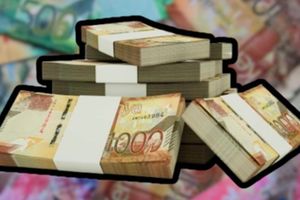
The Kenyan in me, naturally, wanted to know what the darn things cost. According to the article, each bearskin hat comes in at around Sterling £2,460. That is a whopping Sh425,000 for a single piece!
Knowing how our government spending is abused to line the pockets of the high and mighty, especially in the secretive area of military procurement, I naturally wondered what we spend on animal skin headgear.
I was comforted by the knowledge that we at least don’t import bearskin. A little further reading beyond the article at hand came out with an interesting fact: As freedom from colonial rule dawned in 1963, the incoming government of Prime Minister Jomo Kenyatta wanted something distinctive for the Independence Day parade, something that added a dash of local authenticity to the military traditions being inherited from the British.
While the parade planners were posing over the challenge posed by ol’ Jomo, his friend, Emperor Haile Sellasie of Ethiopia, came to the rescue with a donation of 200 colobus monkey skins. Seamstresses, furriers, hatters, or whoever, went to work, and our military got the headgear that carries so much more swag and colour, black and white fur swaying in the wind, than stiff bearskin.
We have colobus monkeys in our forests, now a highly endangered species, but hopefully sufficient for our needs.
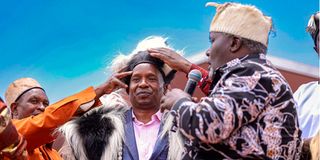
Incidentally, the skin is also highly priced for the ‘crowning’ of potentates in the Mt Kenya region.
The event took a rather comical turn when the colobus skin headgear fell off his head, knees creaking as he laboured to squat onto his stool.
The latter, an unashamed demagogue who almost exclusively pushes the Mt Kenya ‘murima’ political agenda, has consistently been condemned as a tribalist by President William Ruto and the choir that echoes his every word.
His main crime has been the seizure of Mt Kenya political loyalties and corralling of the community into opposition.
On the other side has been Prof Kindiki, resisting his predecessor’s incursions and fighting to retain the region’s support for Dr Ruto.
The weekend colobus monkey skin installation was just the latest instalment in the fight for the non-existent post of Mt Kenya political kingpin; a duel for tribal leadership that cannot have one a lesser tribalist!
Mr Gaitho, an independent journalist, is former NMG Managing Editor for Special Projects. [email protected] .