This week, again, the world really felt on edge. Europe and the broader international community is once again questioning whether the rule‑based order which has existed and long taken for granted, can still hold. Yet, amid this unease, something remarkable happened: the High Seas Treaty quietly came into force.
After nearly two decades of negotiation, the world finally agreed on a legally binding framework to protect marine biodiversity in the vast ocean spaces that lie beyond national jurisdiction. This seemed like a precious moment. A rare moment of global alignment at a time when alignment feels increasingly elusive.
I must admit I was looking for symbolism in this news because it matters right now. At a moment when many are questioning whether nations can still work together on anything of consequence, the High Seas Treaty offers a counter‑narrative: global cooperation, even if often painfully slow, remains capable of producing meaningful outcomes. It shows that when the stakes are planetary, cooperation can still triumph over fragmentation.
Before the High Seas Treaty, countries with ocean access around the world would not have been able to easily create protected ocean zones or regulate activities like deep-sea mining and fishing that happen in the huge areas of oceans that are beyond any nation’s borders and cover nearly half the planet. The result is overexploitation, habitat destruction, and loss of marine life with no unified rules to stop it.
Now, the treaty changes that by giving all countries a shared framework to set up marine protected areas, check environmental impacts before risky projects, and fairly share benefits from ocean discoveries, like new medicines from deep-sea organisms.
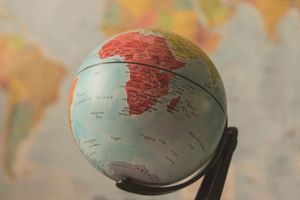
For Africa, the treaty’s entry into force is a clear opportunity to reshape the continent’s relationship with the global ocean economy. African states have long argued that the benefits of marine genetic resources, many of which are used in pharmaceuticals, biotechnology, and other high‑value industries, must be shared more equitably. The treaty establishes a mechanism to do so and commits the international community to support capacity-building and technology transfer, enabling African nations to fully participate in ocean science, conservation, and sustainable economic development.
This Treaty also embeds fairness into global rules, strengthens Africa’s voice in decisions affecting nearly half the planet, aligns with the continent’s call for a more just international system, and affirms Africa not just as a stakeholder in ocean governance, but as a leader shaping its future.
At a time when the international order feels fragile, the High Seas Treaty reminds us that cooperation remains possible, powerful, and essential. It is a modest yet meaningful win for multilateralism, showing that even in turbulent times, the world can choose collective action over division.
For Kenya, this moment feels particularly special. Kenya will make history as the first African nation to host the Our Ocean Conference (OOC) by hosting the 11th edition from June 16-18 in Kilifi and Mombasa. It is a milestone that reflects Kenya’s leadership on ocean governance, but also Africa’s rising voice in shaping the future of our shared planet.
The OOC has served as a global platform for governments, civil society, the private sector, and the scientific community to unite and confront the escalating crises facing our oceans. Each conference has pushed the world toward more ambitious, action‑based commitments. The most recent gathering, held in Busan, South Korea in April 2025, spotlighted digital innovation and new pledges for ocean action, underscoring how rapidly the global ocean agenda is evolving.
Under the theme “Our Ocean, Our Heritage, Our Future” we should rally to support it and invest in it’s success. We have have an opportunity, and maybe even a responsibility, to rally behind the conference and claim our place in shaping the future of the world’s oceans. Moments like this do not come often. At a time when global cooperation feels strained, the OOC offers a living example that nations can still come together with purpose, humility, and shared ambition.
Let’s be intentional about every opportunity to showcase African ingenuity, elevate African priorities, and prove that regional leadership can shape global destiny. This is our moment to step forward with confidence. I hope our government will seize it for the Our Oceans Conference, broadcast it widely, bring local communities into the heart of it, celebrate the excellence of coastal identity & culture, and turn the conference into a vibrant, national celebration of our oceans and all they make possible. We must begin to celebrate, loudly and unapologetically, what is working, or risk being paralysed by the weight of what is not. Kenya’s hosting of the OOC must be an invitation to lean into hope, honour progress, and to remind the world that Africa is not waiting to be included. Africa is leading.
Ms Mathai is the MD for Africa & Global Partnerships at the World Resources Institute and Chair of the Wangari Maathai Foundation