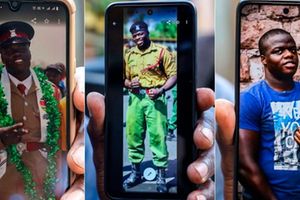
The issue of forged documents has become part and parcel of the social fabric in Kenya. The National Police Service is examining remarks by nominated Senator Karen Nyamu, in which she claimed to have helped a supporter forge a Form Four certificate to secure recruitment in the police service.
The police said that they have come across a video of a recent interview in which the politician claims she was aware of a supporter who used a fake certificate in an attempt to join the police service. The police service termed the remarks as “regrettable” and “unacceptable”.
Kenyans with integrity could not believe their ears when they heard a legislator making such remarks. This incident encapsulates the problems facing the country as a result of fraud.
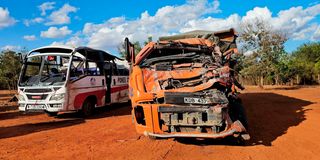
Every day on our roads, Kenyans are losing their lives to road accidents. Instead of the National Transport and Safety Authority chasing after its tail, I think it is high time that the agency began looking at forged driving licences and corruption as key causes of road carnage in addition to human error and poor roads.
A competent, well-trained and conscientious motorist can drive on any road and in any weather. But an incompetent driver with a fake driving licence is a moving Grim Reaper.
If we can have leaders admitting that jobs can be obtained using fake documents, then what will prevent the acquisition of fake driving licences, or any other important documents for that matter?
The problem here is that people like copying bad habits, with the hope that they can get away with it. Consequently, faking documents trickles down from leaders to the voters.
There are many reasons why Kenyans would be inspired to go for fake documents, such as driving licences or obtaining one without going to driving lessons.
Firstly, to save money; secondly, unaffordability; and thirdly, it is just impunity. Some Kenyans can decide to take a shortcut in obtaining licences before training just because they can.
This is a big problem with wealthy Kenyans and relatives of the powerful. They believe that they are above the law. Public Service Vehicles such as long-distance buses and matatus are a magnet for potential drivers with fake licences. It is the easiest way to find employment, and such drivers believe that a short training is enough to drive buses that transport hundreds of passengers.
The other issue that needs to be considered, aside from proper training, is the health of drivers. How many drivers in Kenya have illnesses that would put passengers in danger? These may include epilepsy, heart disease and degenerative eye problems in older drivers.
Essentially, the current training syllabus for drivers in Kenya needs to change and adapt to new and emerging challenges.
While incriminations of motorists fly about, the government has largely gone unscathed. However, given the level of corruption and lack of transparency when it comes to infrastructure development, the government must surely take the largest blame.
Good road networks that are well lit and have signposts play a pivotal role in keeping motorists and passengers safe. But most roads in Kenya, including the artery routes into major towns, are littered with potholes, are poorly marked and lack sign posts.
Travelling at night is taking your life into your own hands, as potholes are not visible in the dark since lighting does not exist on many roads to show drivers where they are going. Motorists must rely on other cars for lighting at night, and if drivers use the wrong or poor light or have no lights at all, this leads to collisions that happen mostly at night.
A recent report that contracts on Private and Public Infrastructure are kept secret from the taxpayers highlights perhaps the lengths officials go to commit corruption. There is no reason why the public cannot access contracts for infrastructure if it is their money being spent to build them.
Whether World Bank or IMF loans are involved or not, the public would still be expected to repay the loans. Therefore, as stakeholders, Kenyans have every right to know how every shilling is spent on roads and other public infrastructure. Good roads are fundamental when it comes to road safety.
Kenyans spend most of their lives escaping potholes either on foot or in cars and motor bikes. In other scenarios, vehicles could be stuck for days in areas where proper roads are non-exist. For farmers and hauliers, this is a huge loss and, consequently, affects the national economy.
It is time to go back to the drawing board on driver training and issuance of driving licences. Untrained drivers and those with fake driving licences are a danger to other road users. Above all, corruption in infrastructure development needs to be curbed.