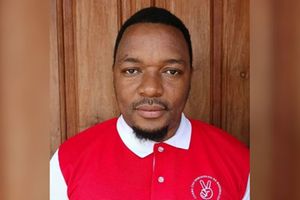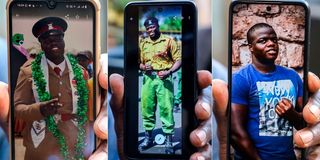
A relative displays pictures of Raphael Ojiambo at the family's home in Kariobangi, Nairobi on October 28, 2026. Ojiambo was allegedly killed by a fellow police officer at Wikithuku Border Patrol Unit Training Camp in Tseikuru, Kitui County.

Raphael Ojiambo Smart had not yet received his first salary when he was shot dead by a fellow constable at a police training camp in Tseikuru last week.
His family had to divert considerable energy from mourning to establish what happened after an initial police account suggested suicide. The pathologist’s assessment of Ojiambo’s gunshot wound demolished the suicide theory.
Disinformation is a menace to society, but more so when it is perpetuated by institutions in which public trust is supposed to repose. The police habit of labelling suspicious deaths as suicides is often the first whiff of a cover-up, a suspicion that is only matched in notoriety by the introduction of a sex angle.
In many cases, police readily acknowledge that the circumstances of death are unknown and investigations are continuing. A premature but seemingly conclusive explanation can stigmatise the dead, make a family’s grief heavier, and divert attention from other possible explanations. It can also shield whoever may have been responsible, whether or not the police were involved.
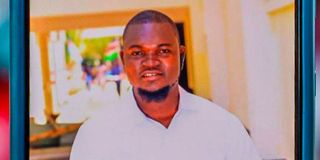
A photo of teacher and blogger Albert Ojwang, who died while in police custody.
Albert Ojwang’s death in police custody last year provides a memorable illustration. Police initially said he had repeatedly hit his head against a cell wall before being taken to Mbagathi Hospital, where he was pronounced dead. A post-mortem examination found head injuries, neck compression and multiple bruises consistent with assault.
The Independent Policing Oversight Authority (Ipoa) established that Ojwang had died inside Central Police Station, not at the hospital. Inspector-General Douglas Kanja subsequently apologised for the misinformation. But why was it necessary or even excusable to put out that falsehood and what were the consequences for those responsible?
Nobody expects the police to know everything immediately. Police can acknowledge what they do not know.
The killing of Rex Masai during the June 2024 protests raised questions about the integrity of police records. At an inquest into his death, officers testified to irregularities in the firearms movement register, including altered entries and instances of officers signing for weapons they had not personally collected.
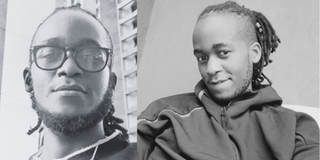
A Reuters investigation into deaths during Kenya’s 2024 protests found discrepancies between police morgue records and post-mortem findings. Charles Owino and Shaquille Obienge were recorded as accident victims, although post-mortem examinations found gunshot wounds. Other deaths were recorded as “mob justice” or drowning — despite evidence and witness accounts contradicting those classifications. Such descriptions, it was found, were sometimes used to conceal deaths caused by police.
Kenya’s history is replete with examples of official accounts that do not stand up under scrutiny. When JM Kariuki disappeared in March 1975, then Vice President Daniel arap Moi told Parliament, relying on police reports that the Nyandarua North MP was in Zambia. His mutilated body was eventually found in Ngong Forest.
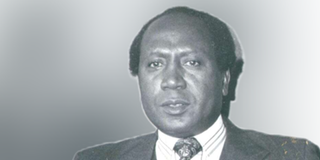
Former Minister of Foreign Affairs the late Dr Robert Ouko.
Investigations would later implicate very senior police leadership. In February 1990, Foreign Affairs minister Robert Ouko was found dead near Got Alila Hill, his leg broken, body burned and with a gunshot wound. Early suggestions of suicide were challenged by the circumstances of his death and subsequent inquiries. Again security officials were heavily implicated.
Bereaved families who doubt the official account must raise money for an independent pathologist, a second post-mortem, lawyers and other experts. They must pursue records, find witnesses and press for investigations that ought not to depend on their ability to pay. The state has investigators, forensic facilities and access to the scene, paid for by the public purse, yet families end up financing the process through which the state is challenged.
Where police accounts of deaths are contradicted by forensic evidence or subsequent investigations, accountability should follow — especially for the falsehood. The Internal Affairs Unit has a role in examining how the initial account was formed, who authorised its release and whether officers acted negligently or deliberately misled the public. Ipoa also has a mandate to investigate police conduct. The public might get to know only that an account was wrong, but will hardly be told how it came to be issued and whether anyone knowingly misled it.
Perpetuate criminality
Cover-ups perpetuate criminality, but there is also an ethical question in issue. Police investigations depend on public confidence. When an official account falls apart, the next one is harder to believe, even when it is accurate. Granted, police officers routinely encounter difficult scenes after road crashes, murder, domestic violence and the distress of bereaved families, which can desensitise them. Officers cannot be expected to respond to every scene as a bereaved relative would, but professional distance is no excuse for indifference or bare-faced lying.
The Maraga Taskforce found that, in some instances, officers had to transport dead bodies in vehicles also needed for routine police operations. It also found that initial training contained only a small component on human rights, continuing training was haphazard and psychological support was inadequate for a service of more than 100,000 people.
Raphael Ojiambo’s family should not have to spend money to discover the truth about his death or defend his name against an account unsupported by evidence. The official investigation should establish what happened at Tseikuru and who was responsible, but more importantly, deliver for accountability for the first instance of disinformation.
Follow our WhatsApp channel for breaking news updates and more stories like this.
The writer is a board member of the Kenya Human Rights Commission and writes in his individual capacity. @kwamchetsi; [email protected]