Only 65 public primary schools out of 21,000 are headed by people aged below 35 years, raising questions about the opportunities available to young teachers to rise to leadership positions.
National Gender and Equality Commission chief executive officer Dr Purity Ngina said the figure was disproportionately low given that young teachers account for 32.5 per cent of the teaching workforce.
Speaking during a presentation on gender-responsive leadership for equitable and inclusive schools at the 2026 Kenya Comprehensive School Heads Association (KECSHA) annual conference in Mombasa, Dr Ngina said the findings were contained in an equality audit of the teaching workforce conducted by the commission.
“Only 65. You can count them one by one, up to 65. Those are the only schools led by young people,” she said.
Dr Ngina questioned why young teachers were not being given opportunities to take up leadership responsibilities despite having the capacity to manage schools.
“And that explains why young people are not happy with us because they know they have the capacity and capability to lead,” she said.
The NGEC chief executive said the situation raised concerns about the progression of young teachers into management positions, particularly at a time when a significant proportion of the teaching workforce is made up of younger professionals.
She challenged education stakeholders to reconsider the barriers that could be preventing younger teachers from accessing leadership positions.
National Gender and Equality Commission chief executive officer Dr Purity Ngina.
“I have heard stories of some of you who have said, ‘I became a head teacher when I was 30.’ So why are we not giving young people the responsibility to lead?” she posed.
The findings point to a gap between the number of young people working in the teaching profession and those entrusted with managing public primary schools.
While 32.5 per cent of teachers are aged between 18 and 34, the number of young people heading primary schools remains low, according to the commission's audit.
The commission called for deliberate efforts to create leadership and career-development opportunities for younger teachers, including examining promotion practices that may limit their progression.
The audit recommends testing leadership and career-development programmes for young teachers and reviewing promotion criteria that could be disadvantaging them.
Dr Ngina said schools and education institutions should promote equal opportunities and create environments where all qualified teachers can contribute to leadership.
“We must promote equality, give girls and boys equal opportunities, protect learners and make schools safe from bullying,” she said.
The findings come amid ongoing discussions on the management of schools under the Competency-Based Education system, which has expanded the responsibilities of school administrators as institutions prepare learners for different education pathways.
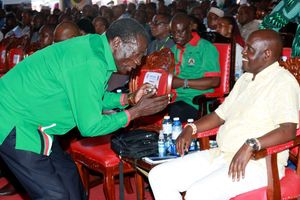
Head Teachers attending the Kenya Comprehensive School Heads Association (KECSHA) National Annual General Meeting in Mombasa on November 11, 2026.
Photo credit: Kevin Odit | Nation
The concerns come as the Teachers Service Commission (TSC) moves to address career progression challenges through a review of the 2018 Career Progression Guidelines, introducing two distinct pathways for teachers.
Acting TSC chief executive officer Dr Evaleen Mitei told the Kenya Comprehensive School Heads Association conference in Mombasa that the revised framework provides separate career paths for classroom teachers and school administrators, allowing teachers to advance without necessarily taking up management positions.
The reforms are expected to address career stagnation among teachers who have remained in the same job groups for years.
TSC boss revealed that the revised guidelines would allow teachers in both pathways to rise to the top of their respective career ladders, subject to set criteria and requirements.
“The reviewed CPG has provided for two distinct pathways for the teaching service; one for classroom teachers and one for school administrators. This means every teacher, be it in the classroom or the administrative cadre, can rise to the top of the ladder based on the set criteria and requirements,” said Dr Mitei.
Kenya National Union of Teachers (KNUT) secretary-general Collins Oyuu also called for greater recognition of younger teachers, saying their professional aspirations should be accommodated in the management and transformation of schools.
Mr Oyuu said younger teachers were increasingly seeking professional autonomy, recognition, participation in decision-making and opportunities to influence issues affecting their work.
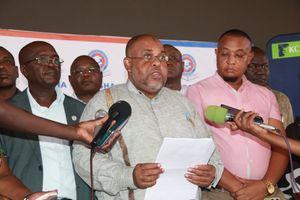
Head Teachers attending the Kenya Comprehensive School Heads Association (KECSHA) National Annual General Meeting in Mombasa in on November 9, 2026.
Photo credit: Kevin Odit | Nation
He said schools should create an environment where the experience of older teachers complements the creativity and technological skills of younger professionals, through mentorship, professional dialogue and innovation.
“The wisdom of experienced teachers should not be lost, while the creativity and technological competence of younger teachers should not be suppressed,” said Mr Oyuu.
Kenya recently employed young Gen Z teachers who dub themselves as moguls teaching Junior School. They have been pushing for reforms in the sector and the unions including KUPPET and KNUT. They have been using social media to agitate for their rights, some have even texted senior government officials.