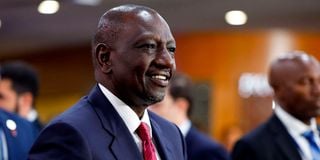
In New York, William Ruto stands beneath blue flags and talks about Haiti, “harassment, abductions, criminal acts” and how such things are “unacceptable and unjustifiable.”
He honours three fallen Kenyan officers by name: Samuel Tombei. Benedict Kabiru. Kennedy Nzumbi. It plays like a benediction.
Then cut to Kiambu: the Kabiru family is told, finally, officially, that Benedict is gone. Grief delivered after applause.
That timing isn’t a protocol hiccup. It’s a painting on the wall on precisely how things are. The state knows how to perform morality when the cameras are global and the room is polite, but struggles to do the same when the audience is Kenyan and the duty is plain. Haiti gets the podium; families back home get a phone call hours later, if they’re lucky.
Ruto’s UNGA pitch was clean, deliberate, and well-rehearsed. Kenya, he said, is stitching Port-au-Prince back together—schools reopened, hospitals secured, critical sites stabilised. He even scolded the UN’s back office and second-hand kit, warning the mission is limping at “40 per cent” strength.
The subtext was obvious: Kenya is carrying weight and the world must step up. In that room, it landed. But the script’s inconsistencies stray dangerously on the side of inhumane callousness. As the president told the world that Kabiru had fallen, Kenya’s Attorney-General stood in a Nairobi courtroom saying there was no official confirmation.
The family learned after the UN, after the entire stream had travelled across the entire world, to them. That’s contempt. It reduces the bereaved to props, useful for a moment and disposable once the microphones cool.
Back home, the “gangs” come with state shadows. Since mid-2024, rights groups have tracked a wave of abductions of activists and critics: young people lifted in daylight, thrown into unmarked cars, families walking station to station with photos and prayers. The denials are loud. The pattern of deceit, however, is louder.
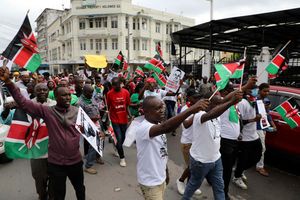
When young people returned to the streets in June 2025, carrying the grief of last year and the fresh anger over teacher-blogger Albert Ojwang’s cold murder, the response was familiar: sirens, shots, statements.
Amnesty counted bodies. The human rights commission counted even more. We debate numbers like they’re theory, while parents organise funerals.
This is what “public order” means to Ruto, when not in New York. We’re told the problem is “a few rogue cops,” yet cameras fail, documents vanish, and families learn to parse autopsies like legal briefs. New York gets the moral sermon. Nairobi gets a shrug and a backlog.
We queue for basic services at home while underwriting order abroad. What kind of State chooses international clout over domestic credibility?
Listen to the Office of the DPP’s favourite word: expedite. Expedite this. Expedite that. A lullaby of urgency that never resolves. If abductions are “unacceptable and unjustifiable” in Haiti, why do they live forever “under investigation” here? It isn’t a double standard by accident. It’s the operating system: condemn what’s convenient, delay what’s costly.
A leader who can thunder for foreign cameras but can’t guarantee his own citizens won’t be snatched on their commute. Every unmarked van is a sermon. Every funeral is a referendum. Eventually, people stop listening to speeches and start counting their dead. And every count is a simultaneous countdown for when consequences shall eventually be served.
Even the Haiti mission’s own triumphal note can’t hide its limp. Forty percent capacity. Faulty kit. Families informed after the world.
You can’t outsource moral clarity to Manhattan. You earn it in Mathare, you earn it in Kisumu, in Nakuru, in Eldoret, in Mombasa, in Nanyuki. You earn it by halting the abductions and charging accountability up the chain—not just the convenient constables who can be traded for headlines.
So what now? This regime won’t develop a conscience out of nowhere, so we must impose good behaviour on them. Don’t be quiet. Pack court galleries until silence is uncomfortable. File petitions. Demand dates.
Timelines from the ODPP. Timelines from the Inspector-General. Tie every foreign podium line to a domestic action: if the president can condemn Haitian kidnappings on Tuesday, he can end Kenyan abductions by Friday. If he can honour officers in New York, he can inform their families before the microphone warms.
It’s a doctrine change: no unmarked operations, body-cams that work, custody logs that survive daylight, supervisors whose promotions depend on the truth, public oversight, citizen board of Management, and prosecutors who remember their first duty is to the public, not to regime. And when a citizen dies in state custody, let the shame reverberate through the nation’s collective psyche.
Ruto says he wants the UN remade in Africa’s image. Fine. Start with Kenya’s mirror. Make abductions as “unacceptable and unjustifiable” on Wangari Maathai Road as they are on Delmas Road.
Make the lack of law and order as unacceptable in Nairobi CBD as you claim it to be in Port-au-Prince. Address Kenyans with the humble pleas you state in New York, not disdainful lectures about your PhDs. Earn the moral authority you keep renting abroad, otherwise, the robe is just a robe, and the emperor’s new clothes are still see-through.
Here’s the truth that won’t vanish into any unmarked van: Kenyans are done with theater. We don’t need a world tour. We need a government. End the fear, or the streets will end the silence. That’s the bargain of democracy. Consent isn’t permanent. It’s renewed. And right now, the renewal is overdue.