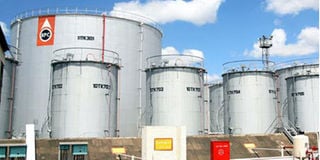
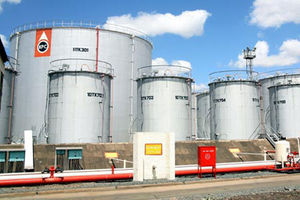
Big money is at stake in the procurement of transaction advisory services for the planned Kenya Pipeline Company (KPC) IPO. These deals are gold mines for consultants.
Take the recent major capital markets transaction—the Sh40 billion Talanta Stadium bond, where transaction advisers pocketed a staggering Sh667 million in fees. The arrangers pocketed Sh259 million, the legal firm Sh77 million.
Or go back to the 2007 Safaricom IPO — the mother of all capital market transactions — where the leading receiving bank paid Sh1.8 billion to advisers from proceeds of the IPO. The National Treasury paid a further Sh609 million to its advisers. That deal drew a record 866,574 applicants.
It’s little wonder that stockbrokers, investment banks, and corporate law firms are waiting with bated breath for the outcome of evaluations for the KPC IPO. From what I gather, a five-member evaluation team has already been quietly empanelled by the Privatisation Commission to assess bids.
Behind the scenes, the legal and financial advisory tenders have turned into a turf war between investment bankers and top-tier law firms, each lobbying hard for a slice of what could easily be hundreds of millions in fees.
The commission faces a delicate balancing act: ensuring transparency and value for money while avoiding the perception that privatisation is becoming a private feast for a well-connected few.
One major flaw stands out. The commission has chosen to break with international best practice by splitting the tender into four separate lots — legal, financial, accounting, and public relations — each procured through a separate process.
In successful privatisations globally, governments appoint an integrated advisory consortium led by a financial adviser or investment bank, supported by legal, accounting, and communications specialists working under a single contract and unified timetable.
Fragmenting the process creates confusion. Each firm operates under different terms of reference, timelines, and deliverables. Coordination becomes a nightmare. Accountability blurs. The government ends up managing competing contractors rather than one cohesive team.
In a transaction as complex as a public listing — where valuation, investor communication, and regulatory approvals must move in lockstep — this siloed approach is not just inefficient; it poses real risks.
The tender timeline has also raised eyebrows. For example, the legal advisory tender was advertised on October 10, with submissions due by October 21 — just 12 days.
Top corporate lawyers say that’s far too short to assemble a qualified team, conduct conflict checks, and prepare a credible proposal. The result? A thin field of bidders dominated by incumbents or insiders already privy to the process. Such compressed timelines undermine fair competition and fuel perceptions of pre-selection and procedural unfairness — the very issues that have derailed past privatisations.
The commission also appears to be using procurement templates designed for ordinary supply contracts — for goods like stationery, carpets, and tyres — to govern high-value professional services.
The tender disallows electronic submission, demands bid bonds, and threatens automatic disqualification for minor binding or pagination errors. These requirements are entirely unsuited to complex advisory work.
Top law and investment firms — especially international ones — rely on digital submission systems and professional indemnity insurance, not bid securities. By applying outdated rules, the commission risks locking out credible bidders and rewarding those skilled at paperwork, not performance.
Then there are the qualification criteria. Bidders must provide reference letters from three major IPOs or rights issues — an impossible task in a market that hasn’t seen a major IPO in more than a decade.
Even more puzzling is the demand for recent bank statements to prove “financial stability.” Globally, professional firms demonstrate their financial soundness through audited accounts and professional indemnity cover, not the balance in their current account.
The stakes are enormous. A single aggrieved bidder could file for an injunction or administrative review, freezing the entire privatisation process. That would be disastrous, given that the proceeds from the KPC IPO have already been factored into this financial year’s budget.
Handled well, the KPC IPO could restore confidence in the Nairobi Securities Exchange, attract private capital, and demonstrate that Kenya can execute large-scale deals with integrity and professionalism.
Mishandled, it will deepen investor cynicism, tarnish institutional credibility, and stall the privatisation pipeline for years.
The Privatisation Commission must get this one right. Kenya’s capital markets have gone for more than a decade without a major public listing. Investors are watching closely — not just for the size of the deal, but for how the government manages it.
If transparency and fair competition prevail, the KPC IPO could mark the rebirth of Kenya’s privatisation programme. If not, it will simply confirm what too many already believe — that public offerings in Kenya have become private feasts for a privileged few.
Treasury must therefore cancel the current lot-based approach and re-issue a consolidated RFP for a unified transaction advisory consortium. If this is not done, the process will tie itself in bureaucratic knots.