On the second floor of the Elimu Resource Centre building in Malindi, Kilifi County, the visitor-welcoming scene is a bustling hub of sustainable innovation, humming with the rhythmic sounds of sewing machines and vibrant collaboration.
On one afternoon, the spacious, sunlit workshop is alive with tailors, designers, and artisans working together to transform heaps of textile waste into high-value fashion and homeware.
In a corner, a group of young men and women are busy sorting out sacks of discarded denim, factory or tailors’ offcuts and dead-stock fabrics and scraps, organising them by texture and colour.
On another table, pattern-makers are spotted sketching out new life for the old garments, mapping out how to slice damaged trench coats into modern utility vests.
Here, rows of industrial sewing machines could be heard humming as tailors expertly patch, resize, and reconstruct garments.
Ruth Anyango Okinyo, the co-founder of Eco-Fashion Week Africa, says they had to come up with the upcycling concept two years ago. Upcycling is the process of transforming waste materials, useless items or unwanted products into new materials or objects of higher quality, value or environmental utility. In the textile waste industry, upcycling is the transformation of discarded clothing, leftover fabric and factory scraps into new, higher-value products without breaking down original fibres.
Eco-Fashion Week Africa co-founders Pamela Kageni(left) and Ruth Anyango Okinyo, who is also the Kilifi County coordinator at the Centre of Vocational Expertise by Commundo Project, display items made from discarded textile waste on September 7.
Photo credit: Kalume Kazungu| Nation Media Group
Ruth’s group of young female and male innovators has been going around towns within Malindi and its environs to collect discarded textile waste, fabric offcuts and scraps and bring them to their Elimu Resource Centre building. They then undertake value addition by stitching and turning them into beautiful, high-value products or treasures.
Items that her group produces through upcycling include tote bags, laptop sleeve bags, makeup bags, dresses, skirts, tops, pillows and pillow cases, accessories and interior décor. Their prices range from Sh350 to Sh7,500. Ruth says in a day, they make an average of Sh2,500, while in a good month, they make up to Sh200,000.
The idea has today created meaningful employment for the once jobless young women and men in Malindi and its environs.
“Upcycling is work that we’ve been dedicated to for the past two years at this particular workshop. Our goal has always been to rethink what the industry throws away, effectively turning what others call trash into absolute treasure,” Ruth says.
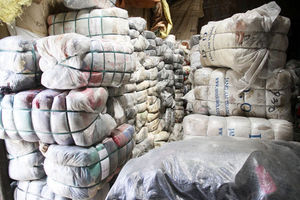
Their major source of upcycled textile waste within Malindi is the bustling Alaskan second-hand clothing market. They also receive discarded fabrics collected from local tailoring and garment-making shops within the town.
“We usually coordinate the collection and ferrying of the textile waste at various points within Malindi and Kilifi. Sometimes we personally do the collection. In these mitumba selling grounds like the famous Alaskan market, we’ve deployed our point men and women who search for the unsold or discarded garments that would otherwise end up in municipal dumps or landfills.
“We also use the local tailors, students and other young girls interested in hands-on learning to collect the excess and discarded fabric offcuts gathered directly from the local tailoring workshops and bring them to the tour centre ready for upcycling. The concept has proved to be a good avenue for job creation,” Ruth said.
Pamela Kageni, the Kilifi County coordinator at the Centre of Vocational Expertise by Commundo Project, an initiative meant to upgrade practical skills training for local youth, cites upcycling as an excellent, highly practical solution to address skills training shortages and unemployment in the Coast region and Kenya at large.
Eco-Fashion Week Africa co-founders Pamela Kageni(left) and Ruth Anyango Okinyo, who is also the Kilifi County coordinator at the Centre of Vocational Expertise by Commundo Project, display items made from discarded textile waste on September 7.
Photo credit: Kalume Kazungu| Nation Media Group
Pamela, who doubles as the Eco Fashion and Climate Change advocate, stressed that by transforming waste materials into high-value products, communities can create sustainable economic opportunities while addressing environmental challenges.
“I am happy to be part and parcel of this upcycling concept here in Malindi, Kilifi. Apart from generating income, our idea is crucial in fixing fashion’s waste, a major global crisis continuing to harm the environment, polluting ecosystems and overwhelming local communities today,” Pamela said.
The fashion industry as a whole is responsible for eight to 10 per cent of global carbon emissions annually more than international aviation and maritime shipping combined, according to the Ellen MacArthur Foundation.
Pamela pleaded with Kenyans of goodwill to join hands in embracing innovation such as upcycling to empower young people through job creation and tackle the problem of climate change. She reiterated that through upcycling, her group in Malindi has been able to elevate worthless scraps into premium products.
“We’ve replaced broken zippers and lining worn collars and ensured we restore their market value. Here, discarded cotton T-shirts are shredded and woven into high-end structural tote bags. Old denim jeans are patchworked into bespoke jackets, skirts and other items that we sell to boutique retailers and general clients, hence generating income,” she said.
Eco-Fashion Week Africa co-founders Ruth Anyango Okinyo (left) and Pamela Kageni, who is also the Kilifi County coordinator at the Centre of Vocational Expertise by Commundo Project, display items made from discarded textile waste on September 7.
Photo credit: Kalume Kazungu| Nation Media Group
Climate analyst Mohamed Dirie noted that the growth of fast fashion and the rising global trade in mitumba clothing have contributed significantly to textile waste generation, creating environmental challenges in developed and developing economies.
Mohamed, who serves as the Lamu County Climate Change Chief Officer, said that around the world, textile and garment factories produce massive amounts of clothing. With that production, however, comes waste: offcuts, defective pieces, and unused fabric that often go unaccounted for.
“The issue of post-industrial textile waste remains largely ignored. I am happy organisations, such as the Malindi youth group, have started paying some attention to what happens after consumers discard their clothes by undertaking upcycling,” he said.
He expressed optimism that creative ways such as upcycling are effective in tackling Kenya’s growing waste crisis. “By transforming discarded materials into products of higher value or quality, it directly prevents waste from reaching overburdened dumping grounds or landfills,” he said.
An observation by the Nation at the Eco Fashion Week Africa workshop in Malindi established that even the smallest fabric scraps brought for upcycling are saved, sorted by material, and stuffed into eco-friendly insulation or artistic upholstery.
For the likes of Ruth and Pamela, their happiness is that by the end of the day, whatever arrives at their workshop located within the Elimu Resource Centre building as garbage, leaves the second floor as a curated collection of sustainable luxury.
“Nothing goes to waste here. This has proved beyond doubt that with creativity and skill, circular fashion can turn environmental waste into economic wealth,” Ruth said.