Pending lawsuits and unresolved compensation claims will gobble up at least Sh10.7 billion of the proceeds from the privatisation of the Kenya Pipeline Company (KPC) Limited through the Initial Public Offer (IPO), as per the policy resolutions adopted by MPs.
This, even as a section of MPs warned that the payoff will likely benefit shadowy lawyers “out to reap the public coffers dry.”
The policy resolution details of the cost liabilities of KPC are contained in Sessional Paper No. 2 of 2025, adopted by the National Assembly on October 1, 2025, in which the government targets to raise Sh100 billion through the IPO for budgetary support for the 2025/26 financial year.
The proceeds from the sale have been ring-fenced for utilisation in either development expenditure, pending bills or liability management.
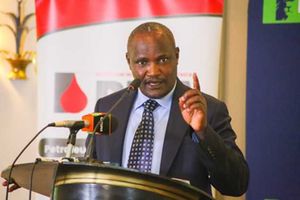
Cabinet Secretary for the National Treasury and Economic Planning John Mbadi before a parliamentary committee on August 11, 2025.
Photo credit: Dennis Onsongo | Nation Media Group
Other than the KPC liabilities, Sh100 million has been set as the cost of procuring a transactional advisor to oversee the transaction, to be done competitively, “and should not deviate from reasonable market rates and approval from the National Treasury should be sought before any increase.”
“The Privatisation Commission ensures that all liabilities-debt and credit and risks affecting the valuation of KPC are comprehensively assessed, transparently disclosed, and factored into the transaction valuation before proceeding with the IPO,” reads the sessional paper’s policy resolutions.
Of the liability costs, pending lawsuits account for Sh5.75 billion, unresolved compensation claims of Sh3.8 billion to residents of Makueni County due to historical grievances linked to pipeline operations and loss of approximately Sh400 million in the Mzima pipeline project due to stalled execution and procurement lapses.
Others include a garnishee order of Sh485 million in favour of M/s Zakhem International following contractual disputes over the Line V enhancement project and the potential loss of public funds amounting to Sh192.6 million after M/s Asharami Synergy took over the LPG facility despite prior investment by KPC.
However, a section of MPs led by Kitui Central MP Makali Mulu have opposed the KPC privatisation, saying it is being rushed for “selfish individual gain”.
“The privatisation is not meant for public interest but personal interests for a few individuals,” said Dr Mulu, with his Kigumo colleague Joseph Munyoro also weighing in.
“It’s Kenyans who will suffer if KPC is sold, as it will place the control of oil prices in the hands of a private monopoly,” said Mr Munyoro, adding, “Shadowy figures have been lined up to benefit in the planned questionable payments.”
KPC is a strategic State corporation of critical national and regional significance, fully owned by the government of Kenya and serving as the backbone for petroleum transportation and storage in Kenya and neighbouring countries.
The government intends to privatise the critical installation with an undertaking to invest the proceeds towards partial plugging of the Sh870 billion deficit in the Sh4.2 trillion budget for the 2025/26 financial year.
The proposed IPO will see the government retain not less than 35 percent, although a section of MPs have opposed the privatisation, warning that it will entrench the oil monopoly in private hands despite being a national security installation.
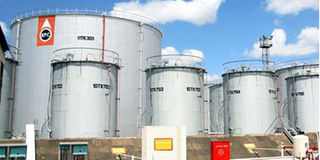
KPC transports, stores, and dispenses petroleum products for Kenya and neighbouring countries using a network of pipelines, depots and loading facilities.
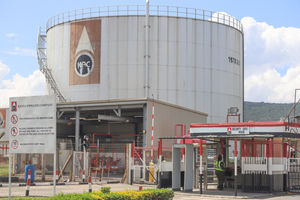
Kenya Pipeline Company (KPC) deport in Nakuru on November 22, 2024.
Photo credit: File | Nation Media Group
Established in 1973 as a State corporation, KPC provides an efficient, safe and cost-effective way to move fuel from Mombasa to the hinterland, significantly reducing reliance on roads and rail.
To prevent the emergence of a monopoly and safeguard competition, the sessional paper proposes that the privatisation be structured to limit the mandate of KPC to transporting and storing petroleum products.
It also guarantees that the company shall not venture into the importation or sale of petroleum products without prior approval from the Competition Authority of Kenya (CAK), the Energy and Petroleum Regulatory Authority (EPRA) and the National Assembly.
The sessional paper provides that the ownership limits for stakeholders shall be such that the Privatisation Commission “shall take steps to safeguard against excessive concentration of shares in a single entity or related parties.”
“This shall be done by setting a maximum ownership limit for any one shareholder to help preserve broad-based ownership, promote market competitiveness and protect national and energy security interests,” the policy resolutions read.
The Privatisation Commission is also mandated to ensure that the employees of KPC are included in an Employee Share Ownership Plan (ESOP).
The eligibility of investors shall be such that the Privatisation Commission will be required to implement a minimum level for participation by Kenyan citizens while ensuring broad local ownership from all walks of life.
The document states that this shall include “in as far as possible, the youth, women, persons with disabilities and that the process is aligned with national economic empowerment objectives in accordance with the privatisation law.”
The Office of the Auditor-General (OAG) is also required to undertake a post audit process to “ensure value for money and submit a report to the National Assembly within six months of completing the privatization processes.”
The MPs resolved that a “clear statement” be included in the prospectus on how Kenya Petroleum Refineries Limited (KPRL), a subsidiary of KPC, has been financially evaluated and factored into the valuation of KPC.
The MPs also adopted a resolution that the Privatisation Commission ensure that the valuation of the KPC is contained in the prospectus and publish a separate citizen-friendly IPO valuation report that should be produced and publicised for the general public.
The Privatisation Commission is also mandated to undertake a valuation of the actual financial and asset position of the KPC and submit a report to the National Assembly, taking into account the future potential of the business in compliance with the Privatisation Act of 2005.