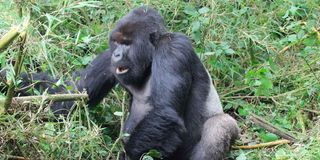
Silverbacks, large males with ridiculously developed chests, a saddlebag of white hair on their backs and as large as 180kg, are the biggest gorillas.
Gorillas are the largest primate species on our planet. Silverbacks, large males with ridiculously developed chests, a saddlebag of white hair on their backs and as large as 180kg, are the biggest gorillas. They are the leaders of their families, they call the shots and lead the defence of the rest of the group.
I saw a social media wildlife video of gorillas defending themselves against a full-grown lion male in his prime. The lion tore into a group of defenceless females and young gorillas, but before he could strike, he was confronted by a silverback in full glory on two legs. They locked forelegs, fangs bared. The gorilla threw back the lion and as they moved forward to engage again, scores of smaller gorilla males surrounded the lion, ready to tear it to pieces as soon as it locked arms with their leader. The lion took off in a great hurry. The gorillas had solid, fearless leadership from the silverback, the other males had discipline, strategy and trust in their silverback. The family was invincible.
When the silverback died, the family had a couple of viable males, but they were yet to grow the hair, earn the respect of the other males and develop the experience and strength to confront lions with the easy confidence of their former leader. So the family ended in the unenviable position of being led by a bald male who had lost his saddleback of white to age, well past its prime and which, though it may have the experience of battle and strategic cunning, it does not have the strength, speed and the fearsome presence to scare off lions or inspire lesser males to follow it into combat.
The old silverback, because of its strength, experience and the terror it inspired in the troop and outside, was able to project protection within and outside the family. Thus, you would find perhaps a baboon from far playfully swinging from the large forearms of the silverback or shyly disappearing into his armpit at the sight of a threat. Or a naughty colobus monkey, its flywhisk tail unfurling like a balloon as it sailed in the air, branch to branch, but never too far from the leader. The family became a home not just for gorillas, but also for other species of primate.
Cynical alliance with the gorillas
Without the great leader, things have dramatically changed in the family; there is no defence. The lion and its pride are too much in the gorilla’s business, once in a while making off with a member for an afternoon snack. The cats now even have a say in primate affairs. Internally, differences are manifesting and magnifying.
Without the authority of the fallen champion, gorillas are freelancing. Those who are different are no longer so comfortable and accepted. The baboon stands out as starkly and garishly as its red coloured testicles, carelessly located practically on its back. Members are annoyed, jealous and resentful of the strong smell of their former leader on its fur, many want to tear its head off.
When the lions were in danger of being run out of their pride lands by a rival group, they sought a cynical alliance with the gorillas. The fallen gorilla leader agreed to help, knowing it was a temporary arrangement but seeing its strategic value: a break from constant lion harassment and an opportunity to learn the ways of the lions to better prepare for future conflict. He made a deal out of strength, with few expectations but certain that he was getting more than he was giving and even that which he gave brought benefits to the family.
After the death of the gorilla king, the new leader agreed to a continuation of the arrangement, but it was a peace made from a state of weakness. Hoping to use the truce to protect the family from lion attacks and get space to restore peace within, he led a small delegation to the lion. Would the lions agree to a continuation of the peace and mutual security assurance?
Less experienced but stronger leader
The lion king, his huge belly filled to the brim with freshly killed migrating wildebeest, rolled playfully on his back, using a fearsome blood stained claw to pick a large chunk of meat from between his teeth and inch-long fang. “Sure,” he said mellifluously, suppressing a sly smile. He snapped his claw and fired the meat into the face of the shy baboon, hiding behind the leader. The little monkey yelped in fear and collapsed in a dramatic swoon.
As the gorillas trooped out, the look the lion gave them was not that of friendship, but of a king inspecting his larder. “Soon”, he told himself, “ the only thing left of you will be the baboon’s sun-dried testicles, because who would eat that? Yuck. And probably the cigar-stained teeth of the colobus monkey.”
The gorillas could save themselves by submitting to a younger, less experienced but stronger leader. But they had chosen the convenience of weakness—meekly offering their unprotected belly to a mortal enemy.
Mr Mathiu is NMG’s former Editorial Director. [email protected]