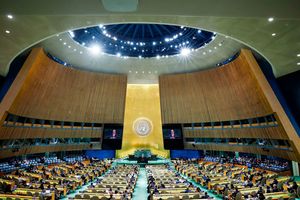
I leave the 81st United Nations General Assembly in New York with a stronger conviction that the global health environment is undergoing a fundamental transition.
Across conversations on health financing, pandemic preparedness, maternal and reproductive health, primary healthcare, technology and African health sovereignty, one issue repeatedly stood out: countries can no longer build health systems that depend on fragmented programmes and unpredictable external financing.
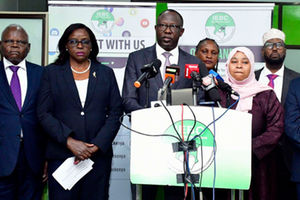
I spotted a significant government of Kenya presence during UNGA. However, the measure of success will not be how many meetings were held in New York, it will be whether those engagements help Kenya build a health system that works more consistently for people at home.
Development assistance is under pressure. Governments are carrying an increasing debt burden. Health systems are simultaneously expected to manage infectious diseases, maternal mortality, non-communicable diseases, climate-related health threats and the possibility of another pandemic. The international response is consequently shifting towards domestic resource mobilisation, sustainable financing, stronger national institutions and more deliberate engagement with private capital.
Shortly before UNGA, the Ministry of Health articulated an approach linking healthcare financing to domestic resource mobilisation, private investment and stronger national systems. It has also called for greater alignment between government, development partners and investors through a common plan, budget and monitoring framework. This is the right direction. However, sustainable financing should not simply mean finding new sources of money. It must also mean improving how existing resources are pooled, allocated, spent and accounted for.
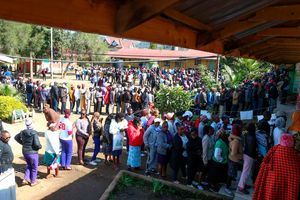
Kenya’s transition to the Social Health Authority represents a major restructuring of health financing. By August, the government reported that more than 32.3 million people had been registered in the new system. Registration, however, is not the same as Universal Health Coverage (UHC). People experience UHC through services. A person living with diabetes experiences it when medicines and diagnostics are consistently available. A family experiences it when an emergency does not become a financial catastrophe. We should therefore judge the success of UHC not only by enrolment numbers but by access, quality, continuity of care, financial protection and health outcomes.
At the UN High-Level Meeting on Pandemic Prevention, Preparedness and Response, governments returned repeatedly to the need for resilient and equitable health systems. The president of the General Assembly made an important point: preparedness cannot exist only as an emergency project activated when the next crisis arrives. It must be embedded within the health systems people use every day. Our investments in community health promoters, primary care networks, laboratories, surveillance, digital systems and preventive healthcare are therefore not peripheral components of UHC. They are fundamental national infrastructure.
UNGA also reinforced something I consider critical: women’s health cannot remain an additional programme within health systems. Maternal health, contraception, adolescent sexual and reproductive health, cervical cancer and other women’s health needs must be integrated into financing, workforce planning, primary healthcare, commodities, research and data systems.
We should be asking not simply how many women entered a facility, but whether they received the care they needed; whether they could make informed decisions about their health; whether essential commodities were available; whether referral systems functioned; and whether cost prevented them from continuing treatment.
Functioning health economy
There was another important conversation in New York: African health sovereignty. For Kenya, this means asking what parts of our health system we should increasingly be capable of producing, financing and managing ourselves. Local manufacturing of medicines and health technologies, research, digital infrastructure and workforce development should become part of the UHC conversation.
This presents an economic opportunity as much as a health opportunity. Health should not only consume public resources; a functioning health economy can create jobs, strengthen manufacturing, generate research and innovation, develop technology and reduce vulnerability to disruptions in global supply chains.
UNGA provides access to ideas, institutions, financing conversations and partnerships. Kenya was well represented in these spaces this year. If we implement it well, UHC will not simply determine how Kenyans pay for healthcare; it can determine how we finance prevention, strengthen communities, prepare for future health emergencies, protect women and children, build our health workforce, generate knowledge and gradually reduce our dependence on external health financing.
The challenge now is to convert international engagement into stronger institutions and, ultimately, better healthcare for every Kenyan.