If you want to fix the critical problems choking this country, you have to begin where the rot is protected: inside the rules the political class writes for itself.
We spend every waking hour arguing about why public hospitals lack basic drugs, why university funding is collapsing, and why the government is forever hunting for new ways to tax a salaried worker’s last shilling. Yet we rarely confront the plain truth sitting right in front of us. You cannot rescue an economy when the people running it have insulated themselves from every consequence of its failure.
Right now, two separate battles playing out in Nairobi expose that insulation better than any treasury report ever could: a fast-tracked High Court petition challenging the 2026 remuneration regulations, and a constitutional amendment push to stop outgoing governors from immediately vying for the Senate. On the surface, they look like unrelated legal disputes. In reality, they are twin pillars of the exact same racket.
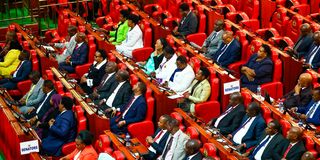
In a country where millions are hustling to survive on a few hundred shillings a day, our 416 legislators have turned representation into one of the most lucrative careers on earth. Stack an ordinary Kenyan MP’s basic gross pay of Sh739,600 alongside fixed monthly mileage allowances, car maintenance packages, committee sitting allowances, a Sh7.55 million car grant, and a Sh35 million subsidised mortgage, and the numbers stop making sense. Measured against what the average citizen earns, Kenyan lawmakers sit right near the top of the global pay pyramid.
That arrangement is now back in the dock. In October 2026, petitioner Eliud Karanja Matindi moved to the High Court seeking to suspend the Salaries and Remuneration Commission’s 2026 pay regulations — accusing the National Assembly of interfering with the independence of the very commission meant to regulate state officers' pay. With Katiba Institute and Transparency International Kenya joining the matter ahead of its November 25 mention, the case cuts straight to a glaring conflict of interest: lawmakers shaping the rules that govern their own pockets.
That extravagance does far more damage than simply bloating the public wage bill. When a parliamentary seat guarantees instant wealth and heavily subsidised real estate, elections cease to be a contest of ideas. They become a high-stakes investment scheme. Candidates sell land, take predatory loans, and spend tens of millions of shillings to get elected — and then spend the next five years recovering their capital at the taxpayer’s expense.
Slashing parliamentary perks is not about envy. It is about breaking the business model of Kenyan politics so public office attracts people who want to legislate, not tenderpreneurs looking for a return on investment. The revolving door between county headquarters and the Senate is the other half of the problem.
As 2027 approaches, several second-term governors who have spent a decade controlling multibillion-shilling county budgets are preparing to slide straight into Senate seats. Kirinyaga Senator Kamau Murango’s Constitution of Kenya (Amendment) Bill, 2026 which proposes amending Articles 99 and 193 to slap a five-year ban on ex-governors running for the Senate or county assemblies confronts an obvious constitutional absurdity. Under Article 96, the Senate exists to oversee counties: to summon governors, dissect Auditor-General reports, and flag stolen funds.
Allowing a governor to walk out of a county office on Tuesday and sit in the Senate on Wednesday is like letting a bank manager retire and immediately return as the external auditor reviewing his own vault. We have already seen former county bosses like Jackson Mandago and Ali Roba make that jump. How seriously can Kenyans take Senate oversight when former county executives sit on committees reviewing pending bills, ghost workers, and stalled projects whose paperwork still carries their own signatures?
Enforcing a five-year cooling-off period before ex-governors can seek Senate seats and cutting parliamentary pay down to reality are not peripheral reforms. They go straight to the heart of why Kenya struggles to move forward.
As long as politicians can shape rules that protect world-beating salaries while public services crumble, they will never feel the urgency to fix the economy. And as long as outgoing county bosses can use the Senate as a shield against scrutiny, devolution will continue to bleed billions without consequence.
Left to their own devices, politicians will never dismantle a system built for their comfort. That is why the petitions in court and the pressure from the public matter so much. If we are serious about rescuing this country, we must begin by stripping public office of its absurd privileges and slamming shut every escape route designed to protect those in power from the people they claim to serve.