After decades of pleas and protests, the government is set to expand the 23-kilometre Maai Mahiu escarpment highway, built by Italian prisoners of war in the 1940s, following years of complaints from motorists and members of the public.
The planned upgrade to a four-lane highway is expected to begin in January 2027, according to the Kenya National Highways Authority (KeNHA).
The expansion is expected to ease transport challenges that have persisted for decades, particularly traffic snarl-ups caused by trucks breaking down on the steep, rocky terrain, which is challenging for motorists to navigate.
President William Ruto said during the State of the Nation address in Parliament last Wednesday that approximately 7,000 kilometres of roads were under construction across the country, as his administration targets tarmacking 28,000 kilometres and dualling 2,500 kilometres of highways.
President William Ruto delivers the State of the Nation address at Parliament Buildings, Nairobi, on November 18, 2026.
Photo credit: Wilfred Nyangaresi | Nation Media Group
Dr Ruto said his administration was prioritising the Kamandura-Maai Mahiu-Naivasha road, which he had also announced three days earlier in Narok would be upgraded to a four-lane highway to ease decades of congestion.
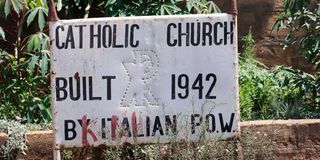
The road was constructed in the early 1940s by Italian prisoners of war, who also built a small church at the foot of the escarpment, on the outskirts of Maai Mahiu trading centre. The church has since become a major tourist attraction.
The highway, a key link between Nairobi, Western Kenya through the Rift Valley and neighbouring East African countries, will be expanded from the current two lanes to four.
In an update following inquiries by the Nation , KeNHA said the project sponsor had proposed to commence construction on the A8 South section in January 2027.
"The commencement schedule for the respective project sections will be implemented in accordance with the applicable project arrangements and approvals," KeNHA stated in a response from its corporate communications department.
On the implementation timelines, the authority said the project sponsor had prepared a construction schedule with defined timelines and committed to working towards achieving them.
"The sponsor is expected to monitor implementation progress and put in place appropriate mitigation measures to address any challenges that may arise and affect the planned schedule," KeNHA stated.
The authority said the detailed road designs were not yet available and would be released once finalised.
"The project design is still under development and reviewed by the Contracting Authority and the Project Sponsor. The available design is at preliminary stages and may change as more refinement is done," KeNHA stated.
Italian prisoners built historic church and highway
Kenya hosted an average of 35,000 to 55,000 Italian prisoners of war in 11 detention camps, with the one in Maai Mahiu designated Camp 352. They were captured by British and imperial forces in Ethiopia, Somalia and Eritrea during World War II.
The smallest catholic church in Africa, measuring 15 by 8 feet, seating 12 worshippers, and without a presiding priest, was constructed by Italian Prisoners of War in 1942, at the foot of the Maai Mahiu escarpment road set for upgrade to a four-lane highway, in this photo taken on November 20, 2026. The Kenya National Highway Authority (KENHA) says the church would not be demolished in the planned upgrade of the road that will commence in January 2027.
Photo credit: Vitalis Kimutai| Nation Media Group
Most of the prisoners, who were sailors and soldiers, were forced into manual labour, including the construction of the Maai Mahiu road.
The Italian prisoners also built a Catholic church in 1942, popularly known as the Travellers' Chapel. It is recognised as the smallest church in East Africa and has a history spanning three countries on two continents: Kenya, Britain and France.
The pentagonal architectural structure has four wooden pews that can accommodate 12 worshippers, representing the number of Jesus' disciples as recorded in the Bible. It was built by the prisoners under the supervision of British colonial authorities.
The church operates 24 hours a day and has an open-door policy, allowing motorists to stop for prayers, conduct weddings or simply visit.
Bishop McCarthy of the Catholic Church and the then Governor of the Kenya Colony, Sir Henry Moore, granted permission for its construction following a request by the Italian prisoners, who were Catholic, while the British were Anglicans.
There are concerns among residents and motorists about the fate of the church once construction begins, with calls for the government to ensure it is spared demolition.
"This church has a very deep historical attachment with Kenya's independence with the fact it was built by Italian Prisoners of War and has been a key tourism site for over 80 years. We do not expect the government to demolish it," said Ann Nyakio, the church's caretaker for the past 18 years.
A signage showing the smallest church in Africa, at the foot of Maai Mahiu escarpment road, that Kenya National Highway Authority (KENHA) says would not be demolished with the infrastructure set for upgrade to a four lane highway, in this photo taken on November 20, 2026.
Photo credit: Vitalis Kimutai| Nation Media Group
Ms Nyakio said the church had received partial maintenance support from the Italian Embassy in Kenya over the years and attracted thousands of local and foreign tourists. Its demolition, she added, would negatively affect tourism and religion.
However, KeNHA said the design currently under consideration would not interfere with or disrupt the operations of the church facilities.
Trucks, accidents and traffic gridlocks
The highway runs through Nakuru and Kiambu counties, linking the Rift Valley, Mount Kenya and Nairobi regions.
At Maai Mahiu trading centre, the Nairobi-Naivasha highway extends towards Nakuru, Eldoret and Malaba, while a turn-off towards Narok leads to Bomet, Kisii and Sirare.
Thousands of trucks transporting goods to and from Tanzania through the Isebania border, as well as Uganda, the Democratic Republic of Congo, South Sudan and Rwanda through the Malaba border, use the highway.
Raw and processed agricultural produce from the Port of Mombasa, industries in Nairobi, Kiambu, Machakos and Kajiado counties, and farming regions in the Rift Valley, Western, Mount Kenya and Eastern regions is also transported through the route.
President Ruto has also said the government is seeking to ease transport challenges through the construction of the Suswa-Ngong road, which will disperse traffic heading to Nairobi and other regions, bypassing the congestion-prone Maai Mahiu route.
Another road has been constructed through Maai Mahiu, passing near Kijabe Mission Hospital and connecting to the main Nairobi-Nakuru highway, to ease congestion on the escarpment and provide an alternative route when the main road is blocked.
"The planned expansion of the Mai Mahiu-Rironi road is a major infrastructural undertaking that will solve decades of challenges for motorists using saloon vehicles, passenger service vehicles and trucks," Narok Governor Patrick Ntutu said.
The hilly and rocky terrain is expected to make construction particularly demanding, requiring specialised equipment and expertise.
"Design and implementation of the works will require a lot of expertise and equipment, that may lead to temporary closure of the highway to curb possible accidents," roads contractor Paul Kirui said.
Mr Kirui said Chinese engineering experts could be useful given their experience in constructing roads through similarly hilly and rocky terrain.
Trucks frequently break down along the highway, causing traffic snarl-ups that leave motorists with no alternative route and trapped in gridlocks for several hours.
Accidents have also repeatedly occurred along the escarpment, with vehicles plunging over cliffs, making it difficult to retrieve wreckage and sometimes resulting in fatalities.
"I have on occasions been forced to stay on the highway for over six hours due to accidents that have caused traffic jams with the police called in to restore order," said Elijah Mosintet, a Narok resident.
Cable car proposal yet to be considered
On proposals to install cable cars along the escarpment, KeNHA said discussions on their implementation had not yet taken place.
"The Contracting Authority and the Project Sponsor are currently focused on finalizing and reviewing the road designs. The proposal will be discussed at a subsequent stage, following the finalization of the road designs," the authority stated.
Roads Cabinet Secretary Davis Chirchir said last week that the government planned to introduce cable cars on the Great Rift Valley escarpment in a project expected to attract more tourists and boost economic growth.
The cable cars would offer users a bird's-eye view of the Great Rift Valley around the Mt Longonot area.
Tourism Principal Secretary Julius Bitok said introducing cable cars would be an expensive undertaking requiring private sector participation.
"Cable cars are expensive ventures that will require private investors to be on-boarded to ensure its success. It is a worthy venture that will boost tourism," Prof Bitok said on Tuesday.
He added that there was also a possibility of introducing cable cars along the Kerio Valley escarpment to boost tourism in the North Rift region.