When I faced the cheerful decision to either take promotion to the higher glory of the glittering office of Consulting Editor or negotiate an early retirement, I called one of my former bosses.
He is an editor but also the quintessential corporate guy, a presentational genius, very smart. Life continues in retirement, he told me, the only downside is that you might be a little broke, “but being broke is normal”. When I put down the phone, I laughed. That was typical of my boss, completely unfazed.
When you do certain jobs, you are never broke for the simple reason that you never have time to spend your money. When you are retired, all you do is spend money and make very little of it.
The speed with which the middle classes are sinking into poverty is truly astonishing. People in business are hardest hit, consultants and clever people who live by their wits, labelled “upper deck” by the president’s economy czar David Ndii, are hardest hit; they can’t pay school fees for their children.
Others are moving to neighbouring countries where life is cheaper as they figure out how to put their stuff back together.
Yet others are looking for jobs; those who can travel are taking jobs abroad in their professions or as carers and supermarket stackers.
I don’t know anyone who is building anything. For the first in my life, if I came to some money, I would not think of investing it, I’d think of hiding it.
From the experience of an ordinary person who has no economics training beyond high school, we seem to be in a financial crisis, but something appears to be tenuously holding things together.
The clerk of one of the schools I sell food to has told me that they are having to buy it from the market every week because they have no money to buy in bulk. Apparently, they are still waiting for money from the government.
I can only sympathise; the same schools drove me out of business by taking produce and not paying. This season I’m growing nothing, perhaps a few acres of maize for fodder. The cost of seeds, fertiliser and labour is enough to make you swallow your dentures.
All businesses have two hands: the revenue hand brings in, the expenditure hand takes out. So long as the revenue hand is longer and stronger than its brother, then everything is fine. The business survives and prospers depending on the strength of its revenues and the relative weakness of the spending side.
My sense is that where our good government is concerned, the expenditure arm is long, strong, muscular and grasping. It is business as usual, down to the crocodile leather belts, Sh200,000 sneakers, private jets, bulging bank accounts in Abu Dhabi and property in Dubai.
The revenue side, on the other hand, has shrivelled, starved by debt and excessive taxation.
One old man who has managed countries told me: “You can’t tax a country into growth.” Excessive taxation is a poison to investment and growth; it not only drains away savings, but tax enforcement can get so bad that people are afraid to invest and risk falling afoul of the authorities.
We must pay taxes, no question about it, but they must be proportionate, all must pay and the money must be used well.
When I try to get some comfort by talking to people who should know, they talk about recovery in 2030, others 2036, and they are not quite clear what recovery means for an ordinary person like me.
Trying to read up on the path of the economy in the coming months, one gets spades and spades of English, interspersed with contradictory jargon. I read about “resilient, albeit moderate, growth” in 2026-27, driven by lower inflation, strong remittances and “recovery in exports”.
They forgot to say “if the rains come”, and every farmer knows we are due for a nasty drought. The “resilient growth” depends on what we do about debt, which will call for “improved revenue collection and fiscal consolidation”. In a word, this is a thick thicket.
I think we should quit flogging a knackered, staggering donkey, it has done its worst, don’t expect miracles in the tail end of the journey.
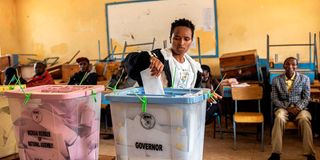
There may be more value in writing off the current journey and shift focus to future ones. So, we should use Kenya Kwanza’s record of economic management to judge whether to keep it or sack it in toto.
I would advise that we use our pain in the next 12 months to define and articulate our expectations so that they are blindingly clear.
After that, we use the time to the election to bring out all the toothcombs in our possession, perhaps even borrow some from Uganda and Tanzania, to coldly assess the proposals of the various parties. If anyone tries to sell you tribalism and other shenanigans, get up, walk away and leave him talking to the birds.
Oh yes, and normalise being broke.
Gen Muhoozi Kainerugaba said in one of his torrents of tweets that Bobi Wine was a State Trojan Horse to divert support from Dr Kizza Besigye. Dr Besigye is in prison on funny charges. So is the very popular Gen Yoweri Museveni, like some people in the region who have imprisoned opponents, running against himself? Wouldn’t it be a laugh if he were to lose to himself!