The world reminds us, with relentless force, that we stand at a defining crossroads in the fight against climate change. In just the past days, Hurricane Melissa tore through Jamaica as the strongest storm in its history, and Typhoon Fung-Wong struck the Philippines, forcing nearly a million people to flee their homes.
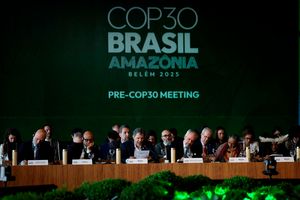
This is the new reality of a planet in crisis, where floods, storms, and rising seas upend lives and livelihoods with devastating speed. At the opening of COP30, President Lula da Silva declared this will be the “COP of truth,” a moment to confront denial, disinformation, and the rejection of science with honesty and resolve. For millions across the global majority, the most vulnerable to climate extremes, the losses and damages are daily struggles for survival.
This is why international economic cooperation is imperative. What kind of economies are we building if rising seas swallow our cities and storms erase decades of progress overnight? Research from the National Bureau of Economic Research in 2024 warns that even a 1°C rise in temperature could slash global GDP by more than 20 percent in the long run. That single figure should shake world leaders into action.
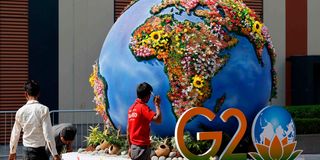
In just one week, South Africa will host the G20 Summit in Johannesburg. It will be a historic moment on African soil. The G20, representing 85 percent of global GDP, 75 percent of global trade, and two-thirds of humanity, is the single most important forum for shaping international economic cooperation. And this time, African leaders must ensure that Africa is not on the margins.
Born in 1999 out of the Asian financial crisis, the G20 now meets twenty-six years later at a time of even greater peril: the climate crisis. With the African Union joining as a permanent member in 2023, and South Africa holding the Presidency, the summit will convene under the theme of “Solidarity, Equality, Sustainability.” For Africa, this matters greatly. For too long, decisions about our continent have been made elsewhere. Now, for the first time, the locus of global economic power shifts here, and our leaders must seize it.
South Africa has pledged to lead in the spirit of ubuntu—that African philosophy of togetherness, of collective solutions to shared challenges. This is precisely the language the climate crisis demands and that is coded in the Brazilian spirit of Mutirão: a recognition that no one must be left behind, and that our survival depends on solidarity.
We live in an era of overlapping crises: climate shocks, political instability, widening inequality, and a turbulent global order. The G20 Summit must rise to this reality. It will convene just as COP30 in Belém concludes. Will leaders carry the bold solutions forged in Brazil into Johannesburg, or will they falter? For Africa, the stakes are existential.
Now, with the African Union at the G20, our voices must shape the agenda. This is Africa’s moment to speak boldly and with authority. The world cannot meet its climate and economic goals without Africa. And Africa cannot afford anything less than bold, just, and decisive action at this summit.
The urgency could not be clearer. In recent weeks, climate catastrophes have reminded us that resilience is the foundation of survival. Debt sustainability must go beyond temporary relief to a bold reimagining of a financial architecture that has long disadvantaged developing countries. Financing energy transitions must be clean, equitable, and restorative. And as we mine critical minerals, we must do so with integrity, ensuring that what we leave behind are not scarred landscapes and impoverished communities, but legacies of opportunity and pride for generations to come.
The Summit in Johannesburg must therefore be a historic turning point. For the first time, the G20 convenes on African soil with the African Union at the table. This summit can either be remembered as a gathering of leaders who spoke in platitudes or as the moment they rose to meet history’s call. If it embraces the spirit of ubuntu and Mutirão, centering the spirit of the Global Ethical Stocktake that spotlights our shared humanity and collective responsibility, it can set the tone for a new era of global cooperation: one where Africa is not spoken about but spoken with, one where justice, solidarity, and sustainability are actions, not aspirations.
Ms Mathai is the MD for Africa & Global Partnerships at the World Resources Institute and Chair of the Wangari Maathai Foundation