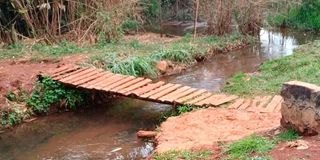
Ondiri wetland in Kikuyu constituency, Kiambu County.
This week Zimbabwe hosts delegates of the 172 countries party to the Ramsar Convention on Wetlands (COP15) in Victoria Falls. We stand at a historic juncture for biodiversity, restoration, and justice. This celebration of wetlands comes in the wake of an unprecedented and unanimous ruling by the International Court of Justice (ICJ). The ICJ is the principal judicial organ of the United Nations, established in 1945 to settle legal disputes between states and issues advisory opinions on legal questions referred by UN bodies. Unlike criminal courts, the ICJ doesn’t prosecute individuals but it holds governments accountable under international law.
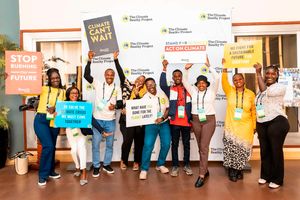
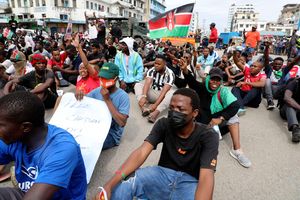
The ICJ’s landmark advisory opinion on climate change was sparked by youth activism, specifically by a group of law students from the University of the South Pacific in Vanuatu. Back in 2019, these students formed the Pacific Islands Students Fighting Climate Change movement (PISFCC), which later joined forces with World’s Youth for Climate Justice. Their campaign urged Vanuatu’s government to request an advisory opinion from the ICJ through the UN General Assembly, a request that was ultimately adopted by consensus in 2023. While the formal request came from a sovereign state, the origin, energy, and moral force behind it came from young people demanding accountability and justice. Sound familiar? This is, after all, about their future!
Supporting livelihoods
The ICJ delivered the largest advisory opinion in its history, declaring that the impacts of climate change must be treated not just as ecological concerns, but as violations of human rights. This ruling changes everything. For the first time, international law recognises the climate crisis as a legal and moral obligation. It affirms that exceeding 1.5°C is not a political choice, but a breach of duty. States must act with integrity and urgency to protect the most vulnerable, and in Kenya, and Africa in general, that also means investing in adaptation like safeguarding our forests and wetlands, not tomorrow, but now. Nairobi, whose very name in Maa means “the place of cool waters,” is built on wetlands that have cushioned communities for generations, yet today, these green spaces, essential to urban climate resilience, are under siege from greed and unchecked development. The ICJ ruling empowers us to call this what it is: a violation of our rights.
One of Kenya’s most iconic images is pink flamingos blanketing the shores of Lake Nakuru, a scene that symbolises our country’s rich biodiversity, but beneath this postcard lies something deeper: wetlands like Lake Nakuru are the filtration system of our ecosystems, regulating and purifying water, supporting livelihoods, and helping us adapt to climate change, yet their quiet disappearance often goes unnoticed, until disaster strikes.
The 2024 Nairobi floods exposed this vulnerability. Wetlands that once absorbed heavy rains had been degraded or built over. Riparian zones were lost to unregulated construction, streams illegally diverted, and the Nairobi River choked with pollution. When the rains came, the city couldn’t cope. What might have been softened by healthy wetlands turned into catastrophe. Kenya’s experience is not unique. Across Africa, and the world, wetlands are vanishing.
The earth’s kidneys
Since its launch in 1971, the Ramsar Convention on Wetlands has sought to protect the world's wetlands, which include lakes, rivers, swamps, marshes, mangroves, peatlands, estuaries, oases, and reservoirs. The 2025 gathering is being held under the theme “Protecting Wetlands for Our Common Future,” a call that could not be more urgent.
Wetlands, though covering just 6 percent of the Earth’s surface, support an astonishing 40 percent of global plant and animal species and contribute an estimated $39 trillion annually in ecosystem services like climate regulation, clean water, and food security. In Kenya, despite occupying a modest 3–4 percent of the land, wetlands play an outsized role in environmental resilience and community wellbeing. Yet their rapid decline (22 percent lost globally since 1970, especially in freshwater systems) poses a serious threat, particularly in low-income countries across Africa where wetlands are vital lifelines for water, livelihoods, and cultural identity.
Increasingly, wetland restoration efforts are being carried out in partnership with Indigenous Peoples and Local Communities who have long-standing relationships with these ecosystems. Their lives, livelihoods, cultures and identities offer a valuable foundation for sustainable restoration and management. Wetlands are the earth’s kidneys, our climate buffers, and now following the ICJ ruling, our legal anchors. COP15 is our moment to elevate their role in restoration efforts, and governance frameworks that center justice and human dignity. We know what causes climate change. We know what fixes it. And now, we have the international mandate to act. Let this be the turning point where youth voices, law, and leadership converge for our wetlands, our climate, and our future.
Ms Mathai is the MD for Africa & Global Partnerships at the World Resources Institute and Chair of the Wangari Maathai Foundation