Why are journalists missing the boat as memoirs rule the day?
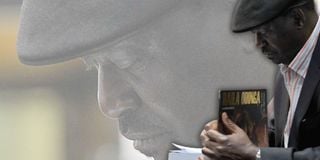
Former Prime Minister Raila Odinga signs a copy of his autobiography "The Flame of Freedom" in Nairobi on November 30, 2013.

Mourning former Premier Raila Odinga last weekend, editor and book publisher John Mwazemba recalled his meeting with the icon earlier in the year, during which they discussed a possible book project.
In the article titled “Raila’s memoir that never was”, published in the Saturday Nation on October 18, Mr Mwazemba says he had hoped to do the second volume of Odinga’s memoirs, covering the period from 2013 to 2025, with the working title The Flame Rekindled.
Odinga’s first volume of memoirs, The Flame of Freedom, written with his long-term associate journalist Sarah Elderkin, was published in 2013, and covers key moments in his life up to 2012. The sequel proposed by Mr Mwazemba would have been a captivating read, considering the dramatic political events that have ensued.


Kenyans have not seen a dull political moment since the 2013 elections. Odinga was not just the constant; he authored and directed the script, then starred in the play. Like The Flame of Freedom, a book in Odinga’s words reflecting on these developments would have been a sure best seller. The challenge now is for Mr Mwazemba and others to rekindle the flame.
This second volume would have added to a growing list of Kenyan public figures’ autobiographies and memoirs. This year alone, the Daily Nation has serialised books by former Attorney-General and Speaker of the National Assembly Justin Bedan Muturi (The Fight for Order), corporate leader and lawyer Francis Okomo Okello (Concert of Life), former minister Marsden Herman Madoka (At the Ready) and veteran public servant, corporate leader, politician and lawyer Albert Ekirapa (Wings of Ambition).
Uncaptured history
Many more individuals, in the public and private sectors, have written and published books.
What does this explosion of personally released biographies mean? On the one hand, the autobiographies and memoirs are a welcome addition to our knowledge of our past, a boost to the country’s literature and a documentation of hitherto uncaptured history. However, they are also a disturbing indictment of a trust deficit in journalism, as well as a missed opportunity for senior journalists.
Some book critics have argued that not all public figures need to write about themselves. If their wish is to document their contribution to the country, this should have been captured by the media during their time in service. Or, could it be that the Kenyan media does not celebrate the country’s heroes and disparage the villains enough?
While most of the autobiographies are a joy to read, some have been a disappointment for literary enthusiasts; hundreds of pages filled with publicly available archival text and photographs.
Their authors have mainly narrated what has already been published in the media, with perhaps some additional information about their childhood and families.
Why do some of these people insist on writing books, always at a great personal cost, including paying ghostwriters and printers? It seems like many public figures do not trust the media to capture their stories truthfully and comprehensively.
Good story
Some of those who have decided or desired to write their own stories say they feel hard done by the media because it is unable to listen to their side of the story due to other prevailing influences on the media’s agenda. They wish to “set the record straight” on matters they were involved or linked to. Some want to “reveal the secrets” surrounding events and developments with which they were associated or witnessed.
A major problem with autobiographies and memoirs is that even the best-written ones can never be impartial. Inconvenient truths will not be allowed to get in the way of a good story.
Certainly, an autobiography of one of the “Covid millionaires”, or the architects of the Goldenberg or the Anglo Leasing scandals, will not confess the subjects’ guilt. It will instead strive to obliterate this from our collective memory, or to feed us on the “alternative truth”. Nobody will write about themselves to look bad.
As happens in other parts of the world, senior Kenyan journalists owe the country biographies of public figures. Political and business reporters, who have not only covered these leaders but also interacted with them over a long period, are best placed to write impartially about them.
They would draw on thorough research, their observations and conversations with the leaders and those who worked and related to them. This, combined with the journalists’ flair for writing, would reignite Kenyans’ interest in local books and enrich our literature.
Contact the Public Editor to raise ethical concerns or request a review of published material. Reach out: Email: [email protected]. Mobile Number: 0741978786. Twitter and linkedin: PublicEditorNMG.


