Kenya’s largest bank by asset base, KCB Group, is targeting a market entry into Ethiopia before the end of 2026, as it seeks to expand its regional footprint, which is increasingly playing a crucial role in driving the lender’s growth in net earnings.
KCB Group has concluded its shortlisting exercise of prospective acquisition entities in Ethiopia and has narrowed down to a target entity that it believes will provide the right cultural and strategic fit to inform its entry into the market.
“We have made good progress. Last year, we indicated that there were a number of banks we were looking at for shortlisting. We have now come down to what we think we can move forward with. We are looking at this year, we are really looking to at least make an announcement in the course of this year”, KCB Group Finance Director, Lawrence Kimathi, said in an interview.
KCB Group, however, said that it will be pursuing Ethiopia market entry through the acquisition of control of the target entity, something that may face regulatory hurdles given the ceiling placed by the National Bank of Ethiopia on foreign shareholding in the liberalizing banking sector.
Proclamation No.1360 of 2025 from the National Bank of Ethiopia liberalized Ethiopia’s banking sector, opening it up to foreign players.
“Aggregate shareholding by foreign nationals and foreign-owned Ethiopian organizations in a bank shall be limited to 49percent of the total subscribed shares of the bank”, the Proclamation states.
Mr Kimathi, however, says that it is gratifying to note that the law allows the National Bank of Ethiopia to allow foreign shareholding above the 49.0 percent ceiling prescribed.
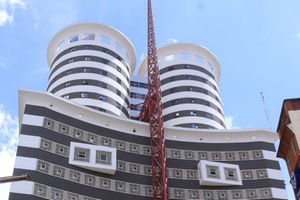
Customers being served at the Kenya Commercial Bank Moi Avenue branch in Nairobi.
Photo credit: File | Nation Media Group
“The current law says a maximum of 40 percent and an additional so foreign shareholding should not go beyond 49 percent. But the regulator holds the discretion to give one higher, and so the law is structured in a way that the regulator has been given the powers, and if they believe foreign ownership can add more value as a majority, they can engage in that conversation," he said.
"We have not got to that step yet of engaging the regulator, but we believe that getting control as one gets into Ethiopia will be critical, Mr Kimathi said.
Proclamation No.1360 of 2025 states: “Notwithstanding the investment limits, for purposes of attracting strategic investments that would benefit the economy and/or as a way of resolving a distressed bank and preserving financial stability, National Bank, on exceptional occasions, may allow well-established, reputable and sound foreign banks to partially or fully acquire domestic banks”
KCB Group will be deploying part of the proceeds from its sale of National Bank of Kenya to Nigeria’s Access Bank to finance the targeted acquisition in Ethiopia. The bank, which is currently awash with liquidity following the sale of National Bank, boosted its full-year dividend by a staggering 133 per cent to Sh7 per share, with the total payout to shareholders standing at Sh22 billion.
The Ethiopia entry will be the latest in a stream of acquisitions by KCB Group, with the lender having acquired a 75 percent stake in Riverbank Solutions and a minority stake in Pesapal in 2025, pointing to a leaning towards fintech capabilities.
In the full year ended December 2025, the share of KCB Group’s profit after tax attributable to subsidiaries outside Kenya grew by 4 percent year-on-year to close at Sh20.3 billion, with the subsidiaries in DR Congo, Rwanda, and Tanzania accounting for 76.3 percent of it.