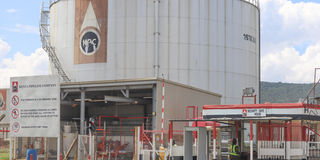
Kenya Pipeline Company (KPC) will not import or sell petroleum products once it is privatised without prior approval from regulators and the National Assembly.
The National Assembly resolved that the divestiture of KPC will be structured to limit the firm’s mandate to transporting and storing petroleum products to prevent the emergence of a monopoly.
“...Kenya Pipeline Company Limited shall not venture into the importation or sale of petroleum products without prior approval from the Competition Authority of Kenya, Energy and Petroleum Regulatory Authority, and the National Assembly,” a new schedule to the Sessional Paper on the privatisation of KPC states.
The National Assembly last week approved the Sessional Paper on the privatisation that will see the government retain not less than 35 percent ownership in the company.
The National Treasury expects to raise approximately Sh100 billion from the sale of the KPC shares through an initial public offering (IPO) at the Nairobi Securities Exchange.
MPs proposed additional policy resolutions, including: undertaking a valuation of the actual financial and asset position of KPC and submitting a report to the National Assembly; ensuring that the valuation is contained in the sale prospectus; and publishing a separate citizen-friendly IPO valuation report.
“This should also take into account the future potential of the business in compliance with section 31 of the Privatisation Act, 2005,” MPs say in the schedule.
The National Assembly resolved that the divestiture of KPC will be structured to limit the firm’s mandate to transporting and storing petroleum products.
Photo credit: File | Nation Media Group
The MPs also recommend that a clear statement be included in the prospectus on how Kenya Petroleum Refineries Limited, a subsidiary of KPC, has been financially evaluated and factored in the valuation.
They want the Auditor-General to review the processes relating to privatisation of KPC to ensure value for money and submit a report to the National Assembly within six months of completing the processes.
On KPC employees, the House wants the Privatisation Commission to ensure there is an employee share ownership plan.
Further, the MPs want the Commission to take steps to safeguard against excessive concentration of shares in a single entity or related parties, and to set a maximum ownership limit for any one shareholder, promote market competitiveness and protect national and energy security interests. They further want the Privatisation Commission to set a minimum level for participation by Kenyan citizens, ensuring broad local ownership including by the youth, women and persons with disabilities.
Procuring and engagement of transaction advisers, the MPs say, should be done transparently and competitively, and the cost of the transaction, currently set at Sh100 million, should not deviate from reasonable market rates, and approval from Treasury should be sought before any increase.
In the schedule, the MPs have also sought to ensure prudent use of the proceeds, saying they should be utilised in either development expenditure, pending bills, or liability management.