Demand for liquefied petroleum gas (LPG) rose by 14.6 percent in the six months to December 2025, on the back of an aggressive government push for clean cooking and rising consumer preference for cheaper household energy.
New data from the Energy and Petroleum Regulatory Authority (Epra) shows that consumption climbed to 251,425 tonnes during the period, up from 219,416 tonnes consumed in a similar period a year earlier.
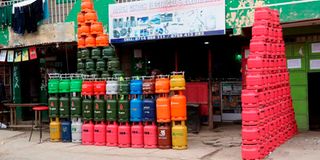
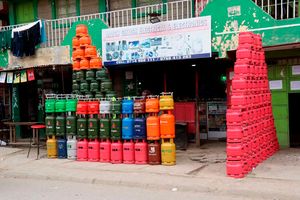
Total Kenya employees offload gas cylinders at a petrol station. PHOTO | FILE | NATION MEDIA GROUP
Epra said the increase reflects sustained policy interventions under the government-backed national LPG growth strategy, which targets wider adoption in households and public institutions, alongside growing awareness of LPG’s health, environmental, and economic benefits.
Under the policy, the State has been promoting LPG use in public institutions such as schools, hospitals, and prisons, segments that consume large volumes of cooking energy and offer a scalable pathway for demand expansion.
“The national LPG growth strategy is expected to further accelerate adoption, particularly in public institutions such as schools, hospitals, and prisons,” said the regulatory body.
The demand expansion comes amid a broader shift in Kenya’s energy consumption patterns, where households are increasingly turning to LPG as a primary cooking fuel due to its convenience and relative cost predictability.
Infrastructure developments have also played a role in the uptake of cooking gas, particularly among households transitioning from traditional biomass fuels.
“The commissioning of the Lake Gas facility in Vipingo, Kilifi County, has boosted storage capacity for LPG receiving terminals, improving supply security. In tandem, the government’s planned implementation of an Open Tender System for LPG will enhance competitiveness, transparency, and efficiency in imports,” said Epra in a past commentary.
An attendant piles up empty gas cylinders ready for refilling at Hashi Petrol Station in Nyeri town. PHOTO |
During the period under review, a total of 207,988 tonnes of LPG was imported through the Mombasa-based AGOL jetty facility, while 22,020 tonnes were handled through the Lake Gas facility in Kilifi.
Data from the Kenya National Bureau of Statistics shows that the retail price of a 13-kilogramme cylinder averaged Sh3,144.82 during the six months under review, down from an average of Sh3,184.71 in a corresponding period a year earlier.
Kenya’s push for LPG adoption aligns with global climate commitments that encourage countries to reduce dependence on high-emission fuels such as charcoal, which contributes significantly to deforestation.