In cities, mornings are a race against time. Commuters juggle breakfast, work emails, and tight schedules, leaving little room for traditional meal preparation. From instant noodles and coffee to instant uji mix, convenience is reshaping daily routines.
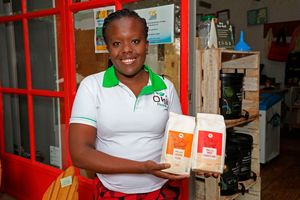
Ryans Foods Kenya, co-founded by two young entrepreneurs, has tapped into this rhythm of urban life, offering a brand of instant uji mix that saves time while providing a practical solution for households on the go without compromising nutrition.
“For the past year, we have focused on innovation, finding ways for people to enjoy nutritious meals without spending hours in the kitchen. Our instant uji mix is ideal for anyone with a busy schedule,” says Benson Kagwima, one of the co-founders.
He adds that it can be prepared anywhere and provides a practical solution for households on the go. Benson and his business partner spotted a gap in the market while managing their own busy schedules. “We wanted a solution for people like us—professionals and students who value nutritious meals but have little time,” he recalls.
Uji, a porridge traditionally made from locally sourced ingredients such as maize, millet, sorghum, soy and sweet potatoes, has been a mainstay of Kenyan diets for generations. Its preparation, however, demands time, a commodity scarce in today’s urban life.
“We have transformed this classic into an instant product that retains its taste, nutrition, and familiarity to our culture, something the imported breakfast cereals lack. We start by grinding maize, soy, sorghum, and sweet potatoes using specialised machinery at KIRDI, (Kenya Industrial Research and Development Institute) and then create a blend using a secret recipe,” he says.
The grains are conditioned before undergoing extrusion cooking at temperatures between 240 °C and 260 °C. This process produces a puffed product, which is then milled into a fine, instant flour ready for consumption.
Ryan’s Foods Kenya CEO Benson Maina (right) and Chief Finance Officer James Maina during the production of Ryan's instant uji mix at the Kenya Industrial Research and Development Institute in Nairobi on January 16, 2026.
Photo credit: Bonface Bogita | Nation Media Group
Benson explains how to prepare the porridge. “Take three to four spoons of the flour and sugar, mix them, add half a cup of cold milk or water, stir, and then pour in hot water until it reaches the desired consistency.”
Within two minutes, the porridge is ready. Those who prefer it piping hot can reheat it in a microwave-safe bowl for one minute or warm it briefly on a stove. The porridge is also customisable to individual taste; for a slightly sour flavour, a few drops of lemon can be added before serving.
Ryan’s Foods Kenya started as a venture funded with personal savings and contributions from family and friends, with an initial capital of approximately Sh150,000. The seed money allowed the founders to purchase basic equipment and raw materials.
“It was challenging to start with limited resources. Ensuring consistency in taste and texture while keeping the product affordable required meticulous testing. We spent months testing blends, adjusting temperatures, ratios and refining our recipe,” he says.
They now employ 10 full-time staff across production, quality control, and marketing. The instant uji mix retails between Sh130 and Sh300 per pack, making it affordable to low and middle-income urban households.
The product is available in selected supermarkets across Nairobi and surrounding towns, as well as on online shopping platforms and social media, including Instagram, TikTok, LinkedIn and Facebook.
The company has also showcased its products at food exhibitions and trade fairs locally and across borders, creating direct consumer engagement and strengthening brand visibility.
“Consumers appreciate the convenience and the familiarity of the ingredients. Once they try it, it often becomes a household staple. Listening to our customers guides our product development and keeps us aligned with the cultural preferences of the communities we serve,” he says.
Ryan’s Foods Kenya CEO Benson Maina is operates a homogenizer machine during the production of Ryan’s instant uji mix at the Kenya Industrial Research and Development Institute in Nairobi on January 16, 2026.
Like many start-ups, Ryans Foods Kenya faced multiple hurdles. Early challenges included maintaining consistent quality, sourcing raw materials, and educating the market about instant traditional foods. At first, customers were sceptical about a ready-to-make uji mix. “We overcame this by demonstrating the production process and letting people taste the porridge. Once they appreciated the quality, trust followed,” he explains.
Supply chain management was another challenge. Securing reliable suppliers for maize, soy, sorghum, and sweet potatoes required strong relationships and rigorous quality control.
“Distribution to distant markets, particularly outside Nairobi, remains a challenge, which we are addressing through continued partnerships with industry players to meet growing demand,” he adds.
The founders plan to expand the product line, increase value addition, and make nutritious, convenient foods accessible to as many Kenyans as possible.
Ryan’s Instant Uji Mix, a product of Ryan’s Foods Kenya, served at the Kenya Industrial Research and Development Institute in Nairobi on January 16, 2026.
Photo credit: Bonface Bogita | Nation Media Group
Currently, Ryan Foods Kenya supplies its products to over 35 stockists in Nairobi and nearby towns, and its presence is steadily growing. They plan to increase production capacity and introduce new products, including fortified flours, snacks, and other ready-to-eat meals.
“Our goal is for Ryan Foods to be a household name for convenient, nutritious foods. We are exploring partnerships with other food manufacturers and retailers to reach more households and urban centres, “he says.
The company is also making a tangible impact on employment and skills development. Staff members gain hands-on experience in food production, quality assurance, and marketing, providing them with transferable skills for Kenya’s growing food manufacturing sector.
With a growing team, expanding stockists, and plans to diversify its product range, the founders are combining traditional Kenyan recipes with modern production techniques, ensuring that products remain familiar, nutritious, and easy to prepare.
“We want every household to see that traditional food can be convenient, culturally authentic, and enjoyable. Innovation and culture can coexist, and a local company can set new standards in the food industry. Our goal is for convenient, nutritious meals to become part of every home,” he says.
They recently entered into a strategic partnership with Hand in Hand Eastern Africa (HIH EA) to support community enterprises that strengthen nutrition, livelihoods and food security in marginalised regions.
Nutritious porridge flour
The collaboration focuses on expanding access to a pre-cooked, nutritious porridge flour designed for resource-constrained households, where time, fuel and consistent access to food remain persistent challenges.
“The initiative targets an estimated 80,000 consumers in arid and semi-arid lands (ASALs) and urban areas, including 10,000 children. It also brings more than 300 smallholder farmers and women-led gatherers into the value chain as suppliers of key ingredients and agricultural produce,” he says.
Ryan’s Foods Kenya CEO Benson Maina operates an extrusion machine during the production of Ryan's instant uji mix at the Kenya Industrial Research and Development Institute in Nairobi on January 16, 2026.
Photo credit: Bonface Bogita | Nation Media Group
Kagwima adds that early uptake is expected to cut household fuel use by between 40 and 60 per cent per serving, while improving daily intake of nutritious food among both children and adults.
Over time, the programme is expected to scale its reach to between 300,000 and 500,000 consumers annually, with adoption by up to 2,000 schools and large humanitarian programmes. Growing demand is expected to boost incomes for farmers while reducing reliance on fuel-intensive cooking, cutting emissions and improving indoor air quality. Several of the crops used are drought-tolerant and require substantially less water and fertiliser than conventional staples, helping preserve soil health and support climate-resilient farming systems.
Increased market demand further encourages rehabilitation of degraded arid land rather than expansion into new farmland.
Ryan’s Foods Kenya and HIH EA’s gum Arabic barter model enables women in ASAL communities to earn income while supplying export markets. In return, they receive nutritious food, improving diets, diversifying livelihoods, and linking small-scale producers to formal value chains.
The programme currently targets Samburu, Marsabit, Wajir and Turkana counties, selected for their high nutritional vulnerability, logistical viability and potential for scale through local retailers, schools and non-governmental organisations.