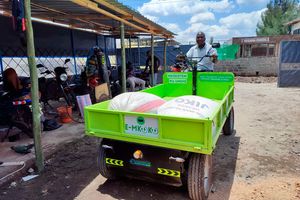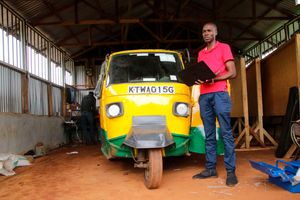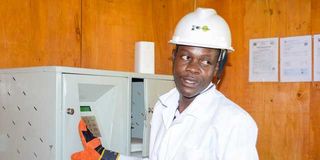
Elly Odhiambo demonstrates how they recharge electric motorcycle batteries at the E-Safiri premises in Nyamasaria, Kisumu, on November 12, 2025.

In Kisumu, the sound of roaring motorcycles fills the streets, serving as the lifeblood of both urban and rural transportation in the lakeside city.
As their engines sputter and expel thick fumes into the humid air, the city struggles with an escalating pollution problem.
The haze is particularly thick in peri-urban areas, where narrow roads are congested with vehicles and transport demand surges in tandem with the growing population.
In response to these challenges, Carol Ofafa founded E-Safiri, a startup that is reshaping transportation, by offering an alternative to gas-guzzling motorcycles.
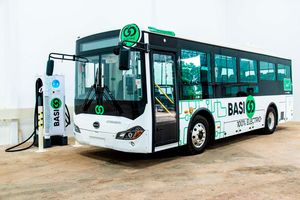
Focused on electric vehicles (EVs), the company is creating an ecosystem designed to revolutionise mobility, with ambitions that extend well beyond Kisumu.

Mr Walter Oremo removes a battery from his motorbike for recharging at E-Safiri’s Nyamasaria premises in Kisumu on November 12, 2025.
“Through pay-as-you-go and Mobility-as-a-Service models, we are driving EV adoption, expanding charging infrastructure, and empowering women and youth,” she says, adding that they are tackling environmental pollution and creating jobs, while providing affordable and accessible transportation for all.
The company’s charging stations are expanding nationwide, combining renewable energy with grid power, to offer a sustainable solution for a cleaner future.
E-bikes, once a distant dream, are now becoming a familiar sight on the streets. Silent, clean, and efficient, these bikes offer a stark contrast to the noisy, smoke-filled engines of their traditional counterparts.
The goal goes beyond providing an alternative to petrol-powered motorcycles; it creates a cleaner, sustainable mobility system that could reshape transportation across Kenya and the wider region.
“I grew up between the rural heartlands of Homa Bay and the urban sprawl of Kisumu, I always knew the limitations of living in areas where basic infrastructure was scarce,” she says.
A scholarship took her to Canada, where she first encountered the stark contrast in resources and the adoption of electric mobility in Europe.
Her time abroad, particularly in Glasgow, marked a turning point in her career.
“Realising that Europe was advancing with electric buses, e-bikes and other renewable transport technologies, I returned to Kenya determined to unlock electric mobility for Africa, where such infrastructure was almost non-existent,” she says.
With a starting capital of $15,000, largely funded from personal savings, E-Safiri operations began in 2023 with a single battery-swapping station in Kisumu.
The start-up tackled one of the biggest obstacles to EV adoption, which is the lack of infrastructure, by providing a battery-swapping service for electric motorcycles and tri-cycles.
It operates across four locations in Kenya, including Dunga Beach, Mamboleo, Nyamasaria and Kisumu Town, with additional sites at Gita and Kiumba Beach set to launch in December 2025.

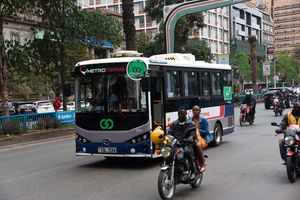
Boda boda riders weave through in Kisumu along Kisumu - Kakamega highway on November 12, 2025. E-Safiri and other innovative transport initiatives are steadily rolling out cleaner, electric options, driving the city toward a smarter, greener urban mobility future.
It also plans to expand operations nationwide. E-Safiri’s innovation relies on solar-powered hubs, which reduce dependence on the national grid.
Carol says that with many areas lacking reliable electricity, especially in rural parts of Kisumu and surrounding regions, solar energy provides a reliable, sustainable power source for charging and swapping batteries.
Each of these hubs is IoT-enabled, equipped with smart systems that monitor battery status, track energy usage, and ensure continuous service even during times of low solar output, with Internet of Things (IoT) technology playing a crucial role in the company’s operations.
Each battery and charging point is connected to an IoT platform that allows real-time data to be collected and analysed.
“The central monitoring system provides proactive maintenance alerts, ensuring that potential issues are identified before they cause service interruptions,” she explains.
This data is vital for operational efficiency, allowing the company to make data-driven decisions on everything from inventory management to the optimal placement of new hubs.
Beyond the charging infrastructure, E-Safiri has innovated in providing solar-powered cold storage solutions for local communities, particularly for fishermen who face challenges in keeping their catch fresh.
The Baridi Box — a portable, insulated storage container — has become an essential tool for transporting perishables over long distances.
The boxes can be leased from designated hubs at a rate of Sh500 per day. Each unit is equipped with ice blocks produced by locally assembled ice makers at the hubs.

Rachel Winnie Akinyi, a technician at E-Safiri’s Dunga Beach premises in Kisumu, assists a client on November 12, 2025, supporting the city’s shift to electric mobility.
Like most startups, Carol acknowledges several hurdles in this emerging sector. Infrastructure remains a perennial issue, and building the necessary hubs while ensuring that battery-swapping stations are strategically placed is no small task.
“Securing land in high-traffic areas is difficult, especially in Kisumu’s crowded, informal settlements where land ownership is not clearly defined,” she notes.
Financing also remains a significant challenge. Despite the starting capital, the company has needed to secure additional funds through grants, private investors, and partnerships to sustain its rapid growth.
The initial investment has mostly been directed toward establishing physical infrastructure—buying solar panels, assembling charging stations, and developing the battery-swapping technology.
However, as she explains, the real cost lies in ensuring that the service is accessible to everyone, especially in rural and peri-urban areas where consumers may not be able to pay upfront for electric vehicles.
“While solar power is a great equaliser in terms of energy access, the cost of setting up charging stations and maintaining them in rural areas is higher than we anticipated,” she admits.
“Add to that the cost of importing EVs and batteries, and it is clear that the biggest hurdle is securing sustainable financing to keep the infrastructure running.”
Another significant challenge is awareness and adoption.
Despite the growing enthusiasm for renewable energy in Kenya, electric mobility remains a niche market, especially among low-income consumers who are more accustomed to petrol-powered motorcycles.
The company has invested in extensive community outreach and education campaigns, particularly in rural areas, to demonstrate the benefits of electric vehicles, including lower operating costs, reduced emissions, and less dependency on fossil fuels.
Despite the challenges, it has made significant progress, employing 10 full-time staff and an additional 25 part-time workers who manage its charging hubs and provide operational/maintenance services for the electric fleet.
A significant proportion of these employees are women from local communities, which is a key aspect of its social impact.
By hiring locally, the company offers skills training and creates opportunities for women to assume leadership roles at the hubs.
Its pay-as-you-go model has proven especially effective for low-income families, allowing riders to pay per battery swap instead of bearing high upfront costs.
With each swap priced at Sh200 and charging services at Sh100, the startup is making electric mobility a cleaner, more viable option for everyday riders.
Carol says the company is looking to expand its footprint beyond Kisumu and the Western region of Kenya.
“We plan to launch additional hubs in Nairobi, Mombasa, and Nakuru, with an eye on tapping into East Africa’s broader electric vehicle market. The goal is to expand into neighbouring countries and create a pan-African network of swapping stations and charging hubs powered by solar energy,” she says.
The company is also exploring new opportunities to diversify its revenue streams, including private charging points for businesses and individuals who want to set up their own stations at home or in the office.
She notes that their true vision goes beyond business growth and focuses on making a lasting social impact.
E-Safiri works to reduce carbon emissions, create jobs, and increase access to clean energy for communities.
Follow our WhatsApp channel for breaking news updates and more stories like this.