In an era of rising lifestyle-related diseases, a growing number of the global population is turning to herbal and organic products for nutritional enrichment and as natural alternatives that support healthy living.
The global organic personal care industry is also among the fastest-growing sectors, as global brands intensify investments and consumers increasingly embrace naturally sourced products.
Responding to rising demand for natural wellness products and the untapped potential of indigenous African plant resources, Justin Nyasinga set out to build a business that would leverage Africa’s biodiversity, scientific evidence and industrial processing capabilities to produce value-added consumer products. This led to the establishment of Impact Botanics-Africa, a company engaged in sourcing, developing, marketing and distributing products in the nutrition and personal care segments.
Nyasinga, alongside his business partner, Antony Ngari, put together Sh1 million and started the venture: “Much of the initial capital went into business registration, licensing, supply chain development, acquisition of a production site and start-up infrastructure,” Nyasinga says.
New Content Item (1)
Photo credit: Bonface Bogita | Nation Media Group
The enterprise is anchored in agroforestry-based raw materials such as baobab, honey, stevia and moringa, which are processed into value-added consumer products through drying, milling, oil extraction and ingredient formulation for local and regional markets.
Originally registered in 2013 as Richant Food Processors, the business began on a relatively small scale, constrained by limited market reach and restricted access to capital: “In the early years, securing consistent funding proved difficult, particularly given the capital-intensive nature of agro-processing and the need for upfront investment in quality infrastructure,” he says.
As demand gradually increased and the product range expanded, the company underwent a strategic transformation in 2017, rebranding as Impact Botanics-Africa.
The firm has built a rapport with grassroots networks across East Africa, enabling the securing of a consistent supply of raw materials, which are then processed at its facility in Nairobi before distribution. Nyasinga says the company seeks to create value across its supply chain, linking farmers supplying raw materials to end users while maintaining environmentally sustainable practices. The firm is also involved in farmer empowerment initiatives in arid and semi-arid regions of East Africa, where conventional farming is less viable and economic opportunities remain limited.
The business, which has grown considerably with 15 full-time staff, 20 part-time workers and 10 field-based employees, receives raw materials from smallholder farmers across East Africa, working in over 20 value chains. It also supports more than 50 storage service providers, grassroots mobilisers, transporters and product marketers.
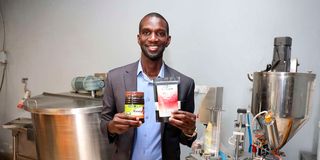
Some of the botanical and wellness products processed and packaged by Impact Botanics Africa Limited are displayed at the company's production facility in Utawala, Nairobi, on June 13, 2026.
Photo credit: Bonface Bogita | Nation Media Group
“Value addition has helped create rural income opportunities and reduce reliance on rural-to-urban migration, especially in Arid and Semi-Arid Lands (ASALs), where conventional agriculture is often not viable,” he says.
He argues that deforestation remains a major driver of environmental degradation and global warming, adding that investment in ASAL-friendly value chains can help incentivise conservation-oriented farming practices. Indigenous species such as shea and baobab, he notes, benefit from commercial utilisation, a process that supports biodiversity conservation in Africa.
As climate variability increases, these crops are drawing greater interest as part of efforts to develop more resilient African agricultural systems. Consumer education and support are key to the company’s operations, with regular engagement used to understand customer needs and feedback.
Impact Botanics-Africa’s products have been inspected and certified in line with the East Africa Organic Products Standards, in collaboration with relevant regulatory authorities. The company also works with the Kenya Bureau of Standards and the Nairobi County Health Department.
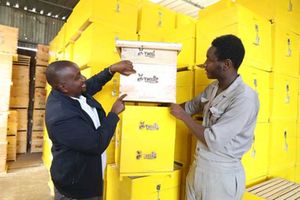
A worker displays pumpkin seeds alongside a packaged pumpkin seed powder product at Impact Botanics Africa Limited’s production facility in Utawala, Nairobi, on June 13, 2026.
Photo credit: Bonface Bogita | Nation Media Group
“We operate a supply chain involving more than 2,900 farmers and 150 mid-level retailers, processing over 800 tonnes of produce from at least 20 crop types. These operations are supported by more than a decade of established partnerships,” he says.
Like many agribusinesses working with indigenous crops, Impact Botanics-Africa faces challenges related to seasonality, with yields of crops such as shea and baobab fluctuating due to weather conditions and harvesting practices. Cross-border operations are also periodically affected by political and regulatory environments in different countries across the region. To address this, the firm has developed structured farmer networks...and has introduced aggregation and storage systems to help stabilise supply.
“We have positioned our products as natural, additive-free and backed by research, while investing in branding, certification and retail partnerships to support premium pricing,” he says.
Nyasinga also notes that many small and medium-sized enterprises still face challenges accessing global markets due to the high cost of certification, logistics and compliance with international standards, however, online visibility has been an advantage.
“Online platforms have enabled smaller manufacturers to reach consumers directly, reducing reliance on traditional distribution networks while providing access to consumer feedback and purchasing data,” he says.