What began as an unlikely gift of two indigenous chickens to her father five years ago has blossomed into an enterprise that is helping 21-year-old Shelly Sotian finance her upkeep and transport to school.
The venture has grown into a flock of more than 250 chickens, giving the university student a taste of entrepreneurship while pursuing her course.
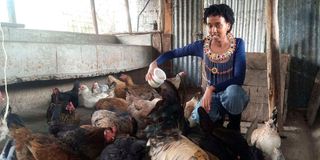
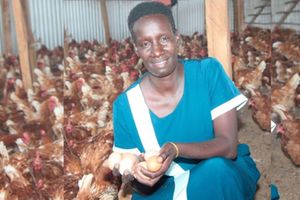
When the Seeds of Gold team paid Sotian a visit at her family farm in Kitengela, Kajiado County, she was collecting eggs from nesting boxes in the field, despite the scorching sun.
Sotian was raised in an enterprising family that, over the years, has been diversifying from traditional livestock keeping into agribusiness, thanks to climate change.
One day in 2022, while she was in Form Four and on school holiday, her father – who had travelled to Kitale – returned home with a kienyeji cock and hen as gifts.
Instead of making them a delicacy, Sotian’s enterprise was born at a makeshift store.
In traditional Maa culture, eating poultry or any kind of bird was a taboo. That has, however, gradually faded, with poultry increasingly becoming a source of food and income-generation.
Kienyeji chickens are known for their hardiness, ability to forage for food and natural brooding. They, however, take long to mature – six to eight months – and lay about 80 to 120 eggs a year.
To sustain her enterprise, the fourth-year Economics student at the University of Nairobi controls the size of her flock.
She sells eggs to the neighbourhood, though demand sometimes outstrips supply.
Sotian’s parents helped her meet the cost of feed and vaccination until she became financially stable.
Shelly Sotian, a young farmer, collecting eggs at her family farm in Kitengela town on November 10 2026.
Photo credit: Stanley Ngotho | Nation Media Group
A mature cock goes for Sh1,500, while a hen is Sh1,000. A crate of eggs retails at Sh600, with customers placing orders she is at times unable to fulfil.
“I have learnt rotation hatching to ensure there always are mature birds and eggs for sale,” she says.
On mornings when she has classes, Sotian wakes up early to feed the birds before leaving them in the care of the family’s two workers.
Apart from supplementary feeds and water provided in a pen, the birds spend much of their time foraging in designated open fields and livestock pens at the farm.
Sotian’s family has expansive rangelands that are divided into paddocks for livestock, providing the birds with enough space to roam and forage.
Free-range farming allows chickens to roam on pasture or open yards, encouraging natural behaviour like scratching, dust-bathing and foraging for insects and seeds.
“I opted for kienyeji chicken farming after seeing a deficit in market for the meat. There was a growing demand for ethically raised and organic food and chicken. It pays,” she says.
Sotian says her enterprise generates enough income to cater for her commute to and from Nairobi. She also pays for lunch and personal items “without bothering my parents”.
“If I borrow money from my parents, they are assured of repayment,” she says.
There are challenges too. Sotian says the supplementary feed is costly. Predators and diseases also strike.
“Sometimes the birds are exposed to environmental health threats. Cats and birds of prey attack chicks,” she says.
Sotian intends to expand her flock to 3,000 birds. She targets customers in Kitengela, Nairobi and other nearby towns. She challenges young women to embrace poultry farming, saying it is profitable.