When Ashok Sunny first set out in business, he did not foresee becoming a recognised name in high-end menswear, specialising in bespoke and made-to-measure tailoring.
He is the chief executive of Ashok Sunny Tailored Limited, a growing Nairobi-based tailoring brand. His path, however, began far from the polished fittings and curated wardrobes he now oversees.
Raised in Majengo, Nairobi, Sunny’s early years in business were marked by setbacks that repeatedly tested his resolve. Twice, he lost his tailoring tools—once to theft in Umoja, where he had set up his workshop and later in a fire in the Nairobi CBD. Each incident forced him to start over, slowing his progress but not stopping it.
Despite these setbacks, he gradually rebuilt his craft and later established a more permanent base in Ridgeways, Kiambu Road, where his work has gained steady traction.
“I did not come from privileged circumstances, so I had to look for ways to earn extra income,” he says, noting that he had always been drawn to clothing and the craft of well-made garments.
While still at university, he began making pieces for himself before extending the work to a few people as a side hustle.
His early venture involved sourcing second-hand clothes from Gikomba market in Nairobi, altering and reselling them to friends. The pieces gained popularity within his circle, prompting him to scale up.
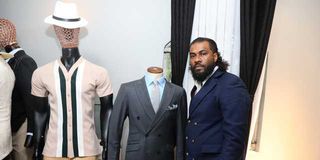
A double-breasted tailored blazer pictured at Ashok Sunny Tailored Limited’s shop in Nairobi on April 23, 2026.
Photo credit: Bonface Bogita | Nation Media Group
“I eventually started thinking beyond second-hand clothing, exploring the idea of making garments from scratch, since you are restricted by what is available,” he says.
With support from his mother, who contributed Sh20,000 start-up capital from her chama savings, he formally registered Ashok Sunny Tailored Limited in 2018, launching the business with a single tailor.
He says this step pushed him into bespoke tailoring, beginning with made-to-measure pieces. The business now operates as a structured tailoring enterprise serving clients seeking customised garments.
Bespoke tailoring traces its origins to 17th-century England and became closely associated with London’s Savile Row, known for its handcrafted suiting. The term “bespoke” comes from “bespeak,” meaning to order in advance, referring to garments made to individual specification.
“Bespoke tailoring means a garment is individually crafted based on specific measurements, preferences and body type,” he explains.
His first sale came unexpectedly. He had made a suit for himself and, while wearing it, was approached by a passerby who inquired where he had bought it.
When Sunny explained that he had made it, the man offered to buy it off him on the spot. He sold the suit for Sh5,500, changing into the sweatpants and T-shirt the buyer provided.
“I was just starting out then, but the business has grown considerably. Our suits now range between Sh35,000 and Sh150,000, depending on fabric and level of detailing,” he says.
Bespoke suits typically require at least four fittings and take up to six weeks to complete, with each piece constructed from high-quality fabrics and finished largely by hand.
“Depending on the type and quality of fabric, pricing varies within that range,” he says, noting that most suits are made from wool ranging from Super 100s to Super 200s, as well as premium materials such as cashmere and vicuña.
He explains that Super 100s are priced at about Sh35,000, Super 110s at Sh45,000, Super 140s at around Sh100,000, and Super 160s at roughly Sh150,000, with higher grades featuring finer and lighter fabric.
Cashmere, often blended with wool, can cost upwards of Sh500,000, while vicuña remains the most expensive fabric globally, though it is not available locally.
Most of the fabrics used are imported, with Sunny sourcing materials from international suppliers in Germany, Belgium, France and London due to the limited availability of premium suiting textiles locally.
Some local suppliers, he notes, provide fabrics within the Super 100s to Super 120s range as the domestic industry continues to develop.
He notes that consistency in fabric quality is critical to maintaining the standards expected by his clientele.
“Demand remains steady despite the premium pricing,” he says, adding that well-crafted garments tend to last longer when properly maintained. He notes that bespoke suits can last a lifetime and are often retained as heirloom pieces, unlike mass-produced alternatives.
Ashok Sunny Tailored Limited staff at work inside their tailoring shop at Ashok Sunny Tailored Limited in Nairobi on April 23, 2026.
Photo credit: Bonface Bogita | Nation Media Group
Custom tailoring, he notes, can also offer sustainability advantages, as garments generate less waste during production and contribute to lower textile consumption over time due to their longer lifespan.
He says the business operates on a made-to-order model, where each suit is only produced after consultation and confirmation of specifications, allowing for more controlled production planning and reduced waste.
The workshop employs 15 tailors organised into cutters, stitchers and finishing specialists to streamline the different stages of production, supported by five staff handling day-to-day operations within a structured corporate framework.
While trends in fashion and style may change, the underlying process remains consistent. Each garment is made from scratch, beginning with the client’s measurements.
The process is defined by detailed consultations, precise measurements and multiple fittings to ensure alignment with the client’s body shape and posture.
Posture and form are carefully assessed and translated onto brown paper patterns using a tape measure, set square and tailor’s chalk.
“We then cut the suit, after which a first basted fitting is assembled. At this stage, the garment is temporarily stitched together using white basting thread for the client to try on,” he explains.
The fit is assessed before the suit is unpicked, adjusted and re-cut where necessary, with final refinements made ahead of completion.
Ashok Sunny Tailored Ltd operates within Kenya’s high-end clientele market, serving individuals in senior corporate leadership, government, diplomatic circles and business ownership.
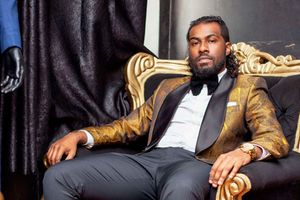
A stylish men’s outfit is displayed at Ashok Sunny Tailored Limited’s shop in Nairobi on April 23, 2026.
Photo credit: Bonface Bogita | Nation Media Group
He notes that his work has, at times, extended to prominent national figures. “I made some of the suits worn by President William Ruto when he was Deputy President,” he says.
Beyond political circles, his clientele also includes actors within Kenya’s entertainment industry, members of Parliament, expatriates and senior corporate executives.
“The clientele remains broad and is still growing through referrals and repeat business, as clients return and frequently bring in new customers,” he says.
However, he points to human capital as a key constraint, particularly in finding and retaining highly skilled tailors capable of consistently delivering precision work.
Edwin Ochieng' (left) and Kevin Omollo, staff at Ashok Sunny Tailored Limited, cut fabric along a marked pattern while tailoring a suit at the shop in Nairobi on April 23, 2026.
Photo credit: Bonface Bogita | Nation Media Group
Bespoke tailoring relies heavily on individual craftsmanship, while training is time-intensive, making it difficult to scale without compromising quality.
“Our team undergoes continuous professional training, including exposure to master tailors from London and Italy. While we currently focus on semi-bespoke garments, we are working towards refining our full bespoke capabilities,” he says, adding that the nature of bespoke production also places pressure on delivery timelines, given the multiple fittings, hand-cutting and revisions involved.
“This can complicate expectations among high-end clients accustomed to faster turnaround times, while differing preferences around fit, silhouette and comfort must still be balanced against technical feasibility,” he notes.
As demand grows, maintaining a personalised, boutique service while expanding production capacity remains a structural challenge within the business.
“There is a significant gap between locally made products and client perceptions of value. Many clients still prefer to source suits from abroad, and there is a need for greater support for the local industry,” he says.
He adds that skills development remains critical. “For those pursuing fashion, mentorship is essential, and training needs to be better aligned with the Kenyan market to prepare designers for local demand,” he says.
He notes that strengthening technical skills, particularly in pattern-making, will be important in improving the quality and competitiveness of locally produced garments. Sunny says building the business has taken patience, discipline and sustained sacrifice, shaped by both setbacks and growth.
His focus is on establishing Ashok Sunny Tailored Limited as a leading bespoke tailoring brand in East Africa and taking it beyond the region in time.