Before entering commercial automobile fabrication, Mohammed Kala Ali spent years navigating the trial-and-error realities of business across Kenya.
His entrepreneurial career began by supplying fresh juice to Nyanza eateries, generating the seed capital for a clothing venture while pursuing a Bachelor of Commerce in Finance at the University of Nairobi. He later ventured into real estate, but the business folded after months without generating revenue, exposing him to the property market’s volatility.
“I had paid rent and other bills for one and a half years without making a single shilling from the real estate business,” Ali recalls. “I then started a mini restaurant selling ice cream and shawarma in Eastleigh, which worked well before I eventually transitioned into the commercial vehicle trade.”
That exposure paved the way for Identity Auto Fabricators, an enterprise that fabricates specialised bodies for minibuses, high-capacity buses, trucks, tippers, and fluid tankers.
Operating along Nairobi’s Mombasa Road industrial corridor, the NTSA-approved vehicle body builder has carved out a distinct market position in the regional transport sector. Founded during the Covid-19 pandemic, the company entered the market during a period of widespread economic uncertainty.
While many manufacturing concerns stalled or scaled back operations, they carved out an initial operational base by starting with just nine employees.
In its early stages, the firm navigated initial operational losses, elevated production overheads, delayed material deliveries, and muted demand across a severely disrupted regional logistics market.
“Starting a manufacturing business during that period meant we had to be cautious with every decision, from sourcing raw inputs to managing labour overheads. We had to adjust our operations continuously as market conditions changed and focus on building a sustainable foundation for the business,” he says.
The firm receives complete vehicle chassis units equipped with engines directly from automotive dealers, while importing specific specialised steel plates, structural components, fasteners, and hardware required for heavy-duty body fabrication.
Workers fabricate and assemble bus bodies at the Identity Auto Fabricators Limited production facility along Mombasa Road in Nairobi on August 29, 2026.
Photo credit: Bonface Bogita | Nation Media Group
The manufacturing workflow begins with assessing client operational specifications and translating transport requirements into precise engineering blueprints.
The process then progresses through metal cutting, structural framing, panel assembly, surface finishing, rustproofing, and multi-stage quality inspections prior to customer delivery.
They then subject completed bodies to structural, electrical and roadworthiness checks before delivery, while ensuring modifications conform to regulatory requirements.
Unlike imported, fully built units manufactured to standardised global specifications, locally fabricated bodies offer extensive customisation tailored to regional fleet requirements. Operators frequently request adjusted seating configurations, expanded payload capacities, specialised cargo storage compartments, or reinforced undercarriages designed for rough road terrain across rural transit routes.
The firm’s product lineup spans minibuses, medium- and high-capacity buses seating between 26 and 67 passengers, customised matatus, cargo trucks, heavy-duty tippers, and fluid tankers. These units serve commercial transport operators, construction firms, agricultural cooperatives, and corporate logistics fleets across the East African region.
Custom body fabrication ranges from Sh150,000 for basic structural modifications to Sh6 million for complex, high-capacity passenger vehicles. Turnkey vehicles, including the chassis and engine, cost between Sh4 million and Sh20 million, depending on the technical specifications and vehicle capacity. All completed builds come with a standard two-year warranty.
“The economics of body fabrication are determined by the availability of local materials and macroeconomic cost pressures. Pricing also varies depending on vehicle design, payload capacity, and the specific operational requirements of each customer,” he explains.
Managing cash flow cycles is a constant balance for the workshop. Fabricating a single high-capacity bus or specialised tanker involves weeks of manual welding, structural framing, electrical wiring, and interior fitting—locking up substantial working capital until final delivery.
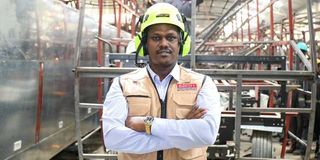
Identity Auto Fabricators Limited founder and CEO Mohamed Ali walks at the company’s production facility along Mombasa Road in Nairobi on August 29, 2026. The facility fabricates and assembles bus, truck and tipper bodies.
Photo credit: Bonface Bogita | Nation Media Group
To manage these inventory holding costs, the company relies on modular assembly workflows. Standardising core structural frames while customising interior fittings allows the plant to reduce total throughput times, optimise raw material usage, and stabilise labour costs across changing production cycles.
“We do not offer in-house credit or rely on individual guarantors for financing, instead, clients acquire vehicles either through cash purchases or formal asset-backed financing from commercial banks, SACCOs, and government institutions such as the CDF, subject to the required documentation.”
According to Ali, this third-party financing structure yields mutual benefits across the commercial transport supply chain. For operators facing heavy capital outlays, institutional backing preserves working capital; for the fabricator, guaranteed payouts secure a vetted order pipeline, stabilising raw material procurement against market volatility.
As production expanded, the business scaled its workforce to over 200 permanent and contract personnel. The current roster includes welders, fabricators, mechanical engineers, spray painters, electrical technicians, and administrative staff, supplemented by casual labour during peak assembly cycles.
The technical requirements of commercial vehicle fabrication have necessitated ongoing capital allocation toward specialised machinery, workshop expansion, precision cutting tools, and workforce skills development.
Because some raw materials are sourced internationally, fluctuations in foreign exchange rates and global supply-chain disruptions directly affect operating costs and prices at local manufacturing plants.
Regional integration under the East African Community (EAC) is accelerating cross-border trade in agriculture, transit freight, and logistics. This has heightened demand for long-haul cargo trucks, specialised trailers, and fluid tankers engineered for regional transport corridors.
A worker inspects a newly fabricated red tipper body mounted on a truck at the Identity Auto Fabricators Limited production facility along Mombasa Road in Nairobi on August 29, 2026.
Photo credit: Bonface Bogita | Nation Media Group
To capture this trade volume, the business is preparing to transition to a larger manufacturing plant along the Mombasa Road industrial belt. While the firm already exports units to Uganda, South Sudan, and Tanzania, the expansion will support higher assembly volumes and facilitate its entry into heavy trailer fabrication.
“The opportunities emerging across the region are significant, but seizing them requires continuous investment in equipment, assembly workflows, and technical skills,” he explains, and adds,
“Our immediate operational goal is to scale output beyond 1,000 units in the coming year. Over the long term, we are positioning the new facility for an annual capacity of 3,000 units to service expanding cross-border supply chains.”