Kenya’s proposed National Infrastructure Fund (NIF) has been faulted for heavy reliance on the sale of public assets amid concerns about the sustainability of the strategy.
Auditor-General Nancy Gathungu said that Kenya’s planned NIF is more focused on the use of asset monetisation despite the risks of lower valuations if the assets are sold during market or depletion of assets to sell.
Kenya’s proposed Infrastructure Fund is more focused on the use of asset monetisation. Further, Kenya plans to capitalise its fund by selling existing State stakes,” she said regarding the proposed NIF.
“This is a recycling strategy similar to models used in the Arab Republic of Egypt and the Republic of Singapore (Temasek), but it carries higher risks if the assets are sold during market downturns and the asset values may be understated compared to the actual market values,” said Ms Gathungu.
The Auditor-General pointed out that the sale of the assets to back the NIF is not sustainable in the long term because of limited resources.
“The sale of the assets may also mean that at a point in future, there may be no more assets to sell, in other words, future generations will be overburdened by the current decisions, contrary to the principles of public finance under Article 201(c) on equitable sharing of the burdens and benefits of the use of resources and public borrowing between present and future generations” said Ms Gathungu.
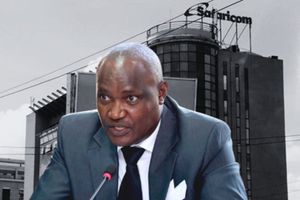
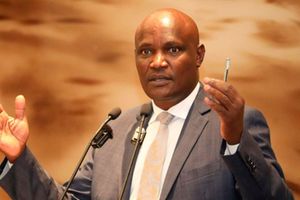
Treasury Cabinet Secretary John Mbadi.
Photo credit: File | Nation Media Group
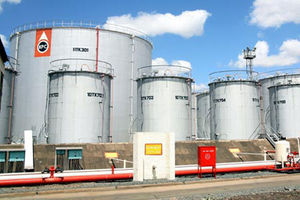
The government has indicated that proceeds from the just concluded initial public offering (IPO) of Kenya Pipeline Company and partial sale of its stake in Safaricom will form part of the fund’s seed capital.
The State expects to raise Sh106 billion from the Kenya Pipeline IPO and around Sh244.5 billion from selling a 15 per cent stake in Safaricom to the South African firm Vodacom Group. The Sh244.5 billion includes an upfront dividend of Sh40.2 billion on what will be the government’s residual stake of Sh20 per cent in Safaricom.
President William Ruto has said that the money from the NIF would be invested in projects that will help grow the human capital, generate additional energy, and transform transport and logistics.
Ms Gathungu criticised the National Infrastructure Fund Bill 2026, which aims to create an NIF to mobilise Sh5 trillion by crowding-in private capital by leveraging up to Sh10 for every shilling invested, saying it doesn’t provide for a transparent valuation process for assets being disposed of.
“The Infrastructure Fund Bill focuses on the management of money once it is in the fund, but does not include the valuation process before the sale of Assets. To ensure value for money, the Bill should include a requirement for independent valuation of state assets before they are offloaded to seed the fund,” said the Auditor-General.
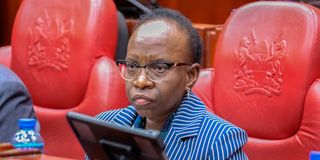
Auditor-General Nancy Gathungu.
Photo credit: File | Nation Media Group
“Without a transparent valuation process, privatisation can result in the sale of state assets for less than their true value.”
“Section 2.4 of the Organisation for Economic Co-operation and Development Journal on Budgeting, Volume 2, No. 2, requires that all state guarantees be disclosed as contingent liabilities. Clause 25 of the Infrastructure Fund Bill allows for such guarantees without a mandatory reporting link to the National Budget,” said Ms Gathungu.
“To avoid hidden debt, I recommend this Clause be aligned with Section 2.4 of the Journal on Budgeting.”