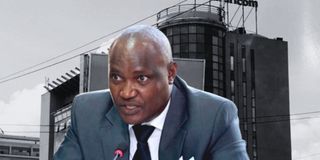
The Treasury Cabinet Secretary, John Mbadi, on Tuesday submitted to Parliament a copy of the Cabinet Memorandum that approved the sale of Safaricom shares to Vodacom South Africa.
He also tabled a copy of the sale and purchase agreement and the valuation agreement for the sale of the government shares in Safaricom.
"You also asked me to table safaricom board minutes approving the transaction.There is no requirement for the board of Safaricom to approve the divestiture. We are selling our shares as shareholders," Mr Mbadi said.
He also tabled the Specially Permitted Procurement Framework that the Treasury entered into with KCB Investment Bank to undertake the transaction with Vodacom SA.
Mr Mbadi told the National Assembly's joint committee that is scrutinising the transaction that the government had decided to establish the National Infrastructure Fund, which will receive the proceeds of the sale of Safaricom shares to Vodacom South Africa.
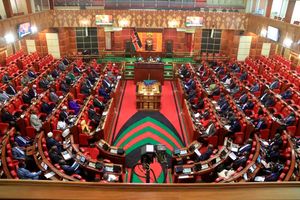
The National Assembly’s Joint Committees on Finance and National Planning, and that of Privatisation and Public Debt, had recalled Mr Mbadi to provide the status of various documents that MPs had demanded to be tabled.
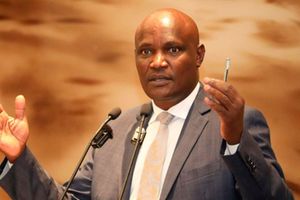
Treasury CS John Mbadi before a joint sitting of the Departmental Committee on Finance and National Planning and the Select Committee on Public Debt and Privatization on January 13, 2026.
Photo credit: Bonface Bogita | Nation Media Group
Mr Mbadi said the recent rally of Safaricom prices should be viewed in the context of the transactions.
"The moment I announced the transaction, there has been a surge in Safaricom share price," he said.
He said even after the conclusion of the transaction, the prices will settle.
The committee had recalled Mr Mbadi over failure to provide critical documents on the proposed partial sale of government shares in Safaricom to South African telco, Vodacom SA.
The government, through Sessional Paper No 3, is seeking to generate approximately Sh204 billion ($1.57 billion) in gross proceeds through the divestiture of 15 percent stake in Safaricom at a premium of 23.6 percent to the six-month volume weighted average price ended December 2, 2025.
The government is seeking to sell six million shares through partial divestiture of government shares Vodacom at Sh34 per share.
The Treasury is seeking to offload 15 percent of the government shareholding in the cash rich telecommunication firm.
The government will repay about Sh55 billion over six years using dividends from the unsold shares. After this period, the government will continue to receive full dividends.
Safaricom will retain a Kenyan chairperson and independent directors. Vodacom has committed to continue supporting the Safaricom Foundation.
A joint committee of the National Assembly will hold ten days of intense public hearings. Key players including Safaricom PLC, Airtel Kenya, and the Law Society of Kenya are scheduled to testify. The goal: to determine if selling 15 percent of the state’s 35 percent stake to Vodacom at Sh34 per share is a masterstroke of fiscal policy or a "fire sale" of national wealth.
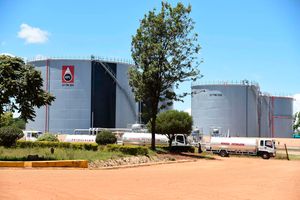
Photo credit: File | Nation
Mr Mbadi told lawmakers that the proceeds of the sale of Safaricom shares will be channelled towards economically viable infrastructure projects.
The committee is at the tail end of conducting public participation on the Sessional Paper on the partial divestiture of government shares in Safaricom.
Finance and National Planning committee chairperson Kuria Kimani said the committee conducted public hearings in 30 counties.
Mr Mbadi told MPs to pass the National Infrastructure Fund Bill to enable the Treasury ring-fence the proceeds of the divestiture of Safaricom and the privatisation of the Kenya Pipeline Company (KPC).
"We are racing against time. The sale of 60 percent shares of KPC is closing today and the last time I checked, we will get over 100 percent oversubscription," Mr Mbadi said.
"We anticipate to get Sh106 billion from the KPC share sale and Sh244 billion from sale of Safaricom shares. We want the total proceeds of about Sh350 billion to go into the National Infrastructure Fund."
Mr Mbadi said the seed capital for the National Infrastructure Fund will come from the privatisation of State agencies.
He said the fund is an investment vehicle that will finance only bankable and commercially viable projects.
Mr Mbadi said the Athi River-Namanga road, dualing of Thika Superhighway, Mombasa-Malindi road, Jomo Kenyatta International Airport and several mega dams have been identified as candidates for funding through the National Infrastructure Fund.