Weeks before the June 2024 anti-tax protests erupted, President William Ruto sought to explain to Kenyans why he had prescribed a bitter pill in the form of the controversial provisions contained in the Finance Bill 2024, including proposed taxes on bread, motor vehicles and financial services.
During an engagement with the Harvard Business School Class of 2025 at State House on May 14, 2024, President Ruto said he wanted to raise the country's tax burden, measured by the tax-to-gross domestic product (GDP) ratio, to 16 per cent by the end of that year and leave it at between 20 and 22 per cent by the end of his term.
The tax-to-GDP ratio is the preferred measure of a country's tax burden because it captures the share of economic output that is transferred to the government through taxation, providing a standard benchmark for comparing tax effort across economies.
Dr Ruto argued that the short-term pain associated with higher taxes would ultimately be offset by long-term gains in fiscal space, allowing the government to channel more resources towards development projects instead of debt servicing.
"My drive is to push Kenya; possibly this year we will be at 16 per cent from 14 per cent. I want in my term, God willing, to leave it at between 20 and 22 per cent [of GDP]," he said.
His tax-raising ambitions were, however, dramatically disrupted by the violent protests against the Finance Bill 2024, which left more than 60 people dead according to rights groups. Many other people were injured and property worth billions of shillings was destroyed.
In its first fiscal year, the Ruto administration increased the tax-to-GDP ratio from 12.9 percent in financial year 2021/22 to 13.8 per cent in the 2023/24 financial year, largely through a raft of tax measures, such as doubling Value-Added Tax on petroleum products to 16 per cent.
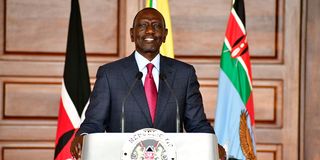
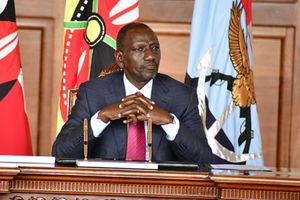
President William Ruto signs into law the Finance Bill, 2026 among other Bills at State House, Nairobi on June 23, 2026.
Photo credit: Francis Nderitu | Nation Media Group
However, following the collapse of the Finance Bill 2024, the ratio slipped to 13.3 per cent in the financial year 2024/25, according to data from the National Treasury.
The Treasury projects the ratio will rise modestly to 13.7 per cent in the current financial year ending June 2026 before falling again to 13.2 per cent in the financial year 2026/27, reflecting the restraint shown in the Finance Bill 2026 as the government remains wary of triggering a repeat of the June 2024 protests that shook the administration and altered the country's tax policy trajectory ahead of the 2027 General Election.
By the end of June 2025, the tax revenue as a percentage of GDP is projected at 13.3 per cent, and is expected to drop to 13.7 percent by the end of this financial year, Treasury data shows.
In the current financial year, the government has steered clear of introducing major new taxes, opting instead to focus on tax administration and compliance measures as it seeks to expand revenue collection from hard-to-tax segments of the economy, including the informal sector.
Salaried workers have, however, missed out on an earlier promise to review the Pay As You Earn (PAYE) bands, a move that would have effectively lowered the tax burden on low-income earners.
The shift marks a departure from the administration’s earlier strategy of aggressively raising taxes through annual finance laws and reflects the caution that has followed the June 2024 protests, which fundamentally altered the government’s approach to taxation and fiscal policy ahead of the 2027 General Election.