When thousands of young Kenyans took to the streets in June 2024 to oppose the Finance Bill, the demonstrations quickly evolved into something bigger than a tax revolt.
They became a nationwide expression of frustration over the rising cost of living, shrinking purchasing power and a growing sense that the economy was no longer working for ordinary citizens.
Two years later, some of the tax proposals that triggered the deadly protests have been abandoned. But the economic pressures that fueled public anger continue to determine how Kenyan households spend their money.
An analysis of earnings and inflation data suggests that families have fundamentally rewritten their budgets since the protests, directing a larger share of their incomes towards essential items such as food and transport while cutting back on discretionary spending like entertainment.
Kenya National Bureau of Statistics data shows that real average monthly earnings rose from Sh55,452 in June 2024, the month of the Gen-Z-led protests, to Sh56,566 a year later. The Sh1,115 increase marked the first improvement in inflation-adjusted earnings after five consecutive years of decline.
The recovery, however, remains fragile.
Even after the gain as captured in the 2026 Economic Survey, real monthly earnings remain nearly Sh3,330 below the Sh59,895 recorded in June 2021, indicating that workers have yet to recover the purchasing power they had four years ago.
For many households, any improvement in wages has been overtaken by rising costs in the categories that consume the largest share of family budgets.
Food inflation accelerated from 6.2 per cent in May 2024 to 9.4 per cent in May 2026, while transport costs posted the steepest increase of any major spending category, rising 16.5 per cent over the same period in the wake of the unresolved Middle East crisis. Overall inflation climbed to 6.7 per cent from 5.1 per cent.
The official numbers suggest that households are spending more money simply to maintain basic living standards. The reality facing many families contrasts with the government's improving macroeconomic indicators and underscores why cost-of-living concerns continue to dominate public discourse two years after the deadly demos.
Police officers use horses to disperse protesters along Parliament Road in Nairobi on June 25, 2026, during the second anniversary of the Anti-Finance Bill 2024 Gen Z protests.
Photo credit: Bonface Bogita | Nation Media Group
While presenting the 2026/27 Budget on June 11, Treasury Cabinet Secretary John Mbadi acknowledged that concerns about household finances were the dominant issue raised by Kenyans during public consultations.
"The message from Kenyans across the country — from our rural villages to our bustling towns and cities, the ordinary mwananchi — is clear and consistent," Mr Mbadi said.
"Kenyans want an economy that works for them; an economy where the cost of living is manageable; where opportunities for employment and businesses are expanding; and where the benefits of economic growth are shared widely across society."
He said wananchi had also called for lower taxes on essential commodities, reduced wastage of public resources and a more decisive fight against corruption.
The concerns mirror many of the grievances that animated the deadly Gen-Z protests in 2024. For Amos Kwedho, a county government employee and businessman in rural Kenya, the economic reality remains far removed from official assurances.
"Things on the ground are different from what the government portrays," he says. "Spending power has really gone down since 2024. Things have gotten worse since this government took over because people hardly have any money in their pockets. If you have not fallen behind on your debt repayment or defaulted, you should thank your God."
His experience offers a window into how economic pressures have rippled through local economies. Mr Kwedho was forced to shut down a motorcycle taxi investment in 2025, selling all 10 motorcycles that he had leased to boda boda riders at a daily fee of Sh400.
The model became unsustainable as operators struggled with rising fuel costs and higher maintenance expenses. Many riders could no longer remit the agreed amount, sometimes paying only half the daily fee.
"The operators were defaulting because fuel became expensive and spare parts costs also went up," he says.
He redirected the proceeds into expanding stock for his pub business, but even there, demand has weakened.
"The returns are down about 20 per cent compared with 2022 because purchasing power has gone down even though customer numbers appear not to have fallen." His account reflects a broader trend emerging from the inflation data. While food and transport costs have surged, inflation in several discretionary spending categories has moderated.
Clothing and footwear inflation has slowed to 2.0 per cent from 3.8 per cent two years earlier. Recreation and culture inflation has eased to 2.5 per cent from 4.8 per cent, while household furnishings and maintenance costs have slowed to 1.9 per cent from 4.1 per cent.
Economists often interpret such patterns as evidence that consumers are prioritising necessities over optional purchases.
Families may postpone replacing furniture, buying new clothes or spending on leisure activities, but they cannot avoid buying food or paying transport costs.
The result is a gradual reallocation of household spending away from non-essential items and towards basic needs.
For businesses, this shift helps explain why consumer demand remains uneven despite signs of economic stabilisation.
Mr Kwedho says financial pressures are particularly severe in rural counties where delayed government disbursements have weakened local economies.
"The problem is the delays in releasing funds to the counties, which see workers going for up to three months without salaries. Schools are not paying suppliers because of delays in the disbursement of capitation, and this has killed the economies in rural counties like here, where I work."
Protesters march along University Way towards the Central Police Station in Nairobi on June 25, 2026 during the second anniversary of the 2024 Gen Z anti-Finance Bill protests.
Photo credit: Bonface Bogita | Nation
The experience illustrates how household finances are increasingly being shaped by broader fiscal pressures, including delayed payments, weak business activity and constrained consumer spending. Two years after the Gen-Z protests, the data suggests that the economic debate that erupted on the streets has not disappeared. Instead, it has shifted into everyday budgeting decisions being made in homes across the country.
The protests may have succeeded in stopping unpopular tax proposals, but they did not eliminate the underlying pressures that sparked public anger.
Today, the legacy of June 2024 can be seen not only in political reforms and policy debates, but also in the quiet adjustments taking place around kitchen tables as millions of Kenyans continue to rewrite their household budgets in search of financial survival.
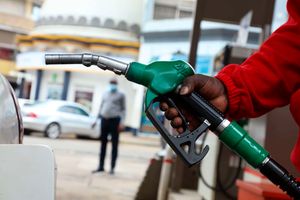
Meanwhile, the cost of fuel has soared by upwards of Sh50 a litre, triggering sky-high inflation and stoking public outrage.
The Finance Bill, 2024, and high inflation costs were among the key reasons behind the protests that led to the death of scores of Kenyans as police used lethal force to quell the protests that led to the invasion and vandalism of Parliament.
The sky-high pump prices drove the inflation rate (measure of cost of living) to 6.7 per cent last month – the highest since January 2024. The current inflation rate is within touching distance of the government’s preferred cap of 7.5 per cent.
A combination of tax increment and the Middle East war has triggered the surge in local pump prices, with a subsidy that the government applies to lower fuel prices doing little to cushion consumers against the costly fuel.
The government increased the Road Maintenance Levy (RML) on a litre of diesel and petrol by Sh7 to Sh25 from July 2024, barely a month after the protests.
The increase in the levy means that the current pump prices could be lower by Sh7 per litre on the basis of the RML alone.
The outbreak of the Middle East conflict in February this year led to a rally in global prices of refined fuel, mainly due to supply hitches and closure of the critical Strait of Hormuz. Escalating prices of fuel have led to a sharp jump in the cost of living, with inflation hitting a two-year high of 6.7 per cent – the highest in slightly over two years.
The sky-high cost of living has done little to ease public ire, leaving the government in a tight corner amid fears that a further rise in prices of fuel and electricity could push Kenyans to the edge.
But the government has largely blamed the costly fuel on the Middle East war amid a simmering public uproar over the steep energy prices.
The costly fuel has led to a runaway inflation rate, leaving the government in a dilemma and triggering this month’s decision to freeze a planned review of electricity tariffs.
The new electricity tariffs were set to kick in from July 1, 2026, and could have hit homes and businesses with higher power bills.
The impact of the costly fuel reared its ugly head last month when public service transporters staged a two-day strike, forcing the government to lower diesel prices by Sh10 a litre.
But the Sh10 drop did little, as fares that public transporters charge and other costs of services and goods surged as service providers and manufacturers factored the costly fuel into the final prices of their products and services.