Agriculture Cabinet Secretary Mutahi Kagwe has assured Members of Parliament that there are sufficient safeguards in the lease agreements guiding the leasing of the four State-owned sugar companies.
In a status report to the National Assembly regarding the leasing of the four companies, Mr Kagwe told MPs that the conditions in the agreements guarantee the interests of farmers.
The four State-owned sugar companies that were leased by the government on May 10, 2025, and handed over to private players are South Nyanza Sugar Company, Nzoia Sugar Company, Chemelil Sugar Company and Muhoroni Sugar Company.
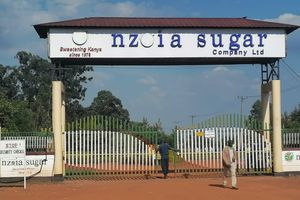
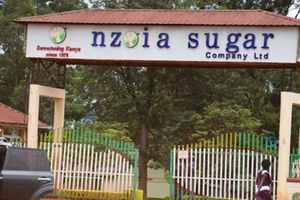
The main gate at Nzoia Sugar Company in Kanduyi constituency Bungoma County.
Photo credit: Brian Ojamaa | Nation Media Group
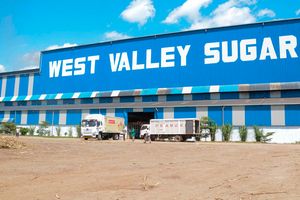
South Nyanza Sugar Company was leased to Busia Sugar Industries Limited, Nzoia Sugar Company to West Kenya Sugar Company Limited, Chemelil Sugar Company to Kibos Sugar and Allied Industries Limited, while Muhoroni Sugar Company was leased to West Sugar Company Limited.
While responding to queries from lawmakers who accused the government of conducting the process in secrecy, Mr Kagwe said the lease agreements give no room for any kind of manipulation, both to the detriment of farmers and host local communities where the factories are domiciled.
The CS said that under the lease agreements, nuclear land shall only be used for cane development and shall not be used as collateral by the lessee.
This was in response to concerns by MPs that some of the private companies that have taken over the State-owned millers could be plotting to use the new lease agreements as collateral to secure loans from financial institutions, a move that risks sinking the millers into further financial distress.
Mr Kagwe also told lawmakers that under the agreements, lessees are expected to invest in cane development and modernisation of the sugar mills through rehabilitation, upgrading of machinery and adoption of new technologies to improve operational efficiency.
The CS further informed the House that the lessees are also expected to invest in diversification, including co-generation of power, production of bioethanol and allied products.
Mr Kagwe added that at the expiry of the lease term, all initial and additional investments shall revert to the lessor.
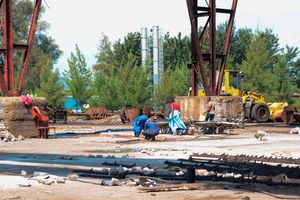
A wheel loader gathers sugarcane at the loading yard of Sony Sugar Company Limited in Awendo, Migori County, on June 11, 2025.
Photo credit: Alex Odhiambo | Nation Media Group
Another key condition under the agreement provides that the management and maintenance of nuclear estates and out-grower systems shall ensure that proceeds benefit local communities through the payment of bonuses to farmers.
Under the agreements, the annual lease rental for Chemelil, Muhoroni and Sony Sugar is Sh40, 000 per hectare, while Nzoia Sugar Company pays Sh45, 000 per hectare per year.
There are also concessional fees of Sh4, 000 per tonne of sugar and Sh3, 000 per tonne of molasses produced.
“The Ministry leased out all the land, buildings, plant and machinery. In other words, it is a complete package covering the entire ecosystem. Only motor vehicles and livestock were exempted from the list of items leased,” Mr Kagwe said.
“The nuclear estate and standing sugar cane were not valued separately since these were considered part of the leased asset portfolio that was already predetermined,” he added.
The operations of the leased State-owned sugar firms are regulated by the Kenya Sugar Board, which was established under the Sugar Act of 2024.
The Act contains several provisions that grant the Kenya Sugar Board regulatory powers for market monitoring, regulation and control of unfair trade practices, aimed at restraining monopolistic behaviour.
The existing framework includes regulatory oversight by the Kenya Sugar Board on compliance, cane harvesting and milling operations, as well as farmer protection and sugar-cane pricing frameworks under the Sugar Act of 2024.
In addition to the Sugar Act of 2024, the leased sugar factories are managed in accordance with the provisions of the Competition Act.
Muhoroni MP Onyango K’Oyoo told the House that the entire leasing process has been shrouded in secrecy, with details of the investors remaining unknown to most stakeholders.
Mr K’Oyoo said the manner in which the process was undertaken has left many questions unanswered, casting doubt on whether it will achieve its intended objectives.
An aerial view of Muhoroni Sugar Factory on July 1, 2025.
Photo credit: Alex Odhiambo | Nation Media Group
A 2019 sugar industry task force report recommended corporate reorganisation and financial restructuring of the struggling mills.
The task force, established by former President Uhuru Kenyatta, recommended the merger of Chemelil and Muhoroni sugar companies, which have cane-growing areas of 18,437 hectares and 22,134 hectares respectively, to form one zone.
It also recommended that Nzoia and South Nyanza sugar companies, which have cane-growing areas of 49,862 hectares and 81,415 hectares respectively, be retained as separate entities.
The task force further recommended that the companies be privatised to rescue them from imminent collapse.
1. The nuclear land shall only be used for cane development and shall not be used as collateral by the lessee.
2. The lessee shall invest in cane development and modernisation of the sugar mill through rehabilitation, upgrading of machinery and adoption of new technologies to improve operational efficiency.
3. The lessee shall invest in diversification into co-generation of power, bioethanol production and allied products.
4. At the expiry of the lease term, all initial and additional investments shall revert to the lessor.
5. Management and maintenance of the nuclear estate and out-grower systems shall ensure that proceeds benefit local communities through the payment of bonuses to farmers.