Kenya’s average weighted trade tariff with the US will nearly triple to 28 percent on expiry of the preferential African Growth and Opportunity Act (Agoa).
The United Nations Trade and Development (Unctad) revealed that the Agoa expiry on September 30, 2025, will signal a major blow to jobs and investments in the country’s textile and apparel sector.
The UN agency warned that if the programme is not extended, Kenya and other African nations dependent on the US export market will be hit hard by the projected sudden jump in tariffs.
“For example, Kenya would see its trade-weighted average US tariff nearly triple, jumping from 10 percent to 28 percent. For Madagascar, it would double to 23 percent,” Unctad said in an analysis.
Kenya would be the second-hardest hit in Africa after Lesotho if the Agoa deal is not extended. The Lesotho average weighted trade tariff with the US would jump from 15 percent to 32 percent without Agoa.
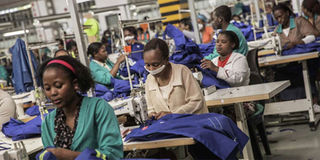
The Agoa pact allows access to more than 6,000 products, such as food and beverages, wood, plastics, and rubber, to the US from sub-Saharan Africa. But Kenya has largely tapped the apparel line, alongside small quantities of macadamia nuts.
Kenyan workers prepare clothes for export at the United Aryan Export Processing Zone (EPZ) factory, operating under the US African Growth and Opportunity Act (Agoa), in Ruaraka, Nairobi, in October 26, 2023.
Photo credit: File | Reuters
“Without Agoa’s renewal, Africa’s export competitiveness in the US market could quickly erode at a time when competition for alternative export markets intensifies globally. Accelerating the implementation of the African Continental Free Trade Area could help mitigate this situation, but such a readjustment would be challenging and require considerable time,” Unctad said.
Kenya’s textile and apparel industry is one of the biggest Agoa beneficiaries, earning a record Sh60.57 billion from textile exports to the US in 2024 — a growth of 19.20 percent over Sh50.82 billion in the prior year.
Data by the Kenya National Bureau of Statistics shows that the sector directly supported 66,804 jobs in 2024—an indication of the impact the non-renewal of Agoa would have on many households supported by workers in the sector.
“The increase in tariff is for everybody exporting to the US. Nobody is exporting at zero. By October 1, 2025, we have a composite taxation of 10 percent, and we expect additional taxes that could go as high as 26 percent,” said Jas Bedi, chairman of Kenya Private Sector Alliance (Kepsa) in an interview.
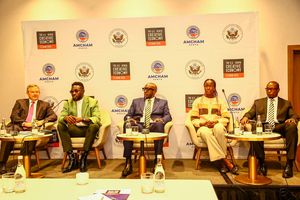
Kepsa and the American Chamber of Commerce in Kenya (AmCham) have both urged a two-year transition period to cushion workers and investors against the shock of a sudden lapse of the Agoa deal.
AmCham, Kenya CEO Maxwell Okello gestures during a past interview at his office in Westlands, Nairobi.
Photo credit: File | Nation Media Group
The Agoa treaty was initiated in 2000 with the intention to wean developing nations from dependency on donations. The deal was initially planned to run for 15 years starting in 2000, but was later extended to June 2025.
The renewal of the Agoa pact would require the approval of the US Congress, controlled by the protectionist President Donald Trump’s Republican Party.
“Without renewal, many African economies will lose export competitiveness in the US market. Since April 2025, rising US tariffs – especially country-specific tariffs implemented on August 7, 2025, and new sectoral trade measures – have increased duties on a wide range of products, regardless of Agoa preferences,” Unctad said.
The UN agency said that the expiry of Agoa means that country-specific and sectoral tariffs would apply on top of most-favoured-nation rates, which is applied equally to all World Trade Organisation members-- instead of the current preferential treatment.
The WTO last week urged African economies to embrace its newly formed Investment Facilitation for Development Agreement (IFDA) in a bid to plug the trade flows gap expected to emerge upon the lapsing of Agoa.
The IFDA was signed on February 13, 2024, as a recognition of the complementary relationship between investment flows and trade flows with participating members committing to accelerate cross-border cooperation and investment facilitation, especially in trading with Least Developed Countries.