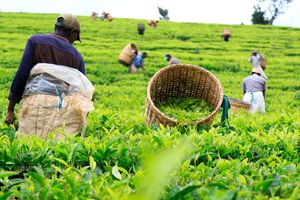
The Kenya Tea Development Agency (KTDA) is banking on value addition and branding to boost global sales of Kenyan-made tea and increase earnings for more than 680,000 small-scale tea growers across the country.
The move comes in the wake of protests by farmers over low bonus payments for the financial year ending June 30, 2025, from the agency’s 77 factories across 21 counties. The agency is now shifting its focus to specialty teas and value addition to cushion farmers from market fluctuations.
KTDA Holdings Limited Board Chairman Chege Kirundi and Group Chief Executive Officer Wilson Muthaura said the agency aims to expand global markets for Kenyan tea to reduce over-reliance on Cut, Tear and Curl (CTC) teas, also known as black tea.
A key focus area, they said, is the production of orthodox tea, which fetches higher prices in select Asian markets. KTDA plans to roll out orthodox tea production lines in several factories to tap into this growing demand.
In the past week, small-scale growers, especially from west of the Rift regions, have raised concerns over poor bonus payments, while their counterparts east of the Rift recorded comparatively higher earnings.
On average, farmers’ earnings in tea-growing constituencies fell by between Sh0.80 and Sh19.10, according to the interim report for the year under review.
Speaking on the sidelines of the Nairobi International Trade Fair (ASK Show), Mr Kirundi said KTDA remains guided by the principle of “farmers first” and is committed to improving returns despite global market disruptions.
“We are confident that the measures in place will fetch higher prices for farmers, even amid existing market challenges caused by geopolitical factors beyond our control,” said Mr Kirundi.
He added that value addition is key to enhancing farmers’ incomes, noting that KTDA is working with both national and county governments to upgrade factory facilities, open new production lines, and expand export markets.
Persistent marketing challenges
Mr Muthaura said KTDA, through its subsidiary Kenya Tea Packers (Ketepa), plans to increase the share of value-added tea across its factories.
“The Tea Act, 2020, requires that by 2028, at least 40 per cent of all tea be value added before being sold. KTDA is moving in that direction in collaboration with industry stakeholders,” he said.
He added that Ketepa is already packaging Safari and Chai Gold brands in Kenya and Dubai for international markets, and that KTDA is partnering with investors to process tea for the Chinese market, which was recently opened and holds high potential for Kenyan products.
“The future is bright for the tea industry. We urge small-scale growers not to abandon tea farming. Earnings will improve over time if farmers adopt good agronomic practices and maintain quality,” Mr Muthaura said.
Bomet Senator Hillary Sigei noted that the South Rift region, covering Bomet, Kericho, parts of Nakuru and Narok counties, produces high-quality tea but faces persistent marketing challenges.
“While claims have been made about poor-quality tea from the west of the Rift, the truth is that the east of the Rift enjoys an unfair marketing advantage,” said Mr Sigei.
Gatundu South MP Gabriel Kagombe, who is also a KTDA board member and director for Zone One, dismissed claims of discrimination in payments between the east and west of the Rift, attributing the variations to market dynamics.
“We should not politicise farmers’ payments or divide growers along regional lines. The differences were informed by market forces and the quality of produce auctioned in Mombasa during the period under review,” said Mr Kagombe.