The court held that the Consumer Federation of Kenya (Cofek), which sued in the public interest over Mr Mohamed's appointment, did not fall within the category of parties entitled to institute a pre-employment dispute before the Employment and Labour Relations Court (ELRC).
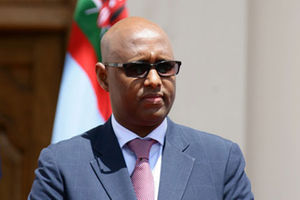
Mr Mohamed, a former Industrialization Cabinet Secretary, was appointed by Treasury Cabinet Secretary John Mbadi as KRA Commissioner-General for a three-year term through Gazette Notice dated May 18, 2026, after a competitive recruitment process.
He succeeded Humphrey Wattanga and was selected from six shortlisted candidates after interviews conducted by the KRA Board.
COFEK, through Secretary-General Stephen Mutoro, argued that Mr Mohamed had already attained the retirement age of 60 years and that the appointment violated the Constitution, the Public Service Commission Act and public service regulations governing retirement.
The lobby insisted it was not questioning Mr Mohamed's integrity, qualifications or experience but the legality of appointing a retired person to a substantive public office.
It sought declarations that the office of KRA Commissioner-General is subject to the constitutional retirement framework and orders quashing the gazette notice appointing Mohamed.
However, the Treasury, the Attorney-General, the KRA Board, the Public Service Commission and Mr Mohamed raised preliminary objections, arguing that the ELRC lacked jurisdiction.
Their lawyers maintained that although the dispute related to a public appointment, COFEK had approached the court purely as a public-interest organisation rather than as an employer, employee or any other party recognised under employment statutes.
However, the court said it lacked jurisdiction to determine the case and also declined to have it transferred to the High Court.
It noted that although the Labour Court's jurisdiction extends beyond employers and employees, pre-employment disputes may only be filed there by persons or entities expressly recognised under employment laws.
These include trade unions, employers' organisations, labour officers and other persons or offices expressly granted standing under the Employment Act, Labour Relations Act and Labour Institutions Act. It found that because COFEK sued as a public-interest organisation, its challenge belonged before the High Court.
“The petitioner is not among the class of persons identified by an Act of Parliament as capable of instituting a pre-employment grievance before the ELRC and the proper forum is the High Court,” said the court.
It emphasized that the Supreme Court had clarified that while the ELRC has jurisdiction over many employment disputes, public-interest litigants who fall outside categories recognised under employment laws must pursue pre-employment disputes before the High Court.
"It is not in dispute that the petitioner herein is a registered public interest consumer rights, accountability and governance transparency organization and instituted the instant petition in the public interest," the court said.
COFEK had urged the court to transfer the case to the High Court if it found it lacked jurisdiction.
The court declined, saying that a suit filed before a court without jurisdiction is a legal nullity and cannot be transferred to another court.
"The upshot of the foregoing is that since a suit filed in a court without jurisdiction is void or a legal nullity, the suit cannot be transferred because there is nothing to transfer," it said.
The ruling did not consider whether Mr Mohamed's appointment breached retirement laws or whether Section 80(2) of the Public Service Commission Act could lawfully justify appointing a retired person to head KRA.
Instead, the court confined his decision entirely to the jurisdiction question.