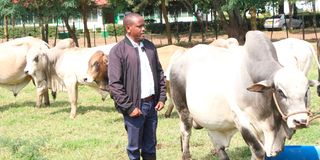
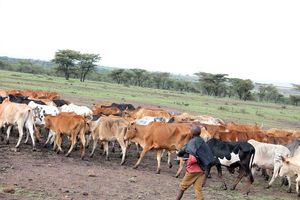
Emmanuel Langat, a resident of Rongai in Nakuru County, braves the scorching sun as he drives his bulls to a seasonal river near his home.
For Langat, keeping livestock has not always been easy. When he began rearing bulls, he relied on conventional feeding methods.
Like many farmers in Rongai, Langat struggles to provide adequate nutrition for his two animals, particularly during dry spells.
It often affected the animals, making them not achieve the desired market weight, consequently limiting his returns.
Langat attributes the problem to inadequate feeding and the increasing effects of climate change, which have made reliable pasture production difficult.
His experience reflects a wider challenge facing farmers across the country, who are dealing with high feed costs, seasonal shortages and nutritionally imbalanced diets that undermine animal health and productivity.
The situation is compounded by an estimated 60 per cent livestock feed deficit in Kenya and reliance on imported raw materials.
Just a few kilometres from Langat’s home is a tech park at the Beef Research Institute (BRI), operated by the Kenya Agricultural and Livestock Research Organisation (Kalro) in Lanet.
Here, researchers demonstrate practical ways of improving livestock nutrition and beef production. Farmers are introduced to different feeding technologies, forage varieties and feed formulation designed to help animals attain optimal weight and produce quality beef.
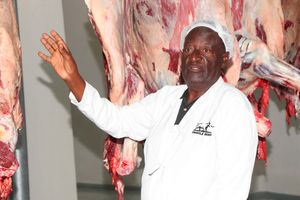
BRI Director, Tura Isako, a livestock nutritionist and breeding expert, says proper nutrition is one of the most important considerations in commercial beef production.
He says cattle intended for meat should get feed that is rich in protein and energy, particularly during the finishing period, which can last three months.
“The objective is to improve weight gain and produce quality carcasses that meet the requirements of the market,” Dr Isako says.
He, however, adds that farmers must first consider the genetic potential of their animals before investing in intensive feeding.
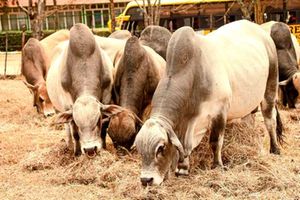
“Boran cattle are among the preferred breeds for beef production because of their ability to perform well under appropriate management and feeding conditions,” Dr Isako says.
Dr Tura Isako, Director of Beef Research Institute at the Kenya Agricultural and Livestock Research Organisation, is showing different beef cattle fattened by feed blocks.
Photo credit: Richard Maosi | Nation
Crossbred cattle can also deliver good results when given balanced nutrition. He says an animal entering the feedlot system should be at least 270 kilogrammes, with BRI’s indicative market price standing at Sh300 per kilo.
A 400-kilogramme bull, for instance, could fetch around Sh120,000, with demand coming from high-end markets.
Dr Isako says successful livestock production requires farmers to embrace scientific approaches to feed formulation instead of relying on guesswork.
Researchers use specialised computer software at the technology park to formulate rations, based on the nutritional requirements of different livestock.
“The software incorporates a database of locally available feed ingredients, enabling farmers and specialists to develop balanced diets using available resources,” Dr Isako says, adding that dry matter is one of the important considerations when determining the amount of feed an animal requires.
Cattle consume approximately three per cent of their body weight in dry matter daily, though their actual requirements depend on factors like age, production stage and physiological condition.
To deal with the problem of feed shortage and poor nutrition, the experts have developed a supplementary technology known as feed blocks.
The blocks are designed to provide animals with essential nutrients in a concentrated and convenient form, particularly during periods of little natural pasture.
Dr Tura Isako, Director of Beef Research Institute at the Kenya Agricultural and Livestock Research Organisation, is showing a feed block for both beef and Milk cattle.
Photo credit: Richard Maosi | Nation
According to Dr Isako, the blocks contain around 16 per cent crude protein and provide an energy value of about 12 megajoules.
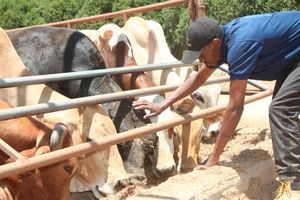
Beef cattle are supplemented with approximately four kilos of the blocks daily, alongside roughage, grass and adequate drinking water.
On a good day, the institute produces up to 1,000 feed blocks, which are stored in a greenhouse under controlled conditions to facilitate drying.
The process involves selecting and weighing forage materials like Rhodes grass and protein-rich legumes such as desmodium. They are then crushed and mixed.
Other ingredients, including molasses, common salt, mineral supplements and a suitable binder, are incorporated to improve the nutritional value, preservation and binding.
“The technology offers several advantages over conventional hay, particularly because the blocks are easier to transport, store and handle while providing concentrated nutrition,” he says.
The institute encourages farmers to embrace feedlot systems supported by the Total Mixed Rations (TMR), which combine different feed ingredients to provide balanced nutrition.
Under this system, approximately 60 per cent of the ration comprises roughage, with the remaining ingredients providing protein, fibre and energy.
Dr Tura Isako, Director of Beef Research Institute at the Kenya Agricultural and Livestock Research Organisation, is showing different beef cattle fattened by feed blocks.
Photo credit: Richard Maosi | Nation
The ingredients are ground and thoroughly mixed. Sunflower seed cake and wheat bran are among the ingredients used to improve the nutritional composition of the rations.
“Here, there are different feeding formulations, including grass-based rations, to help farmers fatten their animals efficiently,” Dr Isako says.
For farmers in dry regions, where conventional feed ingredients like cotton seed cake and sunflower products may be expensive or difficult to obtain, locally available trees and shrubs can be alternatives.
Mathenge and acacia, for instance, can be processed and incorporated into livestock diets where appropriate, provided they are properly assessed for nutritional value and safety.
Mathenge is an invasive shrub that has spread in dryland areas, posing ecological challenges. Researchers are exploring ways of utilising it as livestock feed while taking precautions against harmful species and toxic components.
Dr Isako advises farmers to identify and utilise appropriate indigenous forage resources to reduce dependence on expensive commercial feed ingredients.
There are improved forage varieties that can withstand changing climatic conditions while providing adequate nutrition for animals. One of these is Kakamega 1 Napier grass, a variety developed in Kenya and suitable for livestock feeding systems, including dairy and beef production.
The other forage options include Brachiaria, Rhodes grass, Juncao, forage barley and desmodium.
Brachiaria is particularly valued for its high biomass production, nutritional quality and adaptability to different agro-ecological conditions.