Hello

Your subscription is almost coming to an end. Don’t miss out on the great content on Nation.Africa

Ready to continue your informative journey with us?

Hello

Your premium access has ended, but the best of Nation.Africa is still within reach. Renew now to unlock exclusive stories and in-depth features.

Reclaim your full access. Click below to renew.

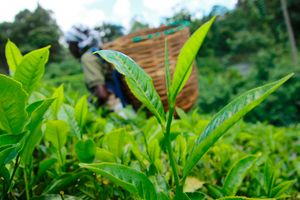
Tea farm
Caption for the landscape image:

Low bonuses, unfair tea prices: MPs demand answers

Scroll down to read the article

Committee wants to know why tea prices from the East of the Rift are generally higher than those from the West.

Photo credit: File

MPs have demanded answers to at least six questions as they begin an inquiry into unfair tea prices in the country and low bonuses to farmers.

The National Assembly Committee on Agriculture and Livestock will next week begin the inquiry and present its report to the House within three weeks.

Speaker of the National Assembly Moses Wetang’ula directed the committee, chaired by Tigania West MP John Mutunga, to take a holistic approach in the inquiry, noting that his office has received numerous complaints from leaders in some tea-growing areas.

Top among the questions the committee seeks to answer is how tea pricing in Kenya is conducted.

The committee will also identify the value chain-related costs and how they are minimised in both the East and West of the Rift Valley.

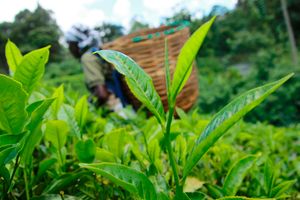
Tea farm

Committee wants to know why tea prices from the East of the Rift are generally higher than those from the West.

Photo credit: File

East of the Rift typically includes tea-growing zones in counties like Murang’a, Kiambu, Embu, Kirinyaga, Nyeri, and Tharaka Nithi while West of the Rift covers tea-producing areas in counties like Kericho, Bomet, Nandi, Bungoma, and Trans Nzoia.

In its inquiry, the committee will seek to establish why tea prices from the East of the Rift are generally higher than those from the West, and also identify inefficiencies leading to low returns for tea farmers.

In addition, the committee will determine why operational costs incurred by factories in the West of the Rift are higher than those incurred by factories in the East.

Further, through the inquiry, the committee will identify gaps in the institutional, logistical, and regulatory frameworks in the tea sector that need plugging, and mechanisms to achieve that.

The committee will also review the roles of the Tea Board of Kenya and the Kenya Tea Development Agency (KTDA) by analysing the legal frameworks governing tea marketing, auction, and export to identify overlapping roles, policy gaps, or excesses that hinder effective price regulation and burden farmers.

To get answers, the committee will carry out an analysis of the tea sector value chain by mapping out the entire chain including pre-production, production, harvesting, conveyancing, processing, marketing, auction, retail, and export.

The committee will identify the points at which tea pricing is done and the determinants, as well as assess the flow of information and decision-making related to setting tea prices.

The committee will examine the tea auction process and alternative marketing channels. It will also assess the competitiveness of Kenya’s tea compared to other global producers like Uganda, Rwanda, Tanzania, Sri Lanka, India, and Malawi.

Parliament

A National Assembly committee seeks to find out how tea pricing in Kenya is conducted.

Photo credit: File | Nation Media Group

Further, the committee will examine the cost of inputs such as fertilisers, transport, and labour; analyse factory and export profit margins; and identify inefficiencies along the value chain.

It will also investigate farmers’ payment structures, the bonus system and deductions.

Leaders from tea areas, especially those from factories in the West of the Rift, recently protested over unfair prices and bonuses that farmers from the region have been receiving over the years.

The leaders complained that the price differential of tea by region in Kenya needs thorough investigation.

“This inquiry seeks to look into the pricing structure and dynamics of Kenya’s tea industry, identify the cost centres and analyse them thoroughly, identify gaps in the sector, and propose policy, institutional, and market reforms necessary for the industry’s sustainability,” Mr Mutunga said.

He said the committee will carry out a comprehensive review of the tea pricing system in Kenya, and evaluate its effectiveness, fairness, and sustainability.

The committee will then make recommendations to the House to ensure all value chain players operate within a framework that maximises value for all stakeholders.

The tea sector in the country has been faced with myriad challenges, key among them being delayed payments to farmers and low, unstable prices. These challenges have been attributed to fluctuations in global tea prices, higher production costs, and market access.