The government has been criticised for insincerity and playing politics in initiating reforms in the tea sector to the disadvantage of the 680,000 small-scale growers supplying their produce to factories managed by the Kenya Tea Development Agency (KTDA).
This comes as Principal Secretary for Agriculture, Paul Ronoh, clashed in Kericho with KTDA directors led by John Mithamo Wa Susana and Mr Philip Langat over the state of the tea sector and management of the agency.
The clash followed a threat by the PS to initiate a process to remove the current KTDA directors should they fail to immediately raise tea prices by at least Sh30 without providing clear justification for it.
Dr Ronoh claimed that some KTDA directors had employed their relatives, held too many meetings aimed at drawing allowances at the expense of the farmers, and failed to put in place measures to raise tea prices.
The PS told the directors “to be prepared for tough times ahead as there will be fireworks in the tea sector with the government keen on restoring order to the benefit of the farmers.”
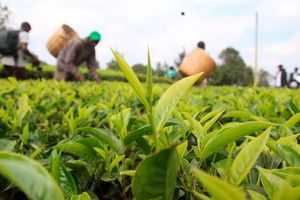
A farmer picking tea.
Photo credit: File | Nation Media Group
But the agency directors fired back saying he was playing politics with serious issues and setting the agency leadership against the farmers so as to run away from addressing the real challenges in the sector, some of which were caused by skewed policies implemented without consultation with stakeholders.
They spoke on Tuesday at Kipchimchim in Kericho County at the funeral of Mzee Augustine Koskei, the father of Tea Board of Kenya CEO Willy Mutai.
“The directors must immediately raise the tea leaves buying price by Sh30 per kilogramme. If they cannot do that, then we will ensure a new team is elected to take charge of the affairs of the agency (KTDA),” Dr Ronoh said.
He said that with the goodwill from the government, the issues affecting the sector must be resolved once and for all.
“Some of the KTDA directors have held meetings for between 110 and 165 times a year and are each paid an average of Sh50,000 per sitting by their respective factories,” Dr Ronoh said, citing recent audits by the Tea Board.
“Directors of KTDA are employing their relatives and friends in what has resulted in a bloated payroll that is weighing down on the small-scale tea growers. In every election cycle, new directors become creative in employing their relatives. This must come to an end.”
He stated that farmers’ meetings will only be convened when elections will be held as there was no need to hold sessions that do not have solutions to problems facing the sector.
“If we have to send the current directors packing, then we will do that. We will return to the farmers and ensure that that is done. There will be no need to call farmers for consultative meetings, as we have identified the problems and would take them head on,” Dr Ronoh said.
The PS claimed that 18 officers at Chai Trading, a subsidiary of KTDA, had been sacked for engaging in fraudulent activities to the disadvantage of small-scale tea growers. The same would be done in other companies owned by the agency, he added.
“KTDA was well-structured, but it has been infiltrated by crooks that have raised operation costs in factories that negatively affect earning by farmers,” Dr Ronoh said.
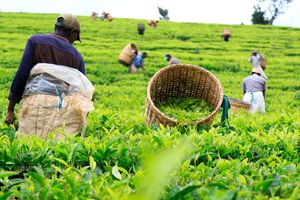
Tea farm.
Photo credit: Joseph Kanyi | Nation Media Group
Mr Mithamo, the chairman for zone five, and Mr Langat, in charge of zone eight, said that some government officials were making KTDA directors the scapegoats, when they should be engaging with stakeholders on reforms.
“Let us stop politicising tea sector issues and making KTDA a punching bag whenever we have marketing challenges and foreign exchange dynamics that have nothing to do with the agency. Let us face the issues soberly instead of being emotional,” Mr Mithamo said.
He said that traditional markets for Kenyan tea were affected by political instability while the strengthening of the shilling against the dollar had negative effects on foreign exchange earnings from sale of the produce, matters which were beyond the control of the agency.
“The PS and other leaders should stop making unnecessary public utterances that have the potential of wrecking instead of steadying the ship in the tea industry,” Mr Mithamo said.
In his response, Mr Langat said the current KTDA directors were being vilified for mistakes made by their predecessors and that the condemnation by senior government officials well aware of the marketing challenges was disheartening.
“It is wrong for the PS to threaten directors in public forums instead of sitting with them to address the existing challenges. We should not be disrupting systems but seeking to strengthen them to the benefit of the farmers,” he said.
A director who requested anonymity later told the Nation that the government removed reserve market prices at the Mombasa Tea Auction in August 2024, which had a negative impact on performance by the factories.
“While the reserve price had been set by the policies under the Tea Act 2020 as 2.4 dollars per kilogramme, it plummeted to 1.4 dollars per kilogramme in what made it difficult for factories to break even,” he said, adding that the move was made by the Ministry of Agriculture without consulting stakeholders.
The director said government officials should stop making populist statements regarding the tea sector in a bid to appeal to farmers who are being played politically. They should instead address the real issues affecting the sector.
KTDA has explained reasons for the low bonus paid to farmers in most of the zones, which it states was beyond the control of the agency.
“In 2024, the Kenyan shilling traded at an average of Sh144 to the US dollar while in 2025, the average was Sh129. This weaker exchange rate meant that even where international prices were stable, the amount realised in Kenya shillings was significantly lower,” KTDA chairman Chege Kirundi said in a recent statement.
A Bill on reforms in the tea sector, particularly dealing with direct sale of tea, has been passed by the Senate and has been referred to the National Assembly for concurrence.