Hello

Your subscription is almost coming to an end. Don’t miss out on the great content on Nation.Africa

Ready to continue your informative journey with us?

Hello

Your premium access has ended, but the best of Nation.Africa is still within reach. Renew now to unlock exclusive stories and in-depth features.

Reclaim your full access. Click below to renew.

Miraa
Caption for the landscape image:

Miraa farmers eye Djibouti goldmine amid certification challenges

Scroll down to read the article

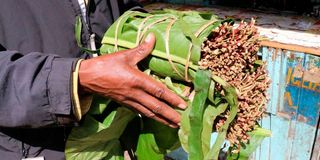
Agriculture and Food Authority (AFA) charges Sh7 per kilo of miraa exported.

Photo credit: Bonface Mwangi | Nation Media Group

Miraa farmers will have to wait longer to benefit from the multimillion-shilling market in Djibouti after prospective exporters encountered challenges registering for certification.

Two weeks ago, the Agriculture and Food Authority (AFA) announced that Kenya had secured a miraa market in Djibouti, with the potential to take in 20 tonnes daily. This could earn farmers more than Sh20 million daily, based on minimum prices set by Agriculture Cabinet Secretary Mutahi Kagwe earlier this year.
However, the Nyambene Miraa Trade Association (Nyamita) protested that the portal provided to exporters by AFA only allowed companies registered in Djibouti.

“Besides the portal being only for Djibouti companies, the information is also provided in French. No AFA official is available to assist the traders. There should be an AFA official who can explain the process of accessing the market,” Nyamita chairperson Kimathi Munjuri said.

AFA Director General Bruno Linyiru said the authority was working with the Kenyan Embassy in Djibouti to resolve the challenges encountered by exporters.

“I want to assure miraa farmers and traders that the market is still available. However, the conditions set by Djibouti must be followed. We will communicate with traders once the issues are resolved,” Mr Linyiru said.

Miraa Pricing Committee Chairman James Mithika added that the market was secured after intense negotiations on prices and volumes.

“We also agreed that exporters will be allocated a quota not exceeding one tonne. Traders must adhere to the prices set out by the ministry,” Mr Mithika said.

Obtaining necessary permits

Earlier, Mr Linyiru had stated that Djibouti, which has for years relied on Ethiopian khat, had opened its market to Kenyan miraa.

“This follows a trade mission conducted in October 2024 and a reciprocal visit by a delegation from Djibouti in November last year. Exporters interested in accessing the market must comply with Djibouti's import regulations, including obtaining necessary permits and adhering to product standards,” he advised.

He added that the opening of the Djibouti market “marks a major milestone in diversifying Kenya’s export markets.”

Meru Governor Isaac Mutuma lauded the efforts of AFA and other government agencies, saying the new market offers a fresh lease of life to farmers.

“The loss of markets in Europe dealt a major blow to miraa farmers in Meru, and many livelihoods were lost. Overreliance on Somalia as the only main market also came with many shortcomings,” he said.

“We thank President William Ruto for his commitment to reviving the fortunes of Meru farmers. By engaging Djibouti’s leadership and securing this market, the President has once again demonstrated his unwavering support for the people of Meru and the larger Mt. Kenya East region,” Governor Mutuma added.

He noted that his administration was working closely with the national government to support value addition and access to more markets for miraa.

Access to the Djibouti market is also expected to open up opportunities in the Middle East.