Members of Parliament have raised alarm over the alleged abuse of Article 223 of the Constitution by the National Treasury and government ministries to withdraw billions of shillings from the Consolidated Fund, effectively bypassing Parliament’s decision to cut non-essential recurrent expenditure.
This comes as Controller of Budget Margaret Nyakang’o warns of a sharp rise in the use of the constitutional provision to finance projects that were foreseeable during the budget-making process but could not be accommodated due to resource constraints.
Controller of Budget Margaret Nyakang’o.
Photo credit: File | Nation Media Group
Article 223 allows the national government to spend money that has not been appropriated by Parliament in cases of emergencies or unforeseen circumstances.
However, such withdrawals are capped at 10 percent of the total annual budget unless Parliament approves a higher threshold. The Constitution also requires that approval for such spending be sought within two months of the first withdrawal.
While scrutinising Supplementary Estimates No 1 for the 2025/26 financial year, several National Assembly committees raised concerns that ministries, departments and agencies (MDAs) were using Article 223 to reinstate budget cuts made by Parliament.
Lawmakers warned that the provision has been turned into a backdoor for financing routine expenditures such as salaries and pending bills, rather than genuine emergencies.
“Looking at your budget, I am very worried. This is not a supplementary budget; you just want to enhance your budget. There is no emergency in the projects you financed through Article 223. You are simply withdrawing money from the Consolidated Fund to reinstate budgets that we cut during the preparation of the 2025/26 budget. Why can’t we just let the Treasury do the budget? You are using Article 223 to circumvent our role,” said Dido Raso, Vice Chairperson of the Administration and National Security Committee.
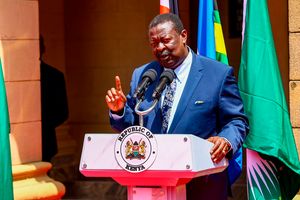
Mr Raso was responding to the Principal Administrative Secretary, Joash Andachi, office of the Prime Cabinet Secretary during a session.
In Supplementary Budget I for 2025/26, the Treasury approved requests amounting to Sh245.9 billion under Article 223, of which Sh185.8 billion has already been disbursed.
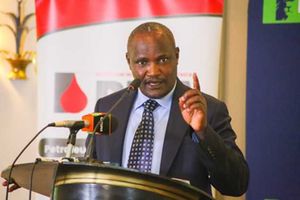
The supplementary budget, tabled by Treasury Cabinet Secretary John Mbadi, exceeds the constitutional 10 percent threshold by 1.1 percent.
John Mbadi, the Cabinet Secretary for National Treasury and Economic Planning.
Photo credit: File | Nation Media Group
Lawmakers have also questioned large allocations made under the provision, including Sh24.4 billion to the State Department for Defence, whose usage remains unclear.
Other allocations include Sh19 billion for fertiliser subsidy under Agriculture, Sh16.69 billion for Higher Education to cover Collective Bargaining Agreement arrears and HELB funding and billions more for Special Programmes, Basic Education, Medical Services, Health and the National Police Service.
A report by the Controller of Budget on national government budget implementation between July and December 2025 shows that MDAs accessed Sh115.1 billion under Article 223, with Sh106 billion spent on recurrent expenditure and only Sh8 billion on development.
“In many instances, these withdrawals were for regular operations and settlement of pending bills, highlighting weaknesses in the budgeting cycle. Increased reliance on Article 223 risks undermining budget credibility,” Dr Nyakang’o said.
She further warned of the growing trend and called for a review of the legal framework governing the use of Article 223, including stricter controls to safeguard fiscal discipline and transparency.
Dr Nyakang’o noted that in the first half of the 2025/26 financial year alone, withdrawals under Article 223 had already surpassed full-year usage in previous years.
“A total of Sh115.11 billion was approved, comprising public debt repayments (Sh86.29 billion), ministerial recurrent expenditure (Sh20.16 billion), and development expenditure (Sh8.66 billion),” she said.
By comparison, withdrawals stood at Sh66.54 billion in 2024/25, Sh19.12 billion in 2023/24, and Sh69.20 billion in 2022/23.
The rising trend has now intensified concerns among lawmakers over the erosion of Parliament’s oversight role in public spending.