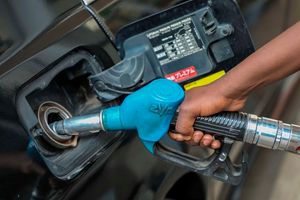
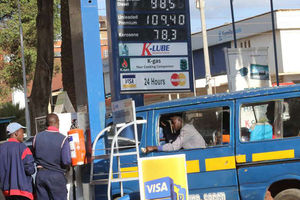
The government will review value-added tax (VAT) on petroleum products even as it plans to spend Sh17 billion from the fuel stabilisation fund to cushion consumers in the event the Middle East war persists beyond the May–June pump price review period.
A review of the 16 per cent VAT on super, diesel and kerosene is seen as critical in helping avert an anticipated spike in pump prices in the monthly schedule for April 15 to May 14. Steep fuel prices could trigger inflationary pressure, hitting Kenyans already beset by tough economic times.
Treasury Cabinet Secretary John Mbadi revealed that plans are underway to review the VAT if the subsidy is not enough to avert a steep rise in fuel prices that will be announced in two weeks’ time.
The new pump prices will reflect the sky-high global prices of crude oil witnessed last month and the rising costs of shipment in the wake of the escalating US-Israel conflict with Iran.
CS Mbadi: Kenya has 16 days worth of petrol stocks, 19 days for diesel and 49 days for kerosene
Mr Mbadi’s pronouncement comes at a time when oil marketers have already said that pump prices could rise by at least Sh20 on account of higher premiums charged on two cargoes of petrol that were imported outside the Government-to-Government deal.
“In the next pricing cycles, however, product prices, insurance, war risk and demurrage rates are expected to increase due to the conflict. We will play around with VAT so that the prices do not increase too much,” Mr Mbadi told lawmakers yesterday.
A review of the VAT will be in addition to a subsidy of Sh17 billion that the State plans to spend to cushion consumers in the coming months.
But the subsidy might not be enough to guard against the expected spike in pump prices, underscoring why the government could now turn to the VAT.
Kenya has a deal with Saudi Aramco, Emirates National Oil Company and Abu Dhabi National Oil Company to supply the commodity on a credit period of 180 days and at fixed premiums.
But the government last month allowed two vessels of petrol to be imported outside the G-to-G framework. The premium on one of the cargoes was $290, which is nearly three times the $84 under the G-to-G deal.
Mr Mbadi said earlier increases in landed costs between January and February of one per cent for petrol, 8.46 per cent for diesel and 6.79 per cent for kerosene signalled emerging upward pressure.
He said while petroleum remains adequate in the short term, covering March and April, imports for May and June are likely to reflect higher global prices, posing a significant risk of further increases in domestic pump prices, with attendant inflationary and fiscal pressures.
Mr Mbadi also revealed that Kenya has 16 days’ worth of petrol stocks, diesel to last 19 days, and 49 days of jet fuel/kerosene.
John Mbadi, the Cabinet Secretary for National Treasury and Economic Planning.
Photo credit: File | Nation Media Group
He told the National Assembly’s Finance and National Planning Committee that more fuel deliveries are on the way and Kenyans should not panic.
The CS told MPs that the country is assured of a steady supply of petroleum products, adding that even if prices are expected to increase due to the Middle East conflict, Kenya is not likely to be adversely impacted due to the existence of the Government-to-Government (G-to-G) oil importation agreement with three international oil majors.
Mr Mbadi said if the next pricing cycle of April 14 to May 15, 2026 results in price increases, the government will utilise the Sh17 billion Fuel Stabilisation Fund and change VAT application on petroleum products from ad valorem to specific in order to cushion consumers.
He said the Sh17 billion Fuel Stabilisation Fund allocated in the 2025/26 financial year could be used to stabilise fuel prices over a three-month period, after which the fund would be exhausted if the Middle East conflict persists.
Ad valorem excise taxes are charged as a percentage of the value of the product, for example, five per cent of the price, while specific excise taxes are charged per quantity, such as per cigarette, pack, or kilogram, for example, Sh12 per pack regardless of price.
The Middle East crisis threatens to deliver the most severe economic shock Kenya has faced since the Covid-19 pandemic.
Photo credit: NMG
Kenya utilised the ad valorem system until the Excise Duty Act, 2015, introduced a specific excise duty system for most products except cosmetics, food supplements and motor vehicles.
Mr Mbadi told MPs that monthly import requirements for both local and transit cargo are 255,000 metric tonnes of super, 170,000 metric tonnes of diesel and 80,000 metric tonnes of jet fuel.
Mr Mbadi told the committee chaired by Molo MP Kuria Kimani that the country expects to receive 290,000 metric tonnes of super petrol from April 2 to April 14, which will last for 47 days.