A ghostly silence greets visitors at the Nakuru based Pyrethrum Processing Company where rusting machines sit idle and dust-laden corridors tell the story of a company that once powered Kenya’s pyrethrum industry but is now struggling to survive.
From the gate, the disused and idle machines and aging trucks give the impression of an abandoned historical site.
The firm, whose factory was busy most of the day in the 1980s and 1990s, is now a pale shadow of its former self.
Officially commissioned in 1934, the former Pyrethrum Board of Kenya (PBK), once home to the biggest pyrethrum factory in Africa, tells the story of the slow death of the pyrethrum industry.
The company is reeling under debts amounting to billions of shillings and is now among the state agencies earmarked for dissolution or divestiture by the government.
On January 21, 2025, the Cabinet approved the merger of 42 corporations and the dissolution or divestiture of more than 20 others in sweeping reforms aimed at improving efficiency and reducing the government’s wage bill amid mounting pressure in the public sector.
Agriculture Principal Secretary Paul Ronoh who visited the firm and held a meeting with the board of management and Managing Director Carolyne Imbwaga revealed that the government was seeking support from the private sector to revive the company’s operations.
Some of the worn out machines at Pyrethrum Processing Company of Kenya in Nakuru County on March 14, 2025.
Photo credit: Boniface Mwangi | Nation Media Group
“The government will seek support to help revive the stalled machines and market pyrethrum products worth millions of shillings lying idle in the company stores. We welcome collaborative partnerships aimed at advancing pyrethrum farming to empower local farmers and broaden the market for their products,” said Mr Ronoh.
During its heyday, the factory was a beehive of activity with machines running daily.
But the factory, which has the capacity to crush 25 tonnes of pyrethrum per day and boasts a 600-tonne holding tank is now, a relic.
An employee of the company who spoke to the Nation on condition of anonymity revealed that the machines are often silent and are only switched on every two to three months, if the company manages to accumulate enough dry pyrethrum stocks.
“PPCK has to accumulate at least 100 tonnes to crush, a process that takes a minimum of two to three months due to low levels of supply by farmers,” the worker said..
But he company’s demise was both systematic and unavoidable. With the former Pyrethrum Board of Kenya serving as a conduit for cartels out to loot, farmers suffered and eventually abandoned the crop.
In the past, the firm also made headlines for corruption scandals involving its officials which have weighed down its operations.
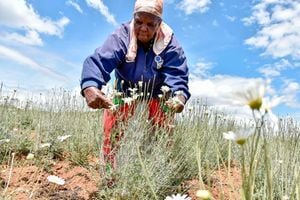
According to company statistics, the number of farmers growing pyrethrum has dropped sharply from about 300,000 in the 1980s to around 6,000 today.
Currently, the factory waits for months to accumulate flowers for processing.
Apart from delays in payment, PBK was unable to supply farmers with critical farm inputs, particularly seedlings. Farmers gradually abandoned the crop in favour of maize, potatoes, horticulture and dairy farming.
The near-collapse of the sector, which used to earn Kenya in excess of Sh10 billion in foreign exchange in the 1980s and 1990s, has been blamed on corruption and mismanagement.
Reports by Auditor-General Nancy Gathungu for the financial years 2020/2021, 2021/2022, 2022/2023, and 2023/2024 further paint a picture of how plunder, years of mismanagement and neglect led to the slow death of PPCK and the pyrethrum sector.
The reports reveal that by 2022, the firm was technically insolvent.
According to the 2022/2023 report, the state risks losing thousands of acres of prime land worth more than Sh1 billion, owned by t PPCK.
At the same time, taxpayers may lose millions of shillings due to systemic mismanagement of the Nakuru-based firm over the years.
The latest audit shows that PPCK does not have title deeds for its land some of which has been grabbed or allocated to individuals.
The dilapidated exterior of the asbestos-made warehouse at Pyrethrum Processing Company of Kenya in Nakuru County on March 14, 2025.
Photo credit: Boniface Mwangi | Nation Media Group
“A review of records revealed that the Pyrethrum Processing Company does not have title deeds or any other ownership documents for various parcels of land valued at more than Sh1 billion in Nakuru and other pyrethrum-growing areas, including Nyandarua, Kisii, Baringo, and Eldoret, among others,” said Ms Gathungu in the report.
The parcels of land include eiight prime plots in Nakuru City measuring more than 11 acres, more than 860 acres in Ol Joro Orok, Nyandarua, valued at Sh360 millio and over 50 acres in Keumbu and Nyosia in Kisii County.
There’s also land in Eldama Ravine, Narok, Meru, Kericho, Bomet and Nyamira counties. The 860-acre farm in Nyandarua alone is not fenced, and a public road cuts across the property.
A 35-acre Mawingu farm in Nyandarua County was allegedly leased to the Agricultural Food Authority (AFA), but documents indicating the terms of the lease were not provided for audit verification.
A prime plot in Nakuru City, worth millions of shillings, was found to have been registered to a private company, yet there were no documents showing that the land had been sold.
PPCK owes pensioners under the Pyrethrum Board of Kenya Staff Superannuation Scheme Sh2 billion. Some former workers have died without receiving their pensions.
The company has also been grappling with unpaid debts owed to contractors, farmers, and other organisations, amounting to millions of shillings and accruing for over a decade.
Frustrated pensioners are demanding the sale of 13 non-core assets spread across Nakuru City to settle their pending dues.
However, it appears that its financial woes stem from poor management.
The auditor-general has raised concerns over the poor management and utilisation of Sh5.5 billion worth of assets belonging to the agency.
“The extraction plant purchased and installed in 2006 at a cost of Sh305,872,000 has never been commissioned. The management explained that the machine was bought in anticipation of an increase in flower deliveries to the factory and that the plant will be commissioned in the future once the industry is revived. However, no evidence has been provided to indicate steps taken to revive the factory,” states the report.
The report also reveals that tenants occupying the company’s Sh640 million rental houses and offices pay far less than market rates, contributing to revenue losses.
With PPCK struggling, farmers have turned to private processors such as Kentegra, Africhem Botanicals, and Highchem.
These private firms have contracted thousands of farmers across pyrethrum-growing counties, providing a lifeline to those who had abandoned the crop.
Agriculture Principal Secretary Dr Kipronoh Ronoh samples dried pyrethrum at Pyrethrum Processing Company of Kenya in Nakuru County on March 14, 2025.
Photo credit: Boniface Mwangi | Nation Media Group
Patrick Waweru, a farmer from Molo, told Nation.Africa that private processors have given farmers a reliable market.
“The main reason why farmers abandoned pyrethrum farming was delayed payments by PPCK, but private processors have renewed our hope. They pay us well and on time,” said Mr Waweru.
Nakuru-based Kentegra is now considering setting up a factory in the region, a move that could further cement the dominance of private processors over the struggling state corporation.
But PS Ronoh is optimistic that the Nakuru-based plant still has the potential and capacity to efficiently process pyrethrum from the 19 producing counties, provided some modernisation and improvements are made.
“Looking at current trends and technology, we are working on a partnership deal aimed at injecting capital into the pyrethrum infrastructure to enhance efficiency in production,” said Mr Ronoh.
He noted that upgrading the plant with new technologies would help address the challenge of high production costs, which have hampered the company's ability to remain afloat.
According to the PS, the company has struggled to sustain its operations due to the high cost of production and its inability to effectively market its finished products, some of which remain in company stores.
The PS expressed surprise at the number of idle plants that have consumed billions of taxpayers' money while remaining non-operational.
Furthermore, finished products worth over Sh64 million remain in storage after failing to move in the market.
While pledging government support to the management board, he challenged them to find innovative ways to market the products and generate revenue for operations.
“I have realised that finished products worth close to Sh64 million are stuck in the stores. If sold, the factory could raise enough money to fund its operations. Nevertheless, the government will explore ways to facilitate the factory,” said Mr Ronoh.
He also promised to meet with leaders from pyrethrum-growing counties and farmers to better understand their challenges and explore possible government interventions.
The pyrethrum revival program has been ongoing for years, with billions of shillings invested in the sector.
However, progress has been slow and many farmers remain skeptical about returning to pyrethrum farming.
It has emerged that PPCK is struggling to secure supplies from farmers, many of whom have opted to sell to private sector buyers due to delays in payments from the company.
Nakuru County Agriculture Chief Officer Newton Mwaura indicated that the county has allocated Sh27 million to support pyrethrum farmers through the distribution of seedlings.