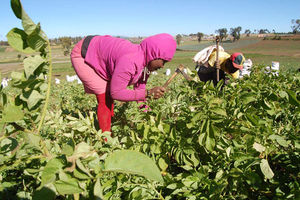
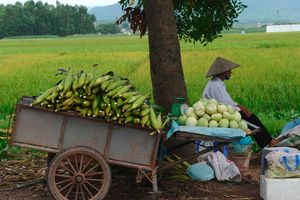
An estimated 40 to 60 per cent of fresh fruits and vegetables are lost due to post-harvest challenges before they reach consumers. These losses reduce farmers' incomes, threaten food security and contribute to environmental degradation. Experts say adopting circularity in agri-food systems can significantly reduce waste by ensuring that food, by-products and other resources are reused, recycled or converted into valuable products, creating a more sustainable and resilient food system. 'Seeds of Gold' spoke to Dr Christine Chege, a senior scientist at the Alliance of Biodiversity International and the International Center for Tropical Agriculture (CIAT) in Nairobi.
What is circularity in agriculture and why is it important for building sustainable and resilient food systems?
Circularity in agriculture refers to an agri-food system where resources are used efficiently, regenerated, reused, and recycled instead of being wasted.
The approach aims to keep materials and nutrients in productive use for as long as possible, reducing losses throughout the food value chain.
At the farm level, circularity encourages the efficient use of resources such as water, soil nutrients, crop residues, and organic waste.
As food moves through markets and distribution channels, some produce may remain unsold or begin to lose freshness. Rather than allowing it to become waste, circularity promotes reusing, redistributing, or processing it into other valuable products before it spoils.
Even when food waste is unavoidable, it should not simply be left to decompose and emit greenhouse gases.
Instead, farmers and market actors can recycle organic waste into useful products such as compost, organic fertilizer, animal feed, or bioenergy. This not only reduces environmental pollution but also creates additional economic value.
By embracing circularity, agriculture becomes more sustainable and resilient. It minimizes waste, conserves natural resources, lowers greenhouse gas emissions, improves soil health, and strengthens food systems while creating new opportunities for farmers and agribusinesses.
Now that we have a lot of post-harvest losses at farm level and waste being generated in market places, how can circularity be beneficial to agriculture as an enterprise?
Large quantities of agricultural waste are generated every day on farms, in households and in market places. Instead of being discarded, this waste can be transformed into valuable resources that support agriculture and create new business opportunities.
At the farm level, crop residues such as maize stalks and other plant cuttings can be fed directly to livestock or incorporated back into the soil to improve soil fertility and structure.
Farmers can also compost the waste to produce organic manure, reducing dependence on chemical fertilizers while improving soil health.
Further along the value chain, markets generate significant amounts of fruit and vegetable waste. This presents an opportunity for youth, women and entrepreneurs to collect and recycle the waste into useful products such as organic fertilizers, compost and livestock feed.
These products can then be sold to farmers, creating employment and generating income while reducing waste.
Recycling agricultural waste also delivers important environmental benefits. Organic waste left to rot in open dumps releases greenhouse gases that contribute to climate change. By converting the waste into productive resources, emissions are reduced, environmental pollution is minimized and valuable nutrients are returned to the agricultural system.
Harnessing post-harvest and household organic waste is therefore a practical way of promoting circular agriculture, improving farm productivity, creating green enterprises and building more sustainable and resilient food systems.
Circularity in food systems plays a key role in reducing food loss and waste by ensuring that agricultural produce is utilized before it spoils.
Instead of allowing surplus or imperfect produce to go to waste, it can be repurposed through value addition into products such as juices, dried fruits, jams, or other processed foods.
This approach extends the shelf life of highly perishable commodities, particularly fresh fruits and vegetables, significantly reducing post-harvest losses across the supply chain.
By minimising food waste, more food reaches consumers, improving food availability and affordability. This not only enhances food security but also contributes to healthier diets and better nutrition for more people while reducing the environmental impact associated with food waste.
Take us through the Waste to Wealth (WAWE) project and how it is promoting innovative approaches to organic waste management and resource recovery?
The Waste to Wealth (WAWE) project promotes innovative business models that transform organic waste into valuable products such as organic fertilizer and high-protein animal feed.
Funded by the Climate and Clean Air Coalition (CCAC), the two-year project began last year and is being implemented in Kenya and Uganda. It focuses on recycling organic waste in ways that generate economic, environmental and social benefits for communities while protecting the environment.
A key objective of the project is to reduce greenhouse gas emissions by applying circular economy principles. Instead of allowing organic waste to decompose in dumpsites and release harmful emissions, the waste is recovered and converted into useful resources.
The project also promotes inclusive business models that create opportunities for youth and women. Participants collect organic waste from markets, process it into organic fertilizer, and earn income by selling the finished products.
Another innovative aspect of the project is the use of black soldier fly larvae. The insects feed on organic waste and produce larvae that are rich in protein, providing a sustainable alternative ingredient for animal feed.
This reduces reliance on conventional protein sources such as omena (silver cyprinid) and soybeans, which are also consumed by people.
By substituting these ingredients with black soldier fly larvae, the project supports more sustainable livestock production while helping preserve food resources for human consumption.
The Waste to Wealth (WAWE) project is being implemented in Kenya and Uganda. In Kenya, the project is focused on Nairobi County and Kiambu County, where pilot initiatives are being rolled out in two markets. In Uganda, the programme is being implemented in Soroti City.
The project works closely with market actors and county governments to test innovative organic waste management and resource recovery solutions. The aim is to demonstrate effective recycling models that can later be adopted and scaled up in other markets and counties across Kenya and Uganda.
A key component of the programme is knowledge sharing and learning among project partners, county governments, and national stakeholders.
The project also seeks to identify policy gaps related to waste management, sustainable food production, and consumption, and provide evidence-based recommendations for improvement.
In addition, the programme is addressing public misconceptions about products made from recycled organic market waste.
Through scientific research, product testing, and public awareness campaigns, the project aims to assure consumers that products such as organic fertiliser and animal feed derived from market waste are safe, sustainable, and beneficial, encouraging wider acceptance and adoption.
Yes. Circularity is highly beneficial to consumers because it promotes a food system that is safer, more diverse, affordable, and sustainable.
While many people associate circularity with farmers and producers, consumers are among the biggest beneficiaries.
Consumers increasingly want safe, high-quality food. Circular farming encourages regenerative and organic production practices, with farmers using locally available inputs and sustainable methods.
This improves food safety and strengthens traceability, allowing consumers to have greater confidence in the food they buy.
Circularity also promotes diversified production at the farm level. As farmers grow a wider variety of crops, consumers benefit from greater choice and improved access to diverse, nutritious foods in markets.
Another key benefit is the reduction of food loss and waste. Circular systems ensure that edible food reaches consumers instead of being discarded, while inedible organic waste is converted into valuable products such as organic fertilizer. This keeps resources in use and increases the availability of food.
How important is collaboration among farmers, traders, researchers, local governments, the private sector, women and youth in scaling circular agriculture initiatives?
Consumers, for instance, need to understand that food produced through circular systems is safe. Public awareness and sensitization are necessary to address misconceptions about products grown using organic fertilizers made from recycled organic waste.
Collaboration is equally important between markets and farmers. Organic waste generated in markets needs to be collected, recycled into products such as organic fertilizer, and returned to farms.
For this to succeed, farmers must have confidence in and accept these recycled farm inputs. Building that trust requires coordinated efforts involving farmers, traders, researchers, governments, the private sector, women and young people across the entire value chain.
Looking ahead, what policies and partnerships are needed to scale organic waste recycling?
Scaling organic waste recycling requires the involvement of all food system actors. It is not enough to work only with farmers.
Success depends on strong partnerships involving farmers, market actors, consumers, researchers, the private sector and government institutions.
Supportive policies are equally important. Governments need to strengthen regulations on waste management, the use of organic farm inputs, food safety and public health to create an enabling environment for circular agriculture.
Research also plays a critical role by generating evidence on the effectiveness, safety and impact of circular agriculture practices. This evidence helps inform policy decisions and encourages wider adoption.
Finally, increased investment is essential. At present, funding for circular agriculture and waste recycling remains limited. Without greater public and private investment, it will be difficult to expand recycling infrastructure, develop innovative business models and scale circular agriculture initiatives.