A short distance from the Kisumu city centre, in the dense and bustling Nyalenda slums, a quiet agricultural revolution is underway. Amid the noise of market stalls and the scent of freshly fried fish, a group of young people are changing perceptions of urban slums—not through protest or policy, but through poultry farming, composting and growing leafy greens.
Once synonymous with uncollected waste, youth unemployment and the growing threat of climate change, Nyalenda is now home to a new generation of agripreneurs. Through the Kisumu Young Agropreneurs (KIYA) project, these young people are turning discarded waste into rich compost, growing vegetables and raising livestock. They are also training others to do the same.
Lilian Chepng’etich never imagined that farming in the heart of an informal settlement could transform her life. Seeing her peers flourish through the KIYA project inspired her to take the plunge.
“I saw my friends benefit from KIYA, and I decided to join. I was mentored and trained, and now I’m a trainer of trainers, working with a team that is 70 percent female. KIYA has opened doors for me,” she says.
Today, Chepng’etich is more than just a farmer. She is also a role model, community trainer and advocate for sustainable agriculture. With support from Mastercard, she built a poultry house that shelters 200 birds. Her farm is now flourishing with tomatoes, kale, cassava and poultry, and thanks to KIYA’s network, she has a ready market.
"Finding markets for my products has become easier," she adds.
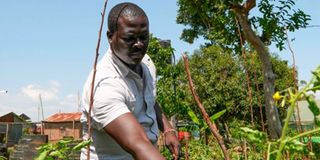
Some of vegetables grown at Lilian Chepngetich Farm in Nyalenda slums, Kisumu in this photo taken on August 24, 2025
Photo credit: Fridah Okachi | Nation
She has even ventured into black soldier fly farming, an innovative and eco-friendly approach to sustainable agriculture and waste management. Her journey reflects the transformation of her community, moving from food insecurity and unemployment to productivity and pride.
Implemented under the GIZ and Agri-Jobs 4 Youth initiative (2020–2025), KIYA has trained over 3,000 young farmers, aged 18–35, in agriculture and food systems. Of those, 2,600 have successfully started their own agribusinesses.
Mr Stephen Onyango, a value chain leader and KIYA mentor, explains how the community has shifted from idleness to farming among young people.
“Before the project started, not many young people were involved in agriculture, but now we have seen many more join.”
"We have trained 3,000 young farmers, and 2,300 have launched their own agribusiness ventures. Around 60 percent have seen their incomes rise, creating job opportunities for others in the community.”
Kisumu County’s food imports have dropped significantly, from 90 percent to less than 50 percent. This shift is largely credited to KIYA and its youth-focused strategy. While many of these young people do not own land, KIYA helps them to lease space for farming, and provides training, mentorship and market access.
With Sh50 million set to be made available through local banks, more young people will soon have access to resources to invest in agribusiness. The project has become a beacon of hope, demonstrating that young people can be the driving force behind food security and economic transformation.
While others see discarded peels, rotting vegetables and scraps destined for landfill, KIYA sees gold. The group collects organic waste from Kisumu’s bustling Kibuye Market and turns it into compost. Every week, the team collects fruit and vegetable peelings and buries them under layers of soil and leaves. Over time, nature transforms the waste into nutrient-rich compost that rejuvenates depleted soils.
But KIYA didn’t stop there. They discovered the power of the black soldier fly, whose larvae are voracious eaters of organic waste. In their aptly named 'love cages', the flies mate and lay eggs, which are collected and nurtured until they hatch into larvae. These larvae devour waste, leaving behind a fertiliser that is pure gold for farmers, and they themselves become a protein-rich feed for poultry, fish and pigs.
“Black soldier fly farming is a game-changer. It’s not just waste management; it’s creating a circular economy,” says Odawa.
Recognising a gap in early agricultural education, KIYA is expanding its reach. In January 2025, with support from the African Population and Health Research Center (APHRC), the project was launched in eight public primary schools in Nyalenda.
“We realised that many children in the slums don’t understand agriculture. These school farms will serve as training grounds and sources of food subsidies,” added Odawa.
Daniel Owino, a liaison officer between the Kisumu County Government and GIZ, during an interview at the project training centre in Nyalenda slums on August 24, 2025.
Photo credit: Fridah Okachi | Nation
Daniel Owino, a liaison officer between the Kisumu County Government and GIZ, added that many teachers have completed the training and are now passing on their skills to pupils.
“We have brought teachers on board. We have trained eight public primary schools in more than five value chains: African indigenous vegetables, poultry, tomatoes, cassava, aquaculture and climate action topics such as black soldier fly farming," said Mr Owino.
KIYA has also introduced an evaporative charcoal cooler and an aggregation centre for African leafy vegetables (ALVs). The cooler keeps ALVs fresh for longer, reducing post-harvest losses.
The aggregation centre enables farmers to package and market their produce collectively, opening doors to better prices and broader markets.
KIYA’s success is rooted in its partnership with Germany’s GIZ, which has played a pivotal role in supporting this youth-led initiative. Kenya’s collaboration with Germany on climate and development issues is realised in the form of KIYA’s work.
The 2022 Climate and Development Partnership between the two countries focuses on reducing carbon emissions, promoting climate-friendly growth and adapting agriculture to climate change goals that KIYA is helping to achieve through its innovative waste management and farming techniques.
By turning organic waste into compost and nutrient-rich black soldier fly products, KIYA is reducing greenhouse gas emissions and creating employment opportunities for young people.
Projects like KIYA demonstrate the tangible benefits of the 1 billion euros investment in bilateral development programmes, showcasing how global collaborations can empower communities and foster sustainable growth at the grassroots level.
As the sun sets over Nyalenda, Odawa and his team prepare for another day of waste collection, larvae nurturing, and farmer training. For them, it's not just about waste management; it's about building a future where young people lead the charge in transforming communities and tackling climate change.
“We’re not just teaching farmers. We’re creating a movement that embodies resilience, sustainability and hope for the future,” says Odawa.
In a world where youth unemployment and food insecurity go hand in hand, KIYA offers a blueprint for transformation.