The importance of proper nutrition in livestock production cannot be overstated, as the right balanced fodder meets the nutritional needs of the animals at their different stages of growth and production.
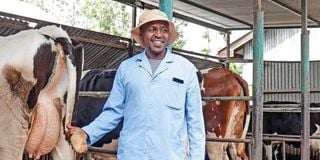
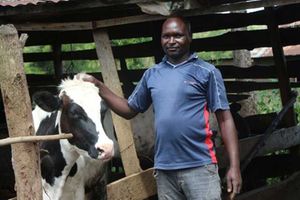
At Kefa Garden, a model two-acre farm located some two kilometres from Kenol stage along Makuyu Sagana Road, nutrition meets quality in a farm that has mastered the art of dairy feeding through the right nutrition, and in the right quantity.
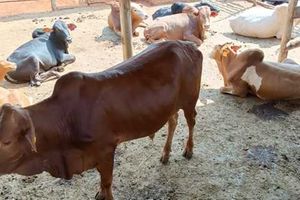
The farm hosts a total of 189 animals at different stages of growth and lactation, and has an average production of 21 litres per cow per day. To ensure consistency at the farm, fodder production is under 50 acres, with the silage storage getting to a tune of 540 tonnes.
To ensure optimum production, the management of the farm is also entrusted to an expert, Dr Isaac Kimani, who manages the farm with precision.
“Proper nutrition in animal feed is a crucial aspect in livestock production, reproduction, growth and development and the body score of the animals. In ensuring that our animals are fed ad libitum we have classified our animals in two; that is by age and by production. The calves, weaners, yearlings, bullying heifers, in calf heifers are grouped together while those that are freshly calved, those in different productions, those that are dried and the ones steaming are clustered together, reason being, livestock animals have different feeding and nutrients requirements according to their species, age, weight and reproductive status,” he says.
Dr Kimani emphasises that animals should be fed optimally with the right healthy feeds and in the right quality quantities, as inadequate nutrition is a major contributor to low weight gain, infertility and low milk yields among other health issues.
“Though exposed to a myriads of feeds in their different regions, farmers face the challenges of not being in a position to determine the quality of feeds they feed their animals on, and worse still, they are not in a position to determine the factors that influence the quality of fodder, yet the animals are highly sensitive to what they consume and how they consume it, and consistency in livestock feeding is key,” he says.
“Consistent livestock feeding is fundamental and farmers need to ensure uniformity especially with the ruminants as in their digestive set up, the feeds are digested or worked on through the process of fermentation, a process that entails the use of bacteria. So if a farmer keeps on changing the feeds the bacteria also keeps on changing, a factor that brings inconsistency in production, in reproduction and in growth and development,” he says.
In ensuring consistency, “Farmers should first source high quality feeds, store them and then feed, but a majority of the farmers only source and feed the animals directly, and this means that they don’t have fodder season in season out, a factor that affects their productivity as there is no consistency,” he says.
Farmers, according to Dr Kimani, should avoid cutting corners in the use of unscrupulous methods in acquiring fodder in an effort to boost production, as dirty, contaminated feeds that have either been mixed with dirt and soil, or are mouldy, or feeds that have elements of poisonous ingredients like pesticides and herbicides on crop residue should not be fed to the animals.
“It is thus imperative to check on the quality of any fodder before it is fed to the animals, as for instance if one realises that the silage has gone bad, one should not feed it to the animals as to some extent, even the one that seems good, has also gone bad or has some elements,” he says.
Hay can also be a source of toxins according to Dr Kimani, especially if it was baled when it had not dried up well, a factor that makes it turn mouldy. Dairy meal is also not spared, as most of its components are hygroscopic, meaning that they pick up water from the atmosphere, and one can find it caked.
The worst bit is that farmers don’t throw away the caked dairy meal, and instead feed it to the animals unknowingly, which is a source of aflatoxin. The other source of aflatoxin is in the soil and in the way farmers cut Napier with the soil. The worst bit with aflatoxin in animals is that, unlike in humans or other single-stomach animals, the aflatoxin doesn’t affect them immediately. It is slow.
Dr Kimani further explains that some strains of these aflatoxins affect the reproductive system, and with this, the animal develops problems in breeding. Some other strains might affect the respiratory systems, and the animal will have pneumonia or related conditions, while others might affect the animals in different ways. That’s why farmers are advised to use mycotoxin binders, to bind the toxins, as one cannot perfect the silage to 100 per cent.
When it comes to silage making, farmers need to follow the principles of silage making to avoid ending up with manure. “Quality silage must be well compacted and be airtight at all times. To ensure quality silage, the process of ensiling should be done right from the very first stage of cutting the fodder at the farm. The stage of harvesting fodder should be right with at least 32 -35p percent of dry matter, as it is key in determining the quality of silage."
"The other key aspect is on the issue of chopping where most farmers use a chaff cutter to cut their fodder instead of using a chopper to crush the maize and have the milk thoroughly distributed in the feeds. The sugars in the cane are also distributed when using a chopper. Chaff cutters only slice the fodder, meaning that the nutritional value in maize will just go through an animal, as an animal cannot digest a seed. A factor that sees so many farmers doing silage gets invaded by birds coming to eat the maize seed. That’s why a chopper is highly recommended to crush the fodder in a certain recommended size,” he says.
When it comes to feeding, Dr. Kimani advises farmers on the need to diversify, as feeding animals only on silage is not recommended, as it is a fodder that has undergone fermentation, and it might have high levels of acidity.
When it comes to purchasing fodder, he advises farmers to be wary of the quality of feed they purchase. “Farmers should be equipped with all the details pertaining the fodder they intend to purchase before purchasing, say from what kind of grass their hay was acquired from, at what stage was it harvested, its weight among other factors, because some farmers just buy hay for the sake of buying and when you look at the leaf stem ratio you realize that what they have is just stems as they purchased hay from overgrown hay and all the leaves have been shed off. With this, they are only feeding their animals with quantity but not quality; in short they are feeding their animals with some filler material because the nutritional value is already compromised,” he says.