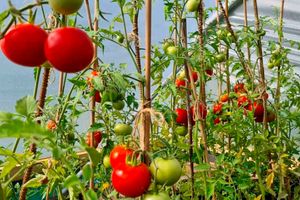
Growing crops in a greenhouse offers many farmers protection from unpredictable weather, pests and diseases. However, managing temperature, moisture, humidity and lighting can still be demanding.
Farmers may need to check whether the soil is dry, open ventilation windows when temperatures rise, switch on fans and water plants at the right time.
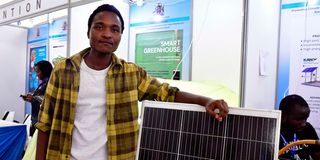
Walter Kisovi, a 24-year-old graduate in telecommunications and information engineering, believes that artificial intelligence (AI) could help farmers to overcome some of these challenges.
He is the innovator behind Bonita, a smart greenhouse that uses an AI agent to manage growing conditions and respond automatically to the needs of crops.
Bonita aims to reduce the guesswork involved in greenhouse farming by using a computer-based system to monitor conditions and make decisions regarding irrigation, ventilation, temperature regulation and artificial lighting. “We wanted to make greenhouses smarter by integrating precision farming. While most conventional greenhouses provide a suitable environment for crops, we wanted a system that could do more than just monitor conditions. It should be able to create and maintain the environment required by a particular plant,” says Kisovi.
The idea emerged in February 2026 following discussions about the challenges that farmers face when adapting to changing weather patterns, as well as the limitations of relying solely on manual farm management.
Kisovi says that his parents, who are experienced farmers, helped him to understand how changes in rainfall can disrupt production and result in financial losses for farmers. “We wanted to address climate change because, when we talked to farmers, including my parents, they would complain that a crop had failed because the rains were delayed. We realised this could be addressed through technology,” he explains
He started exploring how technology could help farmers to control the growing environment, rather than depending entirely on favourable weather or constant human intervention.
University of Nairobi student Walter Kisovi demonstrates how he operates a smart greenhouse using his phone at the Agricultural Trade Fair on October 3, 2026.
Photo credit: Francis Nderitu | Nation Media Group
Working alongside two co-founders, he developed Bonita, a system that monitors conditions inside a greenhouse and automatically activates the necessary equipment to maintain them.
Think of it as a greenhouse with a brain: Bonita integrates sensors, irrigation equipment, ventilation, fans and artificial lighting with a computer system that acts as the greenhouse’s brain.
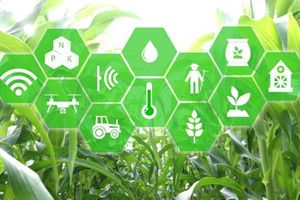
The sensors collect information about conditions inside the structure, including soil moisture and temperature. The AI-controlled system uses this information to determine when intervention is required, activating the relevant equipment as necessary.
For instance, when soil moisture falls below a set threshold, the irrigation system supplies water. If temperatures rise beyond the required range, fans can be activated and automated windows can be opened to improve ventilation and regulate humidity.
Depending on the requirements of the crop being grown, the system can also use artificial lighting to extend the period during which plants receive light.
Kisovi gives the example of mint seedlings, which require around 14 hours of light per day. While natural sunlight provides around eight hours, artificial lighting can supply the remaining six hours required by the selected growing programme.
This enables farmers to adapt the growing environment to suit different crops, rather than applying the same conditions to all plants.
“The best approach is to let the system decide for itself,” he tells Seeds of Gold, explaining that Bonita is designed to reduce the need for farmers to continually monitor and operate individual greenhouse components.
This innovative system can be configured to grow vegetables, herbs, flowers and other crops, and the growing requirements of each crop can be programmed into the system. The design can also incorporate heating equipment to combat the effects of low temperatures on crop growth.
This flexibility could benefit farmers in different parts of the country where environmental conditions such as altitude and temperature influence production.
Kisovi says the system is designed to enable farmers to monitor and manage their greenhouses remotely. “Through a connected application or messaging platforms such as WhatsApp and Telegram, a farmer can receive notifications and communicate with the system,” he explains.
For example, a farmer based in Nairobi could monitor a greenhouse in Kisumu, Garissa or Mombasa, provided the installation has a reliable internet connection.
This could be particularly useful for farmers who oversee several production sites or who cannot be at the farm all day.
Bonita is also intended to reduce inefficiencies associated with delayed farm operations, such as missed watering schedules and failure to adjust ventilation when conditions change.
“When the environment is controlled, the plant gets the conditions it requires. You also reduce inefficiencies that occur when a worker fails to water the plants on time or carry out another task,” he said in an exclusive interview.
He estimates that the technology could increase crop yields by around 50 per cent under favourable conditions.
The team plans to introduce cameras that will capture images of the plants to help assess their growth. According to Kisovi, this would add another layer of monitoring, enabling the system to gather visual information about crop development. However, the camera feature is still in the planning stage due to financial constraints.
One of the considerations behind Bonita is the cost of adopting smart farming technology, particularly for small-scale farmers who may find it difficult to invest in expensive greenhouse systems.
According to Kisovi, the smallest model costs approximately Sh50,000, including the structure and basic control systems. He estimates that developing the prototype cost around Sh40,000, including transportation.
This funding came from personal savings accumulated through previous employment and support from his parents.
The team sources materials locally and employs skilled workers, including steel fabricators and an electrical engineer, to assemble the system.
Kisovi says that using locally available materials and skills is important for developing a product that can be maintained and adapted to Kenyan farming conditions.
Although the project draws on engineering and artificial intelligence, the team aims to make the technology accessible to farmers who may not have advanced technical knowledge.
The idea is that farmers can specify the crop and its requirements, while the system handles routine environmental adjustments.
However, the innovation is still in the testing stage and has not yet been commercialised.
Kisovi says that prospective buyers have already made enquiries, but the team is still working on improving the product and preparing it for wider adoption.
Limited finances remain a major obstacle, particularly as the innovators seek to add new features, improve the system, and establish a dedicated workshop. Currently, the team lacks its own fully equipped workspace, which makes it more difficult to manufacture, test and assemble units consistently as demand grows.
Another challenge is convincing potential customers to trust this relatively new technology. Kisovi says that some people remain sceptical even after seeing the system in operation.
‘We have a product that works, but people are still sceptical, even after seeing the technology in operation. We need support.”