A Swiss multinational at the centre of key government contracts is in the eye of a storm, following a lawsuit where it is accused of poisoning fuel products with a dangerous chemical.
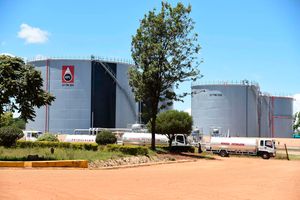
SICPA SA, the company contracted to provide fuel marking services, has been sued for using chemicals harmful to vehicles, public health and the environment, in its contract with the Energy and Petroleum Regulatory Authority (Epra).
This adds onto controversies the multinational has faced previously, including a contract with the Kenya Revenue Authority (KRA) where its staff have been interdicted after more than 20 million excise stamps were stolen at a vault in Times Tower.
In the case filed by the Consumers Federation of Kenya (Cofek) before the High Court in Nairobi, SICPA faces allegations of using fuel markers containing chemicals harmful to the environment and which could cause cancer to people exposed to the fuel.
The fuel marking contract entails application of chemical tracers on petrol, diesel and kerosene once they are imported into the country, to enable regulators arrest malpractices such as fuel adulteration and tax evasion, and guarantee that only fuel meeting prescribed standards reaches consumers.
The government entered into a Fuel Integrity Solution (FIS) - fuel marking - contract with SICPA in 2022 under controversial circumstances, and the Swiss firm has been offering the service since.
Cofek accuses SICPA of using chemical markers containing halogen-based elements at higher levels that risk consumers’ health and the environment.
“The Petitioner (Cofek) has obtained credible independent forensic laboratory analysis indicating that petroleum products currently in circulation within the Kenyan market contain halogenated compounds, including fluorine and iodine, at levels inconsistent with acceptable petroleum standards, thereby raising a prima facie case of contamination and regulatory failure,” court documents state.
Cofek says use of the fuel marked with SICPA chemicals is exposing Kenyan consumers to “potentially irreversible harm” and wants the High Court to order the suspension of use of the fuel with the markers, order Epra to cancel the contract it has with the company and order an independent lab test of the fuel currently circulating in the country.
Cofek Secretary General Stephen Mutoro. FILE PHOTO | NMG
In an affidavit, Cofek Secretary-General (SG) Stephen Mutoro, said the lobby early this year dispatched samples of fuel circulating in Kenya to a US-based laboratory, whose results confirmed that it has harmful chemicals at levels beyond internationally prescribed standards.
“I am advised by experts that the presence of such compounds in petroleum products at abnormal concentrations may pose serious risks to human health, environmental safety, and engine integrity, and that such risks are cumulative, continuous, and potentially irreversible. The continued circulation and use of petroleum products within the Kenyan market, therefore, exposes consumers and the general public to ongoing harm arising from daily and unavoidable consumption and use of fuel,” Mr Mutoro says.
Cofek, at the end of March, wrote to Epra raising concerns that biochemical markers introduced into fuel were harmful, citing the “carcinogenic nature of brominated contaminants in fuel.”
The lobby told Epra that it had dispatched fuel samples to Pittsburgh, US, for forensic chemical analysis.
Cofek demanded that Epra suspend renewal of the fuel marking contract with SICPA, as it cited the multinational for malpractices in at least four other countries where it has been forced to pay fines and its contracts cancelled on corruption allegations.
Auditor-General Nancy Gathungu had in 2024 questioned the process under which SICPA was awarded the Sh2.35 billion fuel-marking contract in 2022, after she found that a consortium of two companies had already won but was not awarded the tender.
It later emerged that SICPA won the contract following an intervention by the Interior Principal Secretary (PS) Karanja Kibicho, who ordered Epra to handpick SICPA for the contract.
Former Epra Director-General Daniel Kiptoo during an event in November last year.
Photo credit: File | Nation Media Group
Mr Kibicho’s letter to former Epra Director-General, Daniel Kiptoo, said a technical working group at the national government had chosen SICPA to implement all contracts pertaining to product marking for the State.
“It was recommended that the agencies with contracts on product marking should not procure new service providers but instead migrate to the enhanced Electronic Goods Management System (EGMS/IPMAS) Integrated Product Marking and Authentication System upon expiry of their existing contracts, a position that was also advanced by the Public Investment Committee (PIC),” Mr Kibicho’s letter on December 6, 2021, stated.
“In view of this background and clarification, therefore, you are required to consider rescinding the ongoing tendering and procurement process for fuel marking and monitoring services. Engage with SICPA, the service provider of the reconfigured EGMS, with a view to migrating to the EGMS prior to December 31, 2021, since the reconfigured interim system is ready for fuel marking and monitoring,” it added.
This is how SICPA came into being, one of the government’s major contractors, supplying not only the fuel marking services, but also the supply of security mechanisms for excise stamps, critical to prevent tax evasion for imported excisable goods or those manufactured in Kenya.
In a response on Monday, SICPA’s General Manager in Kenya, Lillian Atogo, rejected the allegations, saying its tests have shown that the markers it uses are safe.
“We categorically reject the allegations that our markers introduce harmful halogenated compounds at unsafe levels. The markers used in Kenya have undergone extensive safety testing, including during combustion. These tests have consistently confirmed that the markers are safe for human health and the environment when used as intended,” Ms Atogo said.
She said the company could not comment about dosage, composition or other elements in its markers, “which public disclosure would affect the security of our technology and the best service of our client.”
The company said it is looking forward to “a serious, scientifically based, and responsible resolution of these matters.”
Cofek, in the case before the High Court, wants Epra restrained from releasing fuel consignments that have SICPA’s fuel markers and continuing to undertake fuel marking through the Swiss firm’s markers.
The lobby also wants petroleum products in the Kenyan market subjected to independent quality assurance processes and the High Court to restrain Epra from any further contracts relating to fuel marking “without ensuring compliance with constitutional principles, including transparency, accountability, and public participation.”
The legal suit comes barely three months after the multinational was revealed to have been involved in a months-long scandal relating to a contract with the KRA, leading to the theft of 23.7 million excise stamps.
The Auditor-General revealed that KRA suffered multiple breaches at its Times Tower-based vault holding millions of excise stamps, with the theft of the 23.7 million stamps risking the loss of hundreds of millions of shillings to taxpayers.
KRA last month told the Nation that it interdicted at least seven employees and that a staff member attached to SICPA who was stationed at the vault has since been recalled.
“The EGMS service provider took corrective measures, including replacing its representative stationed at the vault. A system-wide audit and strengthening of controls around the receipt, custody, issuance, and reconciliation of excise stamps has been implemented,” KRA’s Commissioner for Investigations, Abdul M’maka said.
Ms Atogo declined to respond to questions seeking information on the role SICPA employees play at the Times Tower vault, actions the multinational has taken on them following the theft of stamps and precautions it has taken to prevent similar occurrences.
She instead responded in an overall statement indicating that “As regards enhanced tax stamps, SICPA is fully committed to KRA in its mission to protect Kenya authorities against illicit trade through EGMS, its citizens against fraudulent products and to maximise public revenue.”
The multinational earns billions of shillings from the Kenyan government for the fuel-marking and stamps deals with Epra and KRA, and the directive offering it express access to the contracts has entrenched its position, scaling above competitors.
SICPA has, however, previously been cited for procurement irregularities in the country, including in the High Court and in Parliament.
In 2017, Busia senator Okiya Omtatah- then as an activist- filed a petition before the High Court for awarding the EGMS contract to SICPA. The High Court later ruled that KRA had violated the law by failing to undertake public participation during the procurement of the EGMS.
Busia Senator Okiya Omtatah.
Photo credit: Dennis Onsongo | Nation Media Group
The court ordered the quashing of the tender that had been awarded to SICPA, though the orders were later stayed by the Court of Appeal.
A special audit on the process for tendering the same service also established that there had been irregularities, including alteration of some of the contents in the Expression of Interest (EOI) documents and a failure to ensure that KRA had sufficient funds before starting the procurement process.
A Parliamentary committee investigating the issue, however, ruled in favour of KRA and the multinational, ending the wrangles at the time.